Nivel, Netherlands institute for health services research, P.O. Box 1568, 3500 BN, Utrecht, The Netherlands.
Department of Primary and Community Care, Radboud university medical center, Radboud Institute for Health Sciences, Nijmegen, The Netherlands.
BMC Palliat Care. 2019 Apr 12;18(1):37. doi: 10.1186/s12904-019-0421-x.
Person-centred palliative care poses high demands on professionals and patients regarding appropriate and effective communication and informed decision-making. This is even more so for patients with limited health literacy, as they lack the necessary skills to find, understand and apply information about their health and healthcare. Recognizing patients with limited health literacy and adapting the communication, information provision and decision-making process to their skills and needs is essential to achieve desired person-centred palliative care. The aim of this study is to summarize available strategies and tools for healthcare providers towards successful communication, information provision and/or shared decision-making in supporting patients with limited health literacy in hospital-based palliative care in Western countries.
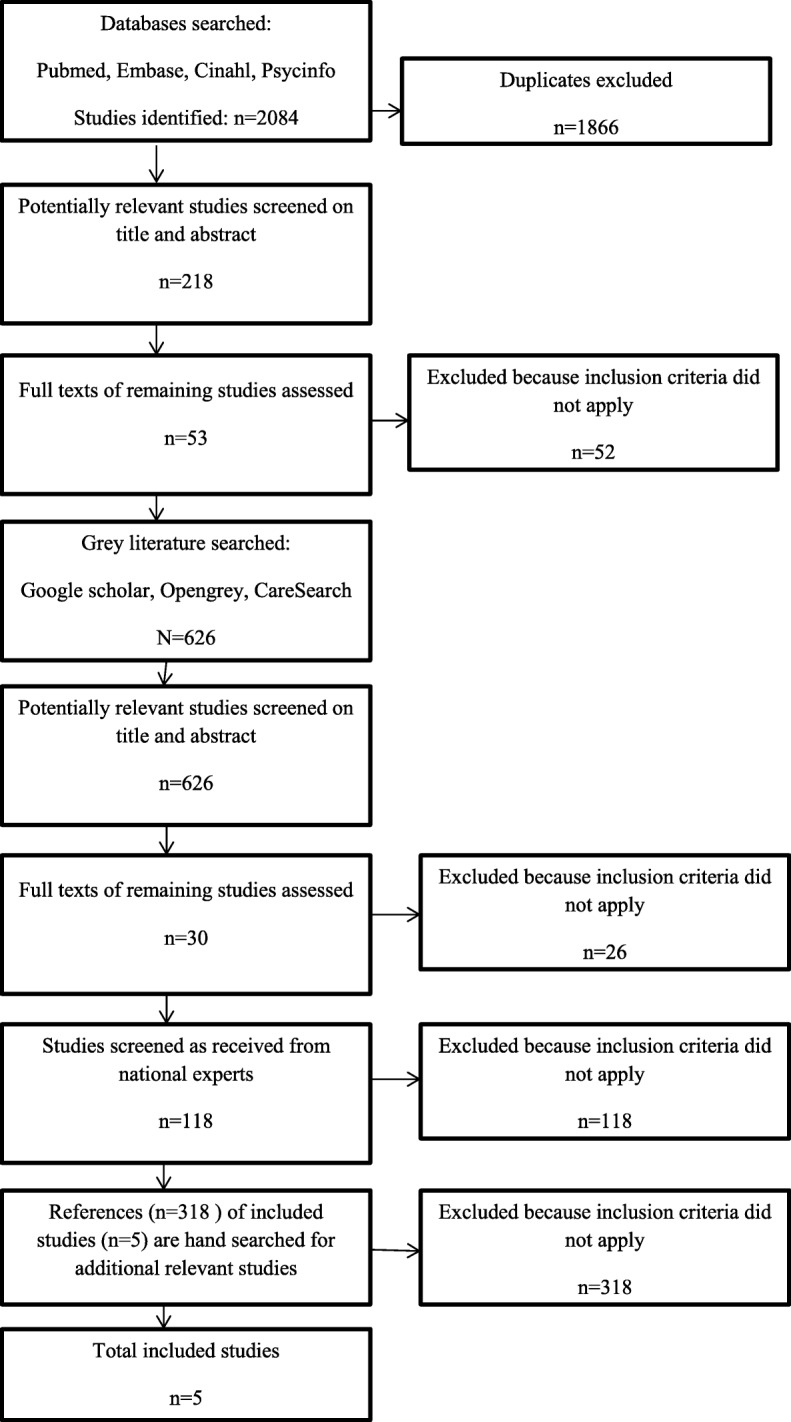
A scoping review was conducted. First, databases PubMed, Embase, CINAHL, and PsycINFO were searched. Next, grey literature was examined using several online databases and by contacting national experts. In addition, all references of included studies were checked.
Five studies were included that showed that there are face-to-face, written as well as online strategies available for healthcare providers to support communication, information provision and, to a lesser extent, (shared) decision-making in palliative care for patients with limited health literacy. Strategies that were mentioned several times were: teach-back method, jargon-free communication and developing and testing materials with patients with limited health literacy, among others. Two supporting tools were found: patient decision aids and question prompt lists.
To guarantee high quality person-centred palliative care, the role of health literacy should be considered. Although there are several strategies available for healthcare providers to facilitate such communication, only few tools are offered. Moreover, the strategies and tools appear not specific for the setting of palliative care, but seem helpful for providers to support the communication, information provision and decision making with patients with limited health literacy in general. Future research should focus on which strategies or tools are (most) effective in supporting patients with limited health literacy in palliative care, and the implementation of these strategies and tools in practice.
以患者为中心的姑息治疗对专业人员和患者在适当且有效的沟通以及知情决策方面提出了很高的要求。对于健康素养有限的患者来说更是如此,因为他们缺乏查找、理解和应用与自身健康和医疗保健相关信息的必要技能。承认患者的健康素养有限,并根据他们的技能和需求调整沟通、信息提供和决策过程,对于实现期望的以患者为中心的姑息治疗至关重要。本研究旨在总结西方国家医院姑息治疗环境中,医护人员在支持健康素养有限的患者时用于成功沟通、信息提供和/或共同决策的可用策略和工具。
开展了范围综述。首先,检索了 PubMed、Embase、CINAHL 和 PsycINFO 数据库。其次,使用多个在线数据库和联系国家专家来检查灰色文献。此外,还检查了纳入研究的所有参考文献。
纳入了 5 项研究,结果表明,存在多种面向医护人员的策略,包括面对面、书面以及在线策略,用于支持健康素养有限的姑息治疗患者的沟通、信息提供,在一定程度上还支持(共同)决策。多次提到的策略包括:回授法、使用通俗易懂的语言进行沟通以及与健康素养有限的患者一起开发和测试材料等。发现了 2 种支持工具:患者决策辅助工具和问题提示清单。
为保证高质量的以患者为中心的姑息治疗,应考虑健康素养的作用。尽管有许多策略可供医护人员用于促进此类沟通,但提供的工具却很少。此外,这些策略和工具似乎并非专门针对姑息治疗环境,而似乎有助于提供者与健康素养有限的患者进行一般的沟通、信息提供和决策制定。未来的研究应集中于哪些策略或工具最能支持姑息治疗中的健康素养有限的患者,以及这些策略和工具在实践中的实施。