Department of Biomedical Engineering, University of California, Irvine, Irvine, CA 92697, USA.
Department of Neurobiology and Behavior, University of California, Irvine, Irvine, CA 92697, USA; Center for the Neurobiology of Learning and Memory, University of California, Irvine, Irvine, CA 92697, USA.
Neuron. 2019 May 22;102(4):887-898.e5. doi: 10.1016/j.neuron.2019.03.025. Epub 2019 Apr 9.
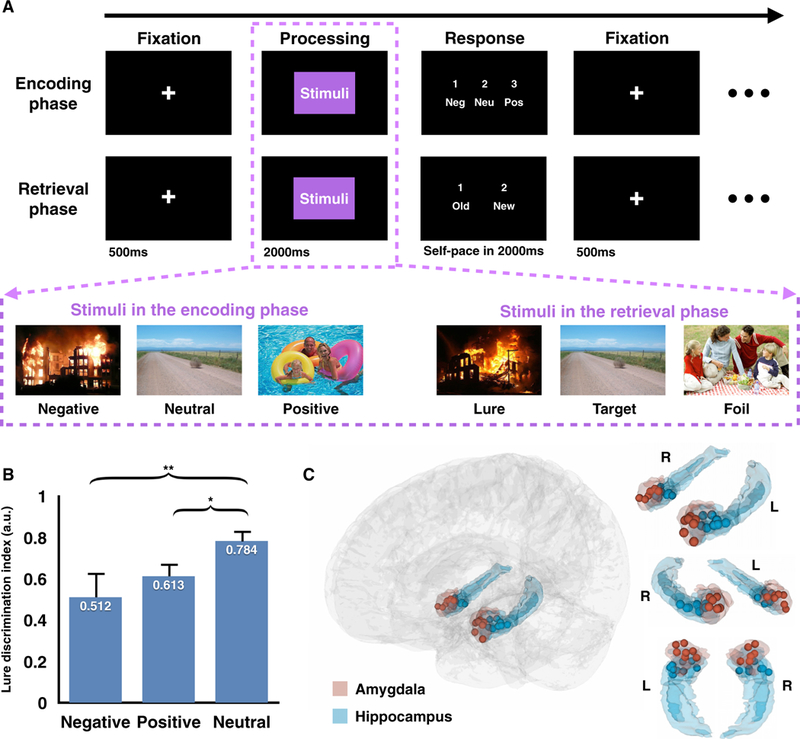
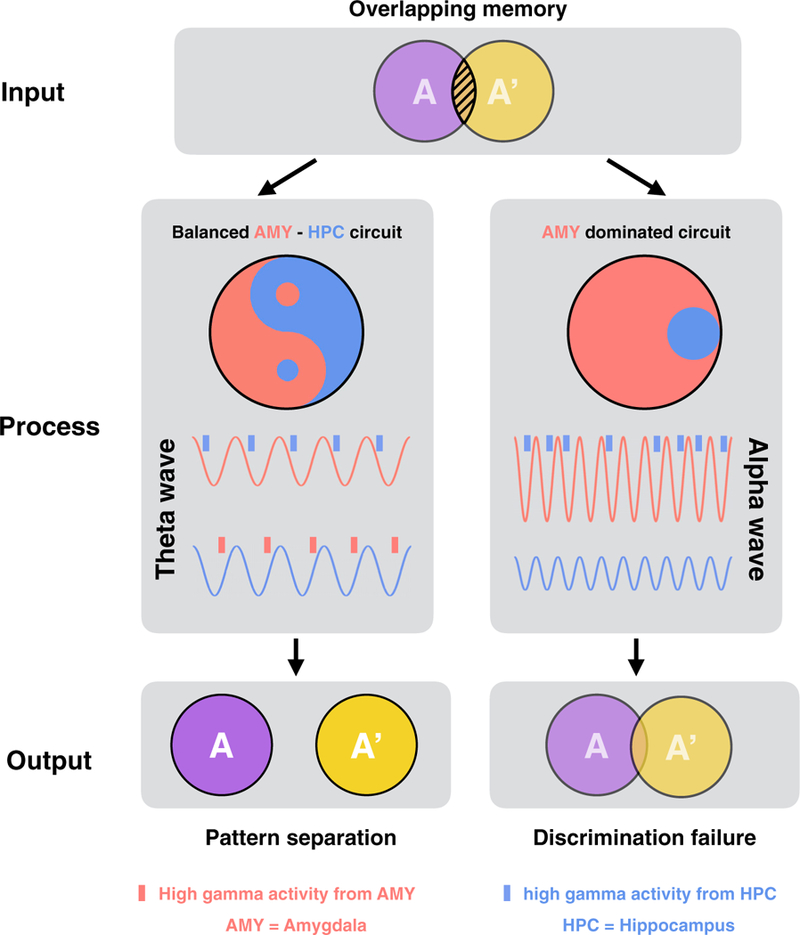
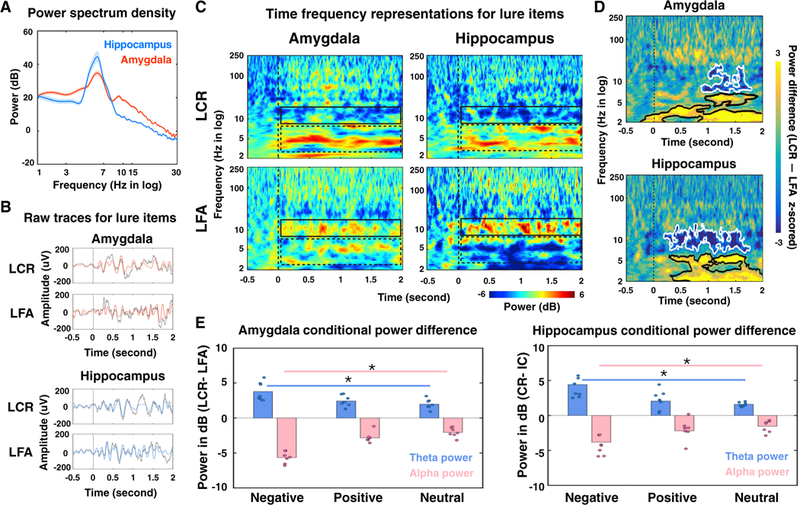
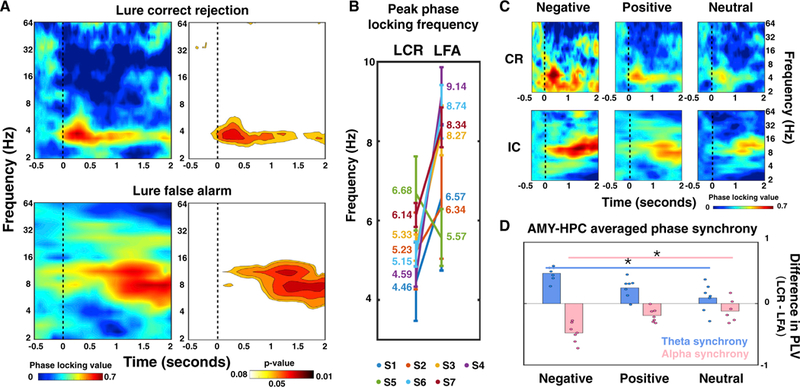
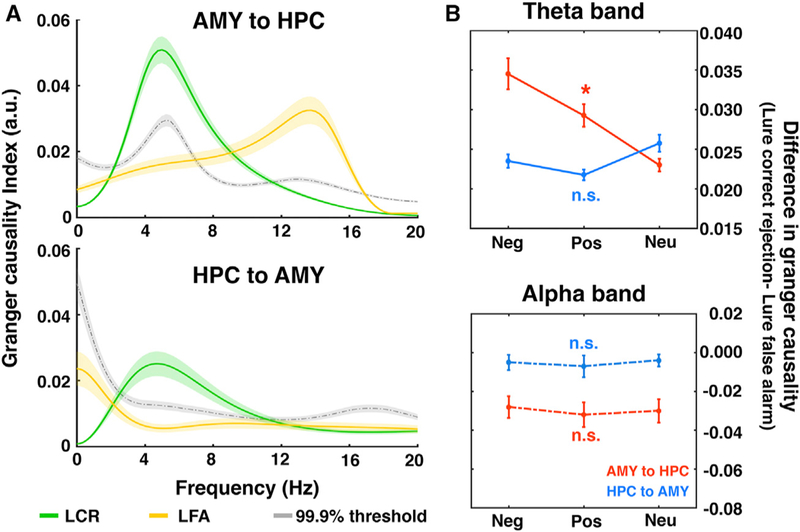
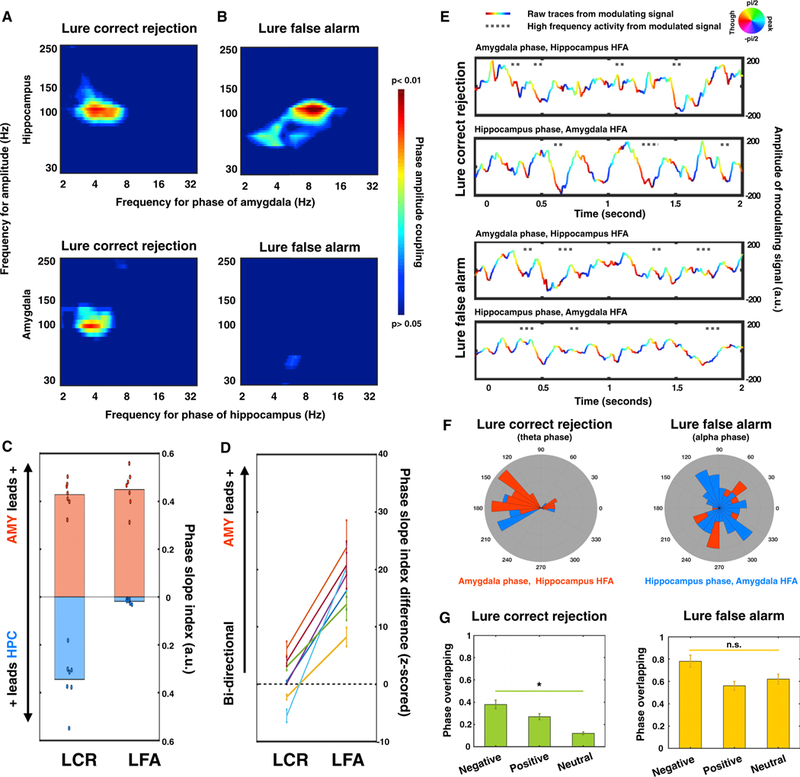
How do we remember emotional events? While emotion often leads to vivid recollection, the precision of emotional memories can be degraded, especially when discriminating among overlapping experiences in memory (i.e., pattern separation). Communication between the amygdala and the hippocampus has been proposed to support emotional memory, but the exact neural mechanisms remain unclear. Here, we used intracranial recordings in pre-surgical epilepsy patients to show that successful pattern separation of emotional stimuli is associated with theta band (3-7 Hz)-coordinated bidirectional interactions between the amygdala and the hippocampus. In contrast, discrimination errors (i.e., failure to discriminate similar stimuli) were associated with alpha band (7-13 Hz)-coordinated unidirectional influence from the amygdala to the hippocampus. These findings imply that alpha band synchrony may impair discrimination of similar emotional events via the amygdala-hippocampal directional coupling, which suggests a target for treatments of psychiatric conditions such as post-traumatic stress disorder, in which aversive experiences are often overgeneralized.
我们如何记住情绪事件?尽管情绪通常会导致生动的回忆,但情绪记忆的准确性可能会降低,尤其是在记忆中区分重叠的经历(即模式分离)时。杏仁核和海马体之间的通信被认为支持情绪记忆,但确切的神经机制仍不清楚。在这里,我们使用术前癫痫患者的颅内记录来表明,成功的情绪刺激模式分离与θ波段(3-7 Hz)协调的杏仁核和海马体之间的双向相互作用有关。相比之下,辨别错误(即未能辨别相似的刺激)与α波段(7-13 Hz)协调的来自杏仁核到海马体的单向影响有关。这些发现表明,α 波段同步可能会通过杏仁核-海马体的定向耦合损害对相似情绪事件的辨别,这表明治疗创伤后应激障碍等精神疾病的目标,其中厌恶经验通常被过度泛化。