Department of Immunobiology, Yale University School of Medicine, New Haven, CT 06511, USA.
School of Medicine, Division of Immunology and Rheumatology, Stanford University, Stanford, CA 94305, USA.
Sci Immunol. 2019 Apr 12;4(34). doi: 10.1126/sciimmunol.aav6778.
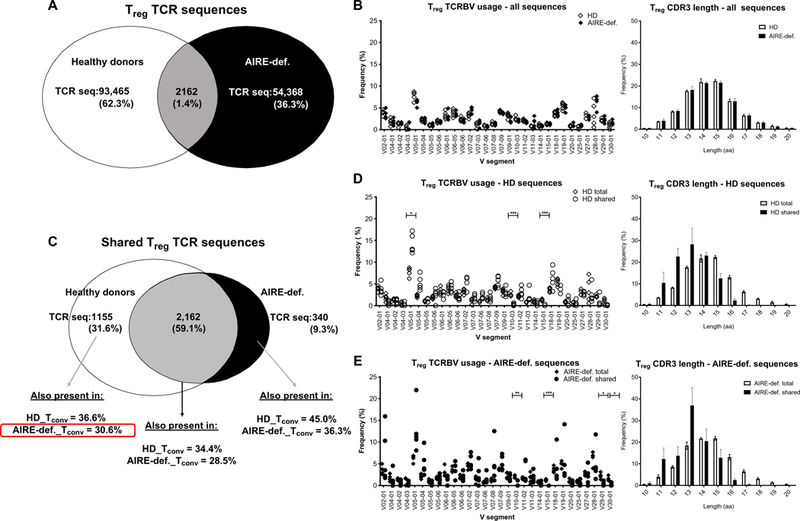
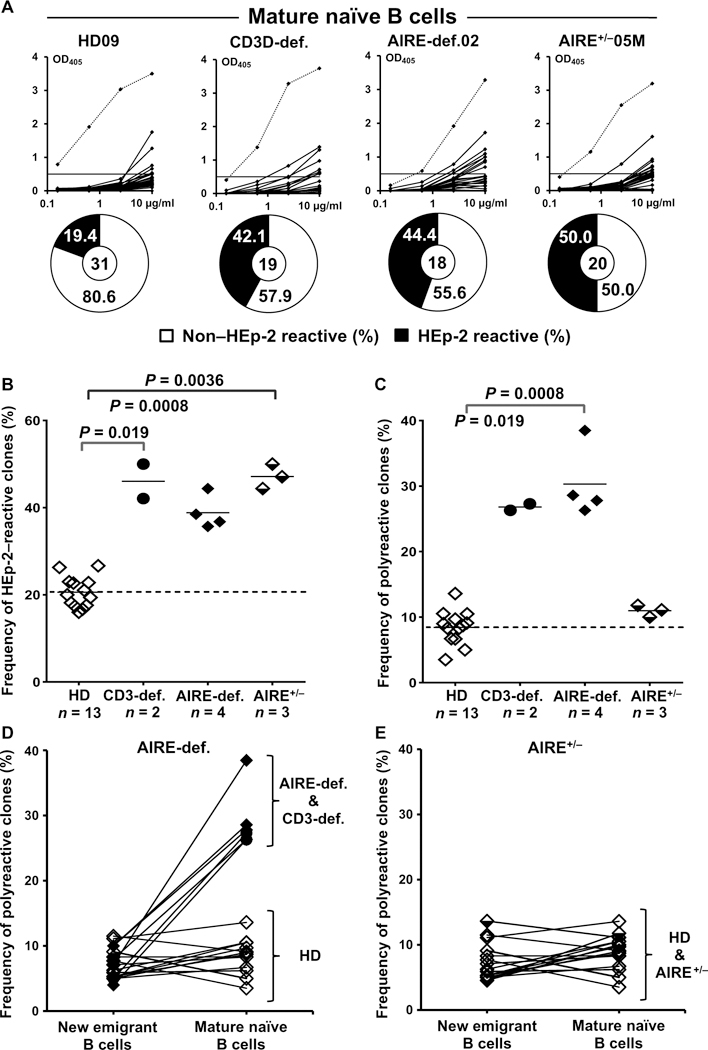
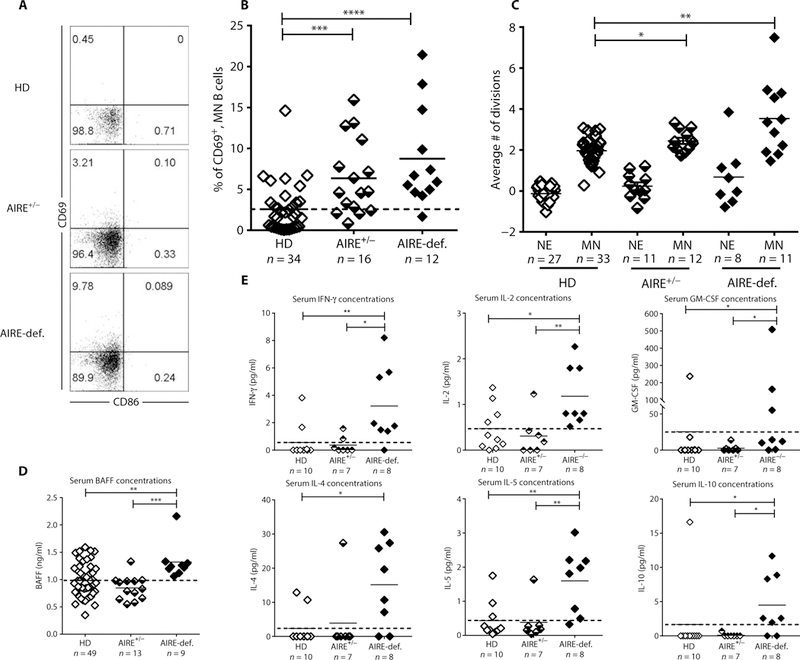
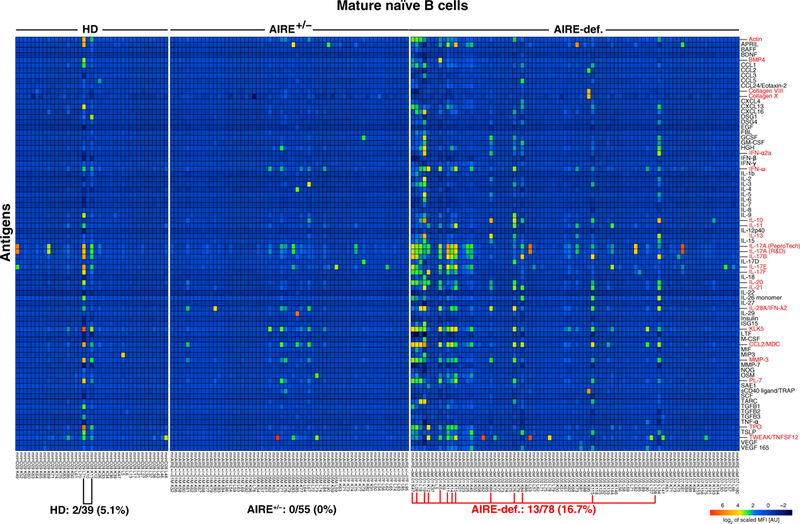
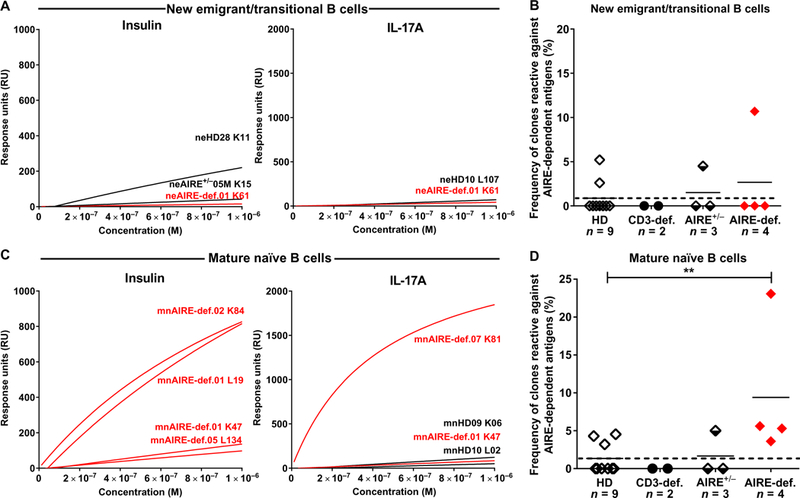
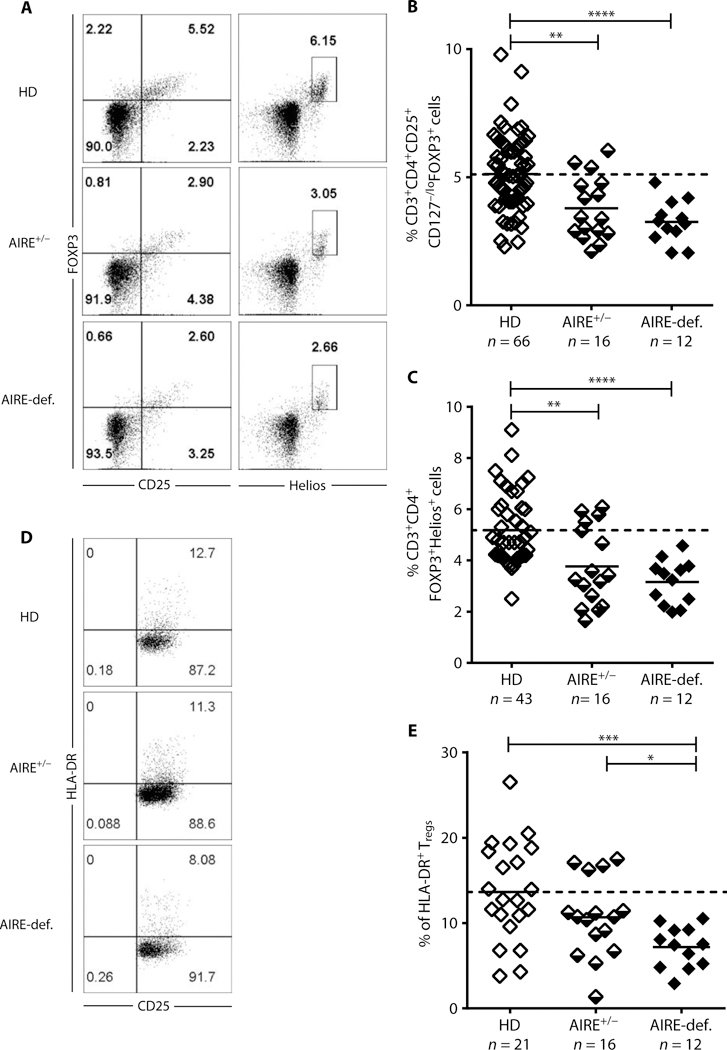
Autoimmune regulator (AIRE) mutations result in autoimmune polyendocrinopathy-candidiasis-ectodermal dystrophy (APECED) syndrome characterized by defective central T cell tolerance and the production of many autoantibodies targeting tissue-specific antigens and cytokines. By studying CD3- and AIRE-deficient patients, we found that lack of either T cells or AIRE function resulted in the peripheral accumulation of autoreactive mature naïve B cells. Proteomic arrays and Biacore affinity measurements revealed that unmutated antibodies expressed by these autoreactive naïve B cells recognized soluble molecules and cytokines including insulin, IL-17A, and IL-17F, which are AIRE-dependent thymic peripheral tissue antigens targeted by autoimmune responses in APECED. AIRE-deficient patients also displayed decreased frequencies of regulatory T cells (T) that lacked common TCRβ clones found instead in their conventional T cell compartment, thereby suggesting holes in the T TCR repertoire of these patients. Hence, AIRE-mediated T cell/T selection normally prevents the expansion of autoreactive naïve B cells recognizing peripheral self-antigens.
自身免疫调节因子 (AIRE) 突变导致自身免疫性多内分泌腺病-念珠菌病-外胚层发育不良 (APECED) 综合征,其特征是中央 T 细胞耐受缺陷和产生许多针对组织特异性抗原和细胞因子的自身抗体。通过研究 CD3 和 AIRE 缺陷患者,我们发现缺乏 T 细胞或 AIRE 功能都会导致自身反应性成熟初始 B 细胞在外周的积累。蛋白质组学阵列和 Biacore 亲和力测量显示,这些自身反应性初始 B 细胞表达的未突变抗体识别可溶性分子和细胞因子,包括胰岛素、IL-17A 和 IL-17F,这些都是 AIRE 依赖的胸腺外周组织抗原,是 APECED 中自身免疫反应的靶标。AIRE 缺陷患者还显示出调节性 T 细胞 (Treg) 的频率降低,这些 Treg 缺乏在其常规 T 细胞区室中发现的常见 TCRβ 克隆,这表明这些患者的 T 细胞 TCR 库存在缺口。因此,AIRE 介导的 T 细胞/T 选择通常可防止识别外周自身抗原的自身反应性初始 B 细胞的扩增。