The Cytometry, Screening and Imaging Core Facility & Border Biomedical Research Center & Department of Biological Sciences, The University of Texas at El Paso, El Paso, Texas, USA.
Department of Biology, University of Massachusetts, Amherst, Massachusetts, USA.
Sci Rep. 2019 Apr 12;9(1):6005. doi: 10.1038/s41598-019-42228-4.
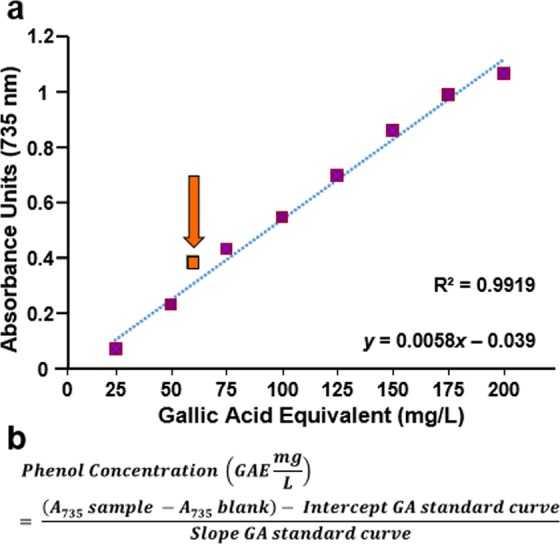
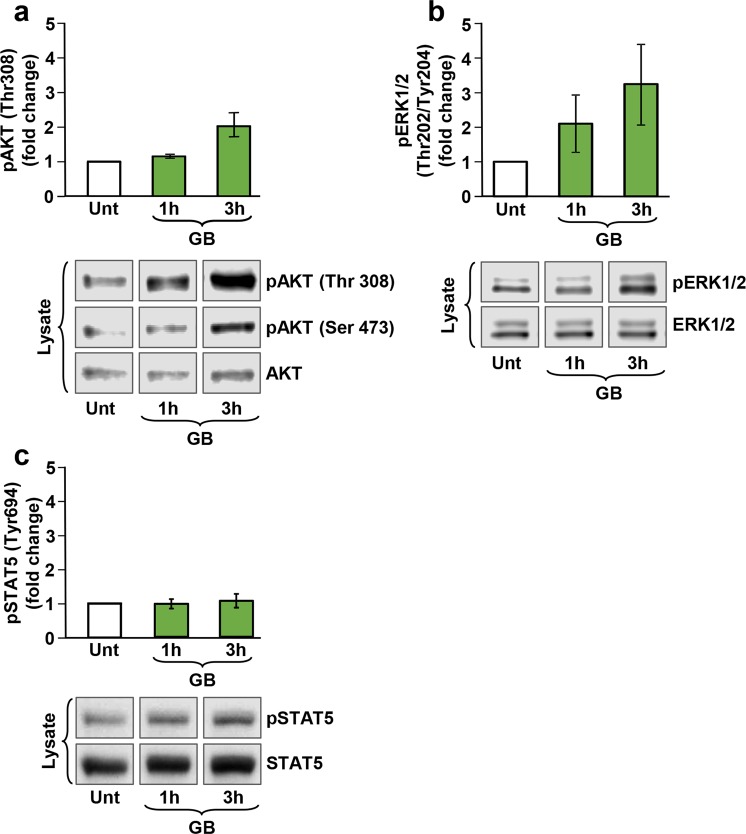
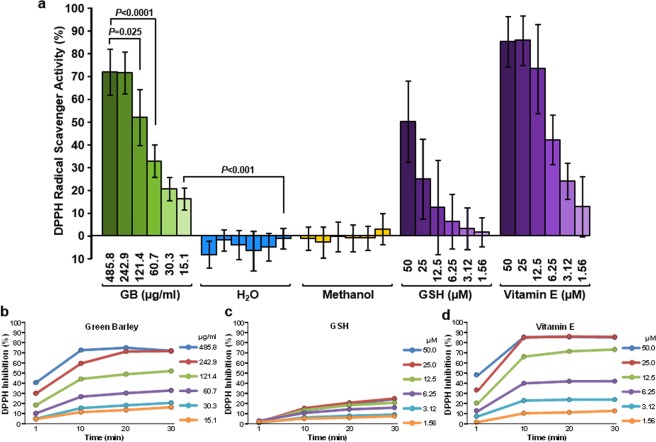
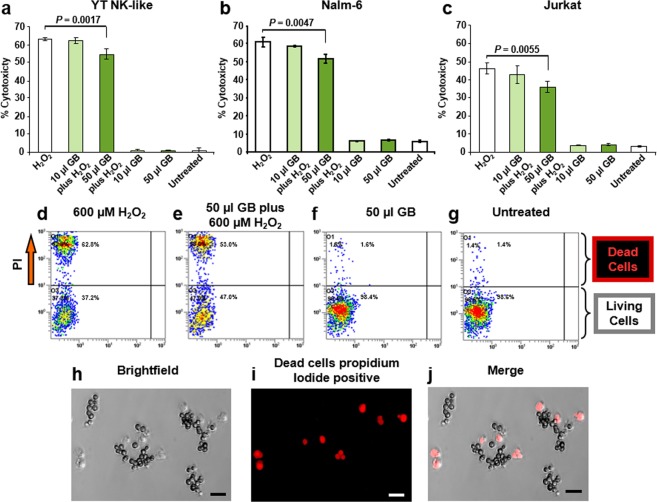
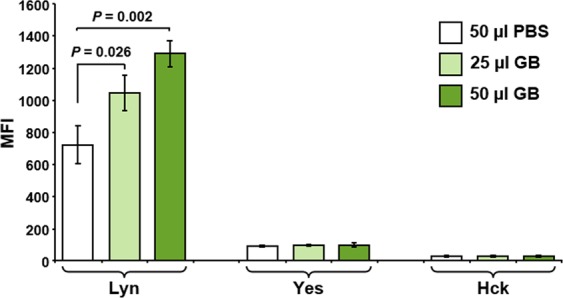
Oxidative stress plays a critical role in numerous diseases. Therefore, the pursuit of compounds with antioxidant activity remains critical. Green barley young leaves aqueous extract (GB) was tested for its capacity to ameliorate cellular oxidative stress, and its potential cytoprotective mechanism was partially elucidated. Through Folin-Ciocalteau and 1,1-diphenyl-2-picrylhydrazyl (DPPH) colorimetric assays, GB total phenolic content and free radical scavenging activity were found to be 59.91 ± 2.17 mg/L and 110.75 µg/ml (IC), respectively. Using a live cell-based propidium iodide dye exclusion assay and flow cytometry, GB was found to display significant cytoprotection activity on three human lymphocytic cell lines exposed to an aggressive HO-induced oxidative stress. The molecular mechanism for GB cytoprotection activity was assessed via bead-based xMAP technology on the Luminex platform and western blot analysis. GB treatment resulted in activation of Lyn, Akt, and ERK1/2, suggesting that GB is able to mitigate the HO-induced oxidative stress via activation of both the Lyn/PI3K/Akt and ERK/MAPK pathways. Our findings support the notion that GB extract has the potential to be a valuable therapeutic agent and may serve to establish a strategy to discover potential compound(s) or biological extracts/mixtures to be incorporated as a treatment to prevent oxidative stress-related diseases.
氧化应激在许多疾病中起着关键作用。因此,追求具有抗氧化活性的化合物仍然至关重要。本研究测试了青稞幼叶水提物(GB)改善细胞氧化应激的能力,并部分阐明了其潜在的细胞保护机制。通过福林-酚和 1,1-二苯基-2-苦基肼(DPPH)比色法测定,发现 GB 的总酚含量和自由基清除活性分别为 59.91±2.17mg/L 和 110.75µg/ml(IC)。通过活细胞碘化丙啶染料排除试验和流式细胞术发现,GB 对三种暴露于强烈 HO 诱导氧化应激的人淋巴细胞系具有显著的细胞保护活性。通过 Luminex 平台上的基于珠子的 xMAP 技术和 Western blot 分析评估了 GB 细胞保护活性的分子机制。GB 处理导致 Lyn、Akt 和 ERK1/2 的激活,表明 GB 能够通过激活 Lyn/PI3K/Akt 和 ERK/MAPK 途径减轻 HO 诱导的氧化应激。我们的研究结果支持以下观点,即 GB 提取物具有成为有价值的治疗剂的潜力,并可能为发现潜在的化合物或生物提取物/混合物作为预防氧化应激相关疾病的治疗方法提供一种策略。