Infectious Disease and Immunology, Border Biomedical Research Center and the Department of Biological Sciences, University of Texas at El Paso, El Paso, TX, United States.
Department of Pathology, School of Medicine, University of New Mexico, Albuquerque, NM, United States.
Front Cell Infect Microbiol. 2022 Aug 23;12:974200. doi: 10.3389/fcimb.2022.974200. eCollection 2022.
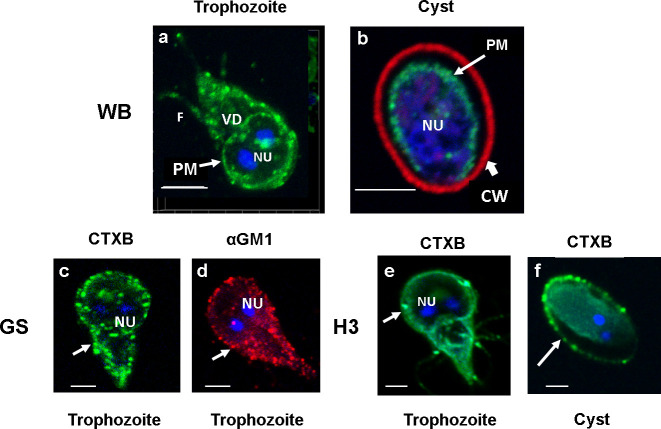
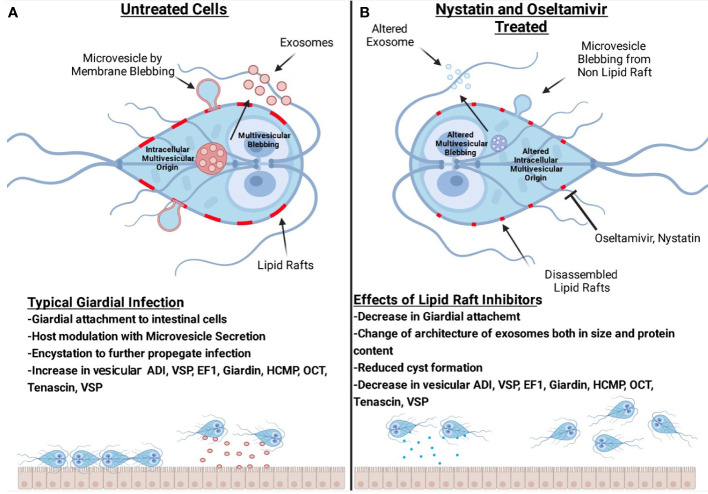
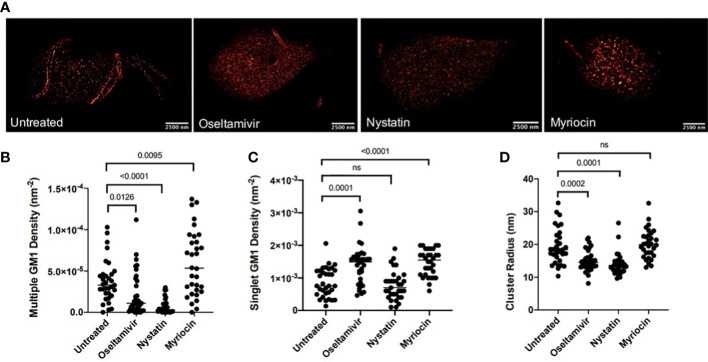
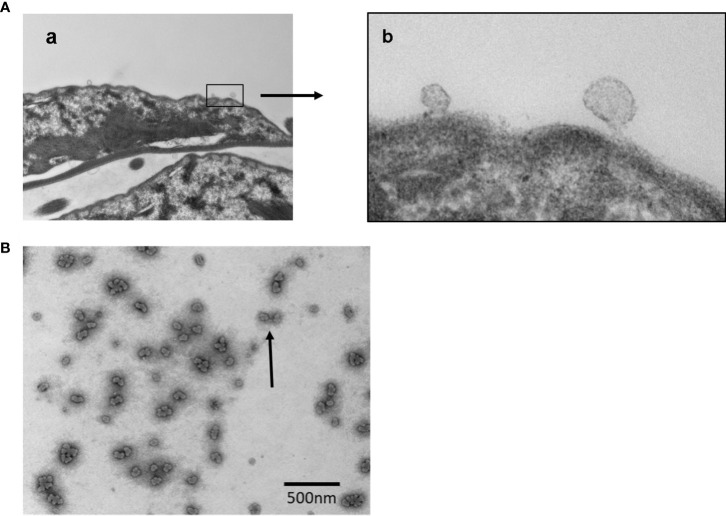
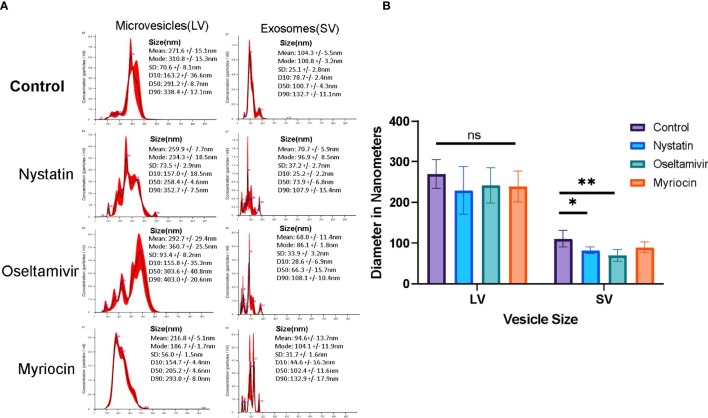
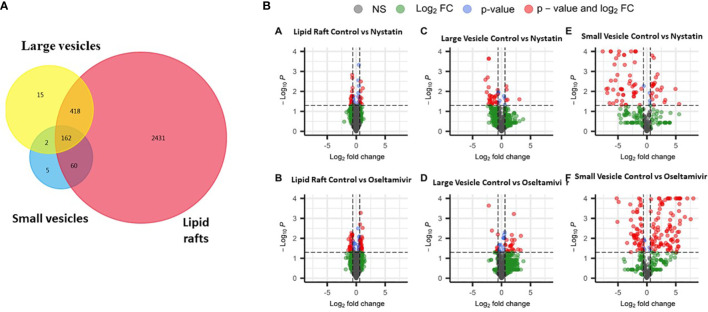
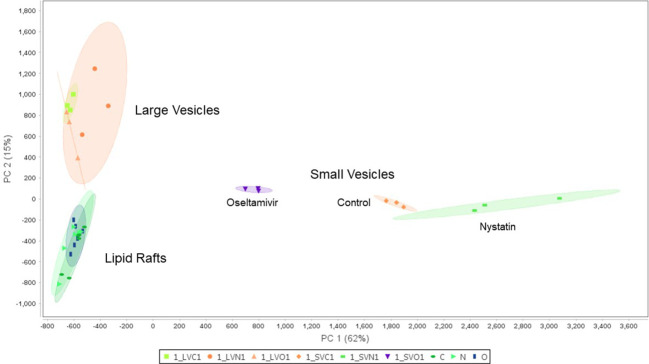
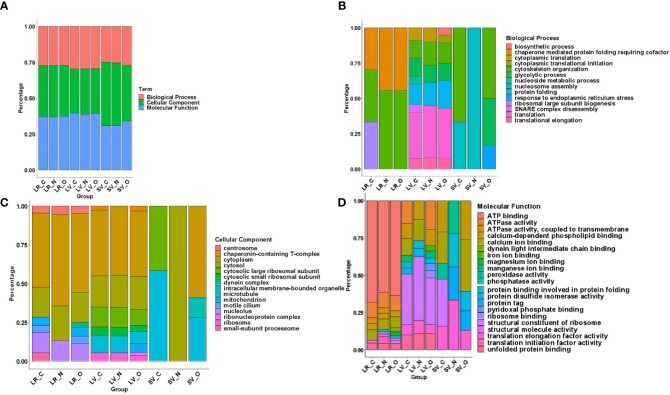
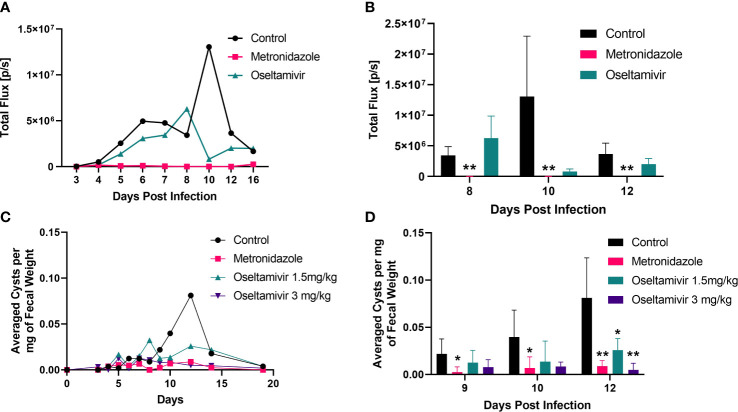
, a protozoan parasite, is a major cause of waterborne infection, worldwide. While the trophozoite form of this parasite induces pathological symptoms in the gut, the cyst form transmits the infection. Since is a noninvasive parasite, the actual mechanism by which it causes disease remains elusive. We have previously reported that assembles cholesterol and GM1 glycosphingolipid-enriched lipid rafts (LRs) that participate in encystation and cyst production. To further delineate the role of LRs in pathogenesis, we isolated LRs from and subjected them to proteomic analysis. Various cellular proteins including potential virulence factors-e.g., giardins, variant surface proteins, arginine deaminases, elongation factors, ornithine carbomyltransferases, and high cysteine-rich membrane proteins-were found to be present in LRs. Since secretes virulence factors encapsulated in extracellular vesicles (EVs) that induce proinflammatory responses in hosts, EVs released by the parasite were isolated and subjected to nanoparticle tracking and proteomic analysis. Two types of EV-i.e., small vesicles (SVs; <100 nm, exosome-like particles) and large vesicles (LVs; 100-400 nm, microvesicle-like particles)-were identified and found to contain a diverse group of proteins including above potential virulence factors. Although pretreatment of the parasite with two giardial lipid raft (gLR) disruptors, nystatin (27 μM) and oseltamivir (20 μM), altered the expression profiles of virulence factors in LVs and SVs, the effects were more robust in the case of SVs. To examine the potential role of rafts and vesicles in pathogenicity, -infected mice were treated with oseltamivir (1.5 and 3.0 mg/kg), and the shedding of cysts were monitored. We observed that this drug significantly reduced the parasite load in mice. Taken together, our results suggest that virulence factors partitioning in gLRs, released into the extracellular milieu SVs and LVs, participate in spread of giardiasis and could be targeted for future drug development.
贾第虫是一种原生动物寄生虫,是全球范围内主要的水源性感染病原体。虽然该寄生虫的滋养体形式会在肠道中引起病理症状,但包囊形式会传播感染。由于贾第虫是一种非侵袭性寄生虫,其致病的实际机制仍难以捉摸。我们之前曾报道过,贾第虫组装胆固醇和 GM1 糖鞘脂富集的脂筏(LR),参与形成包囊和产生包囊。为了进一步描绘 LR 在发病机制中的作用,我们从贾第虫中分离出 LR 并进行蛋白质组学分析。各种细胞蛋白,包括潜在的毒力因子 - 例如贾第虫蛋白、变体表面蛋白、精氨酸脱氨酶、延伸因子、鸟氨酸氨甲酰转移酶和高半胱氨酸丰富的膜蛋白 - 都存在于 LR 中。由于贾第虫分泌包裹在细胞外囊泡(EV)中的毒力因子,这些 EV 会在宿主中引发炎症反应,因此我们分离出寄生虫释放的 EV 并进行纳米颗粒跟踪和蛋白质组学分析。鉴定出两种类型的 EV-即小囊泡(SV;<100nm,类外泌体颗粒)和大囊泡(LV;100-400nm,类微囊泡颗粒)-并发现它们包含多种蛋白,包括上述潜在的毒力因子。尽管用两种贾第虫脂筏(gLR)破坏剂 - 制霉菌素(27μM)和奥司他韦(20μM)预处理寄生虫会改变 LVs 和 SVs 中毒力因子的表达谱,但 SVs 的影响更为显著。为了研究筏和囊泡在致病性中的潜在作用,用奥司他韦(1.5 和 3.0mg/kg)治疗感染贾第虫的小鼠,并监测包囊的脱落。我们观察到该药物显著降低了小鼠体内的寄生虫载量。总之,我们的研究结果表明,在 gLR 中分离的毒力因子、释放到细胞外环境中的 SVs 和 LVs 参与了贾第虫病的传播,可能成为未来药物开发的靶点。