Department of Neurology, University Medical Center Göttingen, Göttingen, Germany.
Department of Neuropathology, University Medical Center Göttingen, Göttingen, Germany.
Glia. 2019 Jun;67(6):1196-1209. doi: 10.1002/glia.23598. Epub 2019 Feb 11.
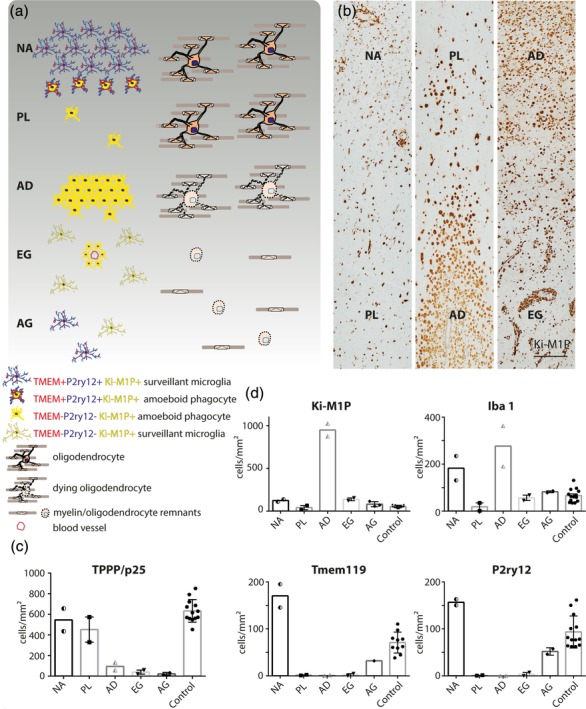
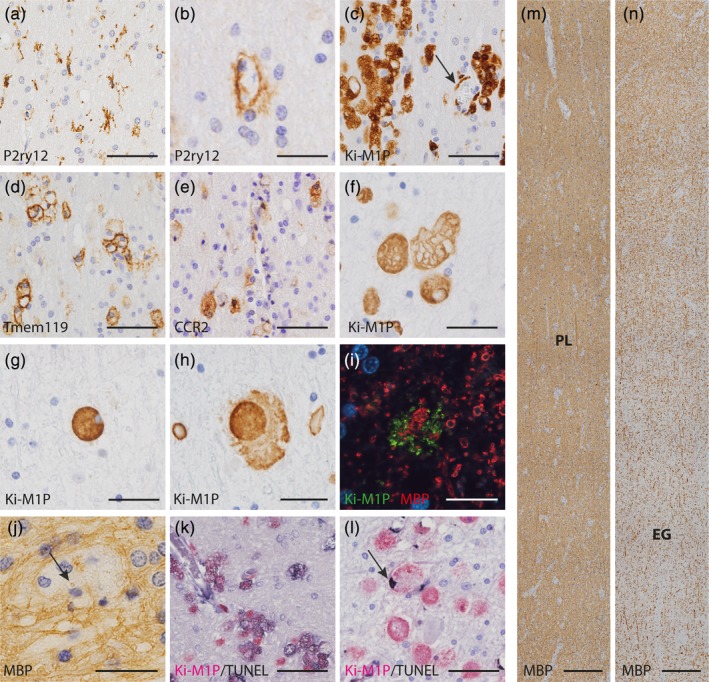
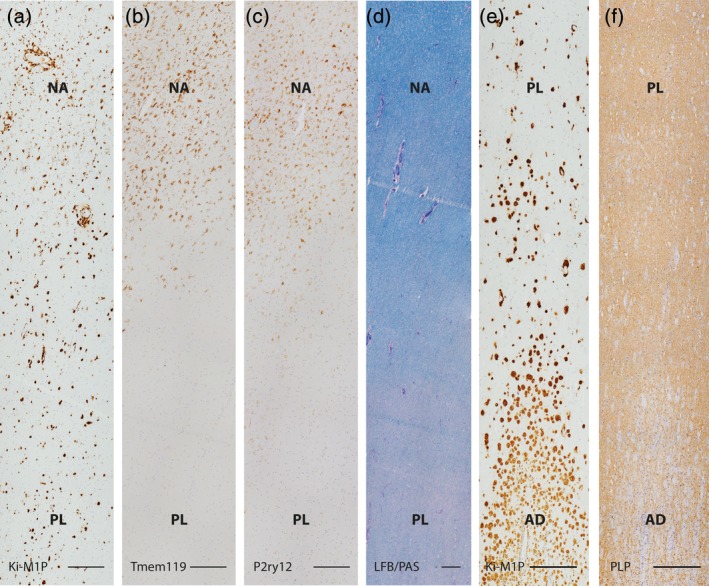
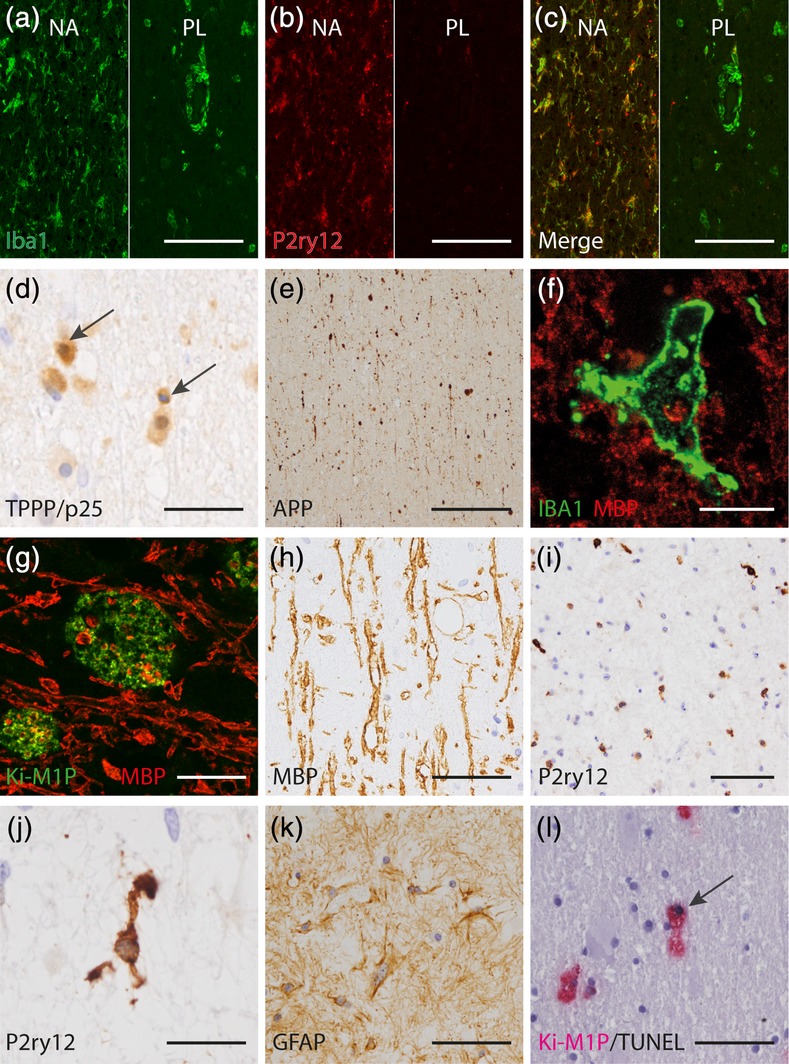
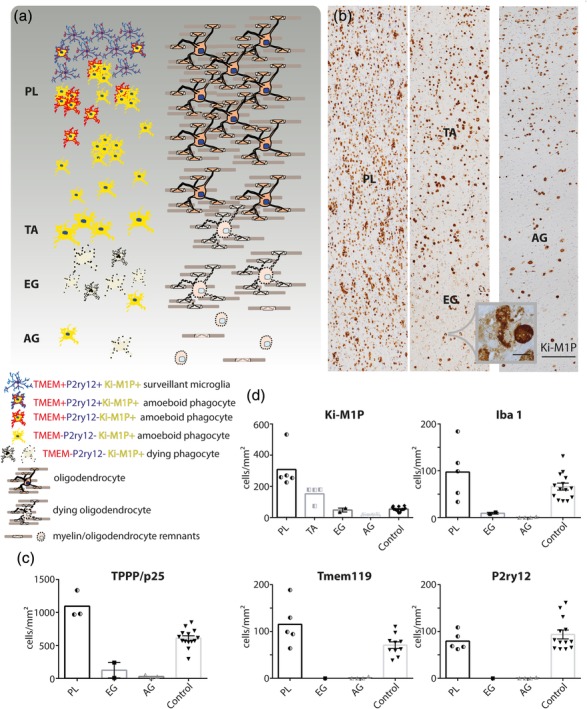
X-linked adrenoleukodystrophy (X-ALD) and metachromatic leukodystrophy (MLD) are two relatively common examples of hereditary demyelinating diseases caused by a dysfunction of peroxisomal or lysosomal lipid degradation. In both conditions, accumulation of nondegraded lipids leads to the destruction of cerebral white matter. Because of their high lipid content, oligodendrocytes are considered key to the pathophysiology of these leukodystrophies. However, the response to allogeneic stem cell transplantation points to the relevance of cells related to the hematopoietic lineage. In the present study, we aimed to better characterize the pathogenetic role of microglia in the above-mentioned diseases. Applying recently established microglia markers to human autopsy cases of X-ALD and MLD we were able to delineate distinct lesion stages in evolving demyelinating lesions. The immune-phenotype of microglia was altered already early in lesion evolution, and microglia loss preceded full-blown myelin degeneration both in X-ALD and MLD. DNA fragmentation indicating phagocyte death was observed in areas showing microglia loss. The morphology and dynamics of phagocyte decay differed between the diseases and between lesion stages, hinting at distinct pathways of programmed cell death. In summary, the present study shows an early and severe damage to microglia in the pathogenesis of X-ALD and MLD. This hints at a central pathophysiologic role of these cells in the diseases and provides evidence for an ongoing transfer of toxic substrates primarily enriched in myelinating cells to microglia.
X 连锁肾上腺脑白质营养不良(X-ALD)和异染性脑白质营养不良(MLD)是两种相对常见的遗传性脱髓鞘疾病,由过氧化物酶体或溶酶体脂质降解功能障碍引起。在这两种情况下,未降解的脂质积累导致大脑白质的破坏。由于其高脂质含量,少突胶质细胞被认为是这些白质营养不良症病理生理学的关键。然而,同种异体干细胞移植的反应表明与造血谱系相关的细胞的相关性。在本研究中,我们旨在更好地描述小胶质细胞在上述疾病中的发病机制作用。应用最近建立的小胶质细胞标记物对 X-ALD 和 MLD 的人体尸检病例进行研究,我们能够描绘出不断发展的脱髓鞘病变中的不同病变阶段。在病变演变的早期,小胶质细胞的免疫表型就发生了改变,并且在 X-ALD 和 MLD 中,小胶质细胞的丢失早于完全成熟的髓鞘变性。在显示小胶质细胞丢失的区域观察到表明吞噬细胞死亡的 DNA 片段化。吞噬细胞衰变的形态和动力学在疾病之间和病变阶段之间有所不同,提示存在不同的程序性细胞死亡途径。总之,本研究表明 X-ALD 和 MLD 发病机制中小胶质细胞的早期和严重损伤。这暗示了这些细胞在疾病中的核心病理生理作用,并为有毒底物的持续转移提供了证据,这些底物主要富集在髓鞘细胞中并转移到小胶质细胞中。