Institute for Infection Prevention and Hospital Epidemiology; Medical Center - University of Freiburg, Faculty of Medicine, University of Freiburg, Freiburg, Germany.
Department of Radiation Oncology, Medical Center, University of Freiburg, Freiburg im Breisgau, Germany.
J Pathol. 2019 Aug;248(4):421-437. doi: 10.1002/path.5281. Epub 2019 Jun 18.
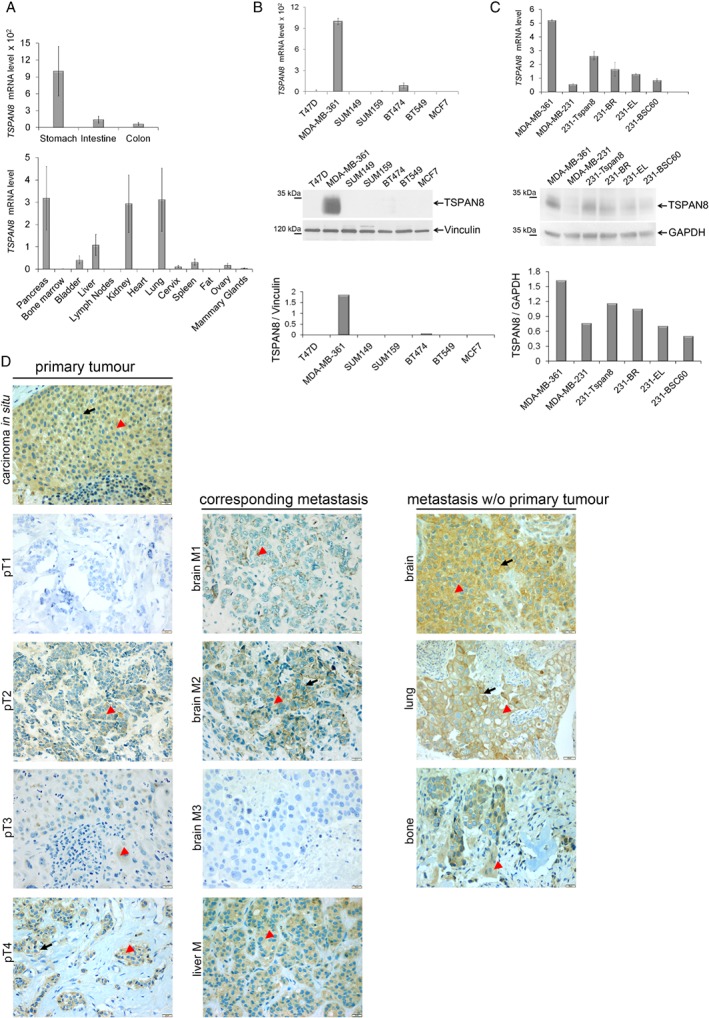
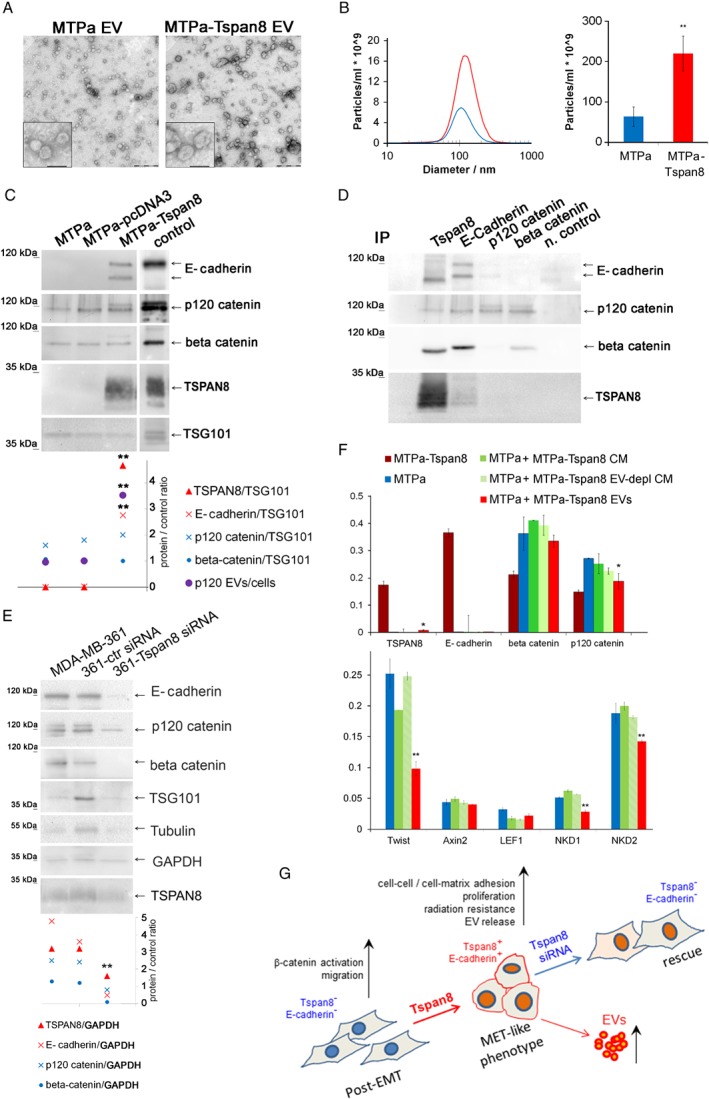
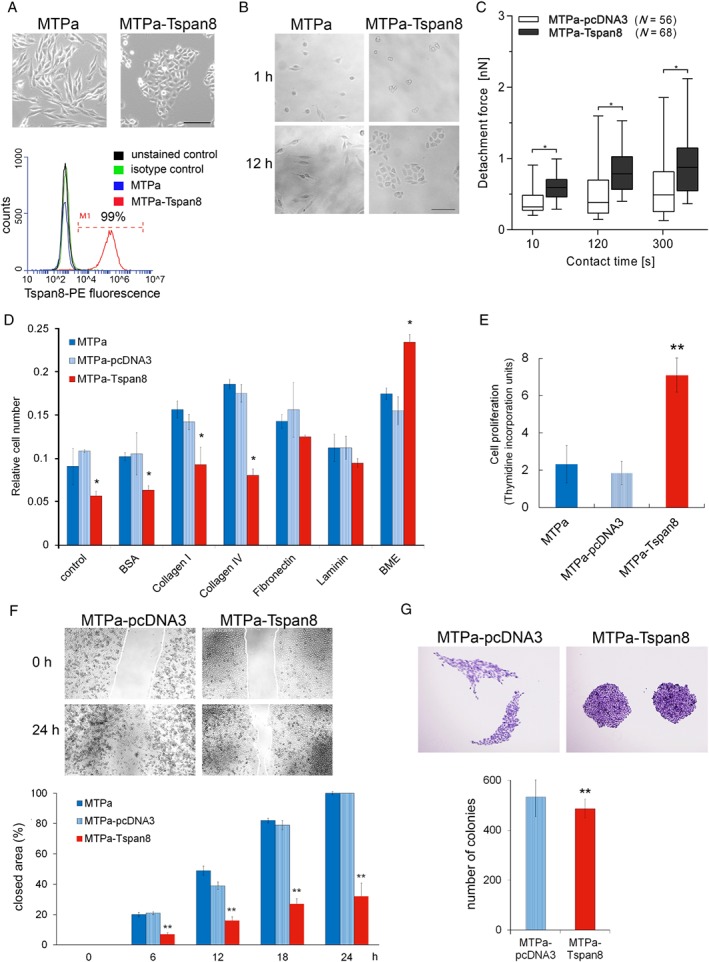
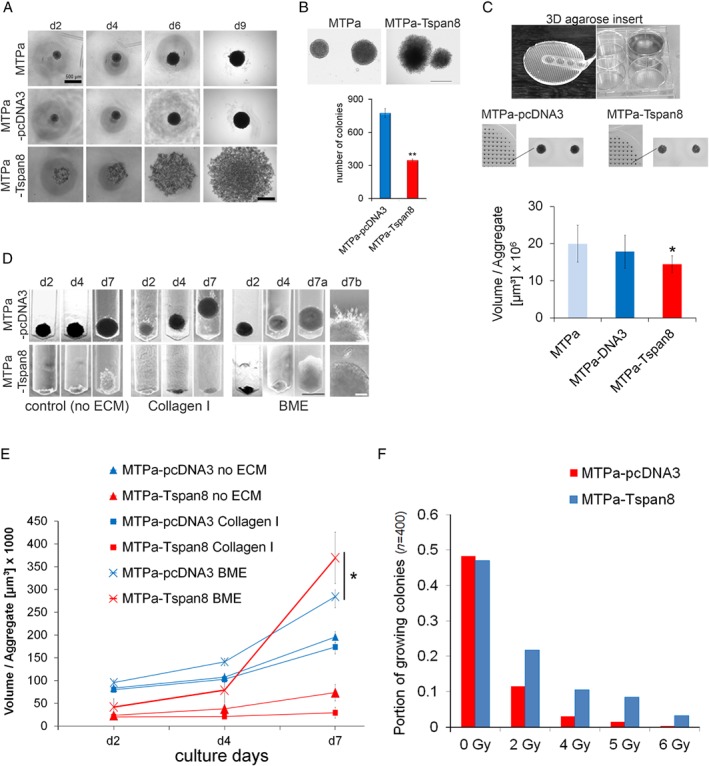
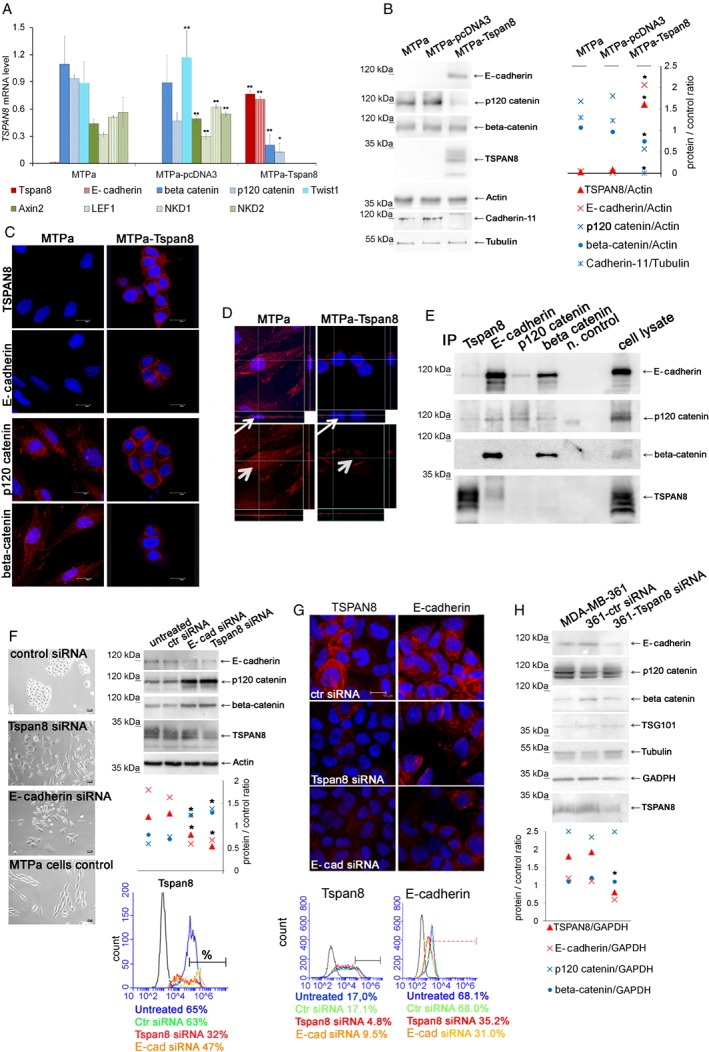
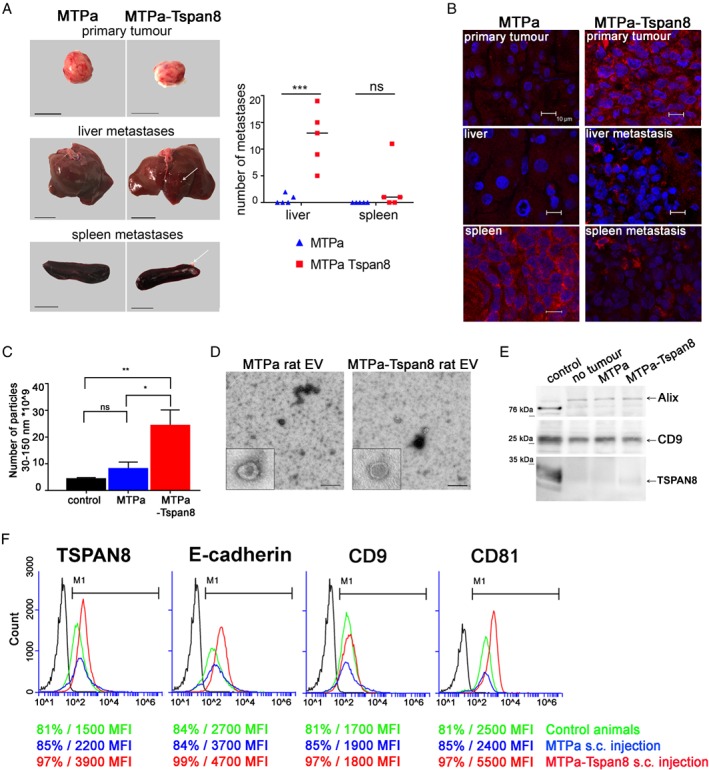
Tspan8 exhibits a functional role in many cancer types including pancreatic, colorectal, oesophagus carcinoma, and melanoma. We present a first study on the expression and function of Tspan8 in breast cancer. Tspan8 protein was present in the majority of human primary breast cancer lesions and metastases in the brain, bone, lung, and liver. In a syngeneic rat breast cancer model, Tspan8 tumours formed multiple liver and spleen metastases, while Tspan8 tumours exhibited a significantly diminished ability to metastasise, indicating a role of Tspan8 in metastases. Addressing the underlying molecular mechanisms, we discovered that Tspan8 can mediate up-regulation of E-cadherin and down-regulation of Twist, p120-catenin, and β-catenin target genes accompanied by the change of cell phenotype, resembling the mesenchymal-epithelial transition. Furthermore, Tspan8 cells exhibited enhanced cell-cell adhesion, diminished motility, and decreased sensitivity to irradiation. As a regulator of the content and function of extracellular vesicles (EVs), Tspan8 mediated a several-fold increase in EV number in cell culture and the circulation of tumour-bearing animals. We observed increased protein levels of E-cadherin and p120-catenin in these EVs; furthermore, Tspan8 and p120-catenin were co-immunoprecipitated, indicating that they may interact with each other. Altogether, our findings show the presence of Tspan8 in breast cancer primary lesion and metastases and indicate its role as a regulator of cell behaviour and EV release in breast cancer. © 2019 The Authors. The Journal of Pathology published by John Wiley & Sons Ltd on behalf of Pathological Society of Great Britain and Ireland.
Tspan8 在多种癌症类型中具有功能作用,包括胰腺癌、结直肠癌、食管癌和黑色素瘤。我们首次研究了 Tspan8 在乳腺癌中的表达和功能。Tspan8 蛋白存在于大多数人类原发性乳腺癌病变和脑、骨、肺和肝转移灶中。在同基因大鼠乳腺癌模型中,Tspan8 肿瘤形成了多个肝和脾转移灶,而 Tspan8 肿瘤的转移能力明显降低,表明 Tspan8 在转移中起作用。为了研究潜在的分子机制,我们发现 Tspan8 可以介导 E-钙粘蛋白的上调和 Twist、p120-连环蛋白和 β-连环蛋白靶基因的下调,并伴有细胞表型的改变,类似于间质-上皮转化。此外,Tspan8 细胞表现出增强的细胞-细胞粘附、降低的迁移能力和对辐射的敏感性降低。作为细胞外囊泡(EVs)含量和功能的调节剂,Tspan8 在细胞培养和荷瘤动物的循环中使 EV 数量增加了几倍。我们观察到这些 EV 中的 E-钙粘蛋白和 p120-连环蛋白的蛋白水平增加;此外,Tspan8 和 p120-连环蛋白被共同免疫沉淀,表明它们可能相互作用。总之,我们的研究结果表明 Tspan8 存在于乳腺癌原发性病变和转移灶中,并表明其作为乳腺癌细胞行为和 EV 释放的调节剂的作用。