• 文献检索
  • 文档翻译
  • 深度研究
  • 学术资讯
  • Suppr Zotero 插件Zotero 插件
  • 邀请有礼
  • 套餐&价格
  • 历史记录
应用&插件
Suppr Zotero 插件Zotero 插件浏览器插件Mac 客户端Windows 客户端微信小程序
定价
高级版会员购买积分包购买API积分包
服务
文献检索文档翻译深度研究API 文档MCP 服务
关于我们
关于 Suppr公司介绍联系我们用户协议隐私条款
关注我们

Suppr 超能文献

核心技术专利:CN118964589B侵权必究
粤ICP备2023148730 号-1Suppr @ 2026

文献检索

告别复杂PubMed语法,用中文像聊天一样搜索,搜遍4000万医学文献。AI智能推荐,让科研检索更轻松。

立即免费搜索

文件翻译

保留排版,准确专业,支持PDF/Word/PPT等文件格式,支持 12+语言互译。

免费翻译文档

深度研究

AI帮你快速写综述,25分钟生成高质量综述,智能提取关键信息,辅助科研写作。

立即免费体验

靶向迷走神经刺激用于中风后的康复治疗

Targeted Vagus Nerve Stimulation for Rehabilitation After Stroke.

作者信息

Engineer Navzer D, Kimberley Teresa J, Prudente Cecília N, Dawson Jesse, Tarver W Brent, Hays Seth A

机构信息

MicroTransponder, Inc., Austin, TX, United States.

Department of Physical Therapy, School of Health and Rehabilitation Sciences, MGH Institute of Health Professions, Boston, MA, United States.

出版信息

Front Neurosci. 2019 Mar 29;13:280. doi: 10.3389/fnins.2019.00280. eCollection 2019.

DOI:10.3389/fnins.2019.00280
PMID:30983963
原文链接:https://pmc.ncbi.nlm.nih.gov/articles/PMC6449801/
Abstract

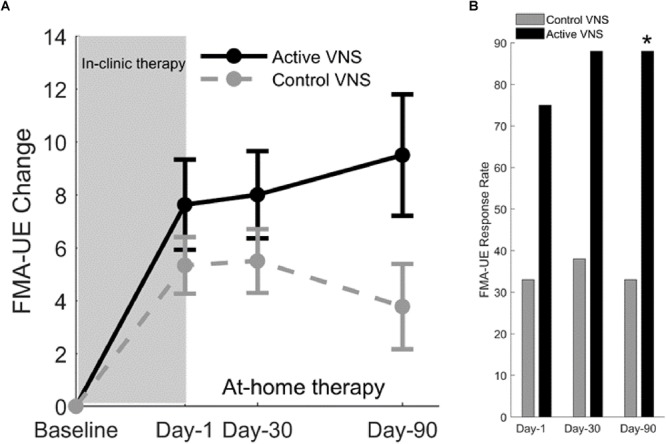
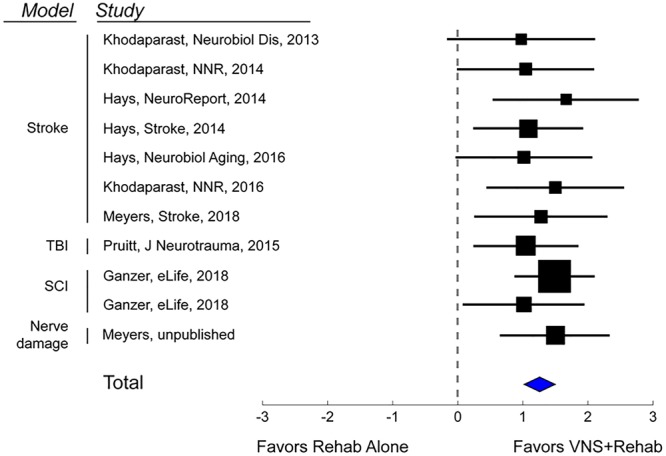
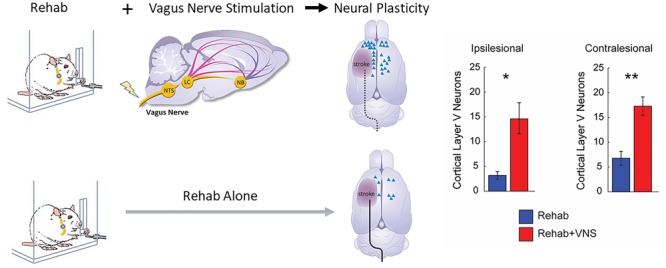
Stroke is a leading cause of disability worldwide, and in approximately 60% of individuals, upper limb deficits persist 6 months after stroke. These deficits adversely affect the functional use of the upper limb and restrict participation in day to day activities. An important goal of stroke rehabilitation is to improve the quality of life by enhancing functional independence and participation in activities. Since upper limb deficits are one of the best predictors of quality of life after stroke, effective interventions targeting these deficits may represent a means to improve quality of life. An increased understanding of the neurobiological processes underlying stroke recovery has led to the development of targeted approaches to improve motor deficits. One such targeted strategy uses brief bursts of Vagus Nerve Stimulation (VNS) paired with rehabilitation to enhance plasticity and support recovery of upper limb function after chronic stroke. Stimulation of the vagus nerve triggers release of plasticity promoting neuromodulators, such as acetylcholine and norepinephrine, throughout the cortex. Timed engagement of neuromodulators concurrent with motor training drives task-specific plasticity in the motor cortex to improve function and provides the basis for paired VNS therapy. A number of studies in preclinical models of ischemic stroke demonstrated that VNS paired with rehabilitative training significantly improved the recovery of forelimb motor function compared to rehabilitative training without VNS. The improvements were associated with synaptic reorganization of cortical motor networks and recruitment of residual motor neurons controlling the impaired forelimb, demonstrating the putative neurobiological mechanisms underlying recovery of motor function. These preclinical studies provided the basis for conducting two multi-site, randomized controlled pilot trials in individuals with moderate to severe upper limb weakness after chronic ischemic stroke. In both studies, VNS paired with rehabilitation improved motor deficits compared to rehabilitation alone. The trials provided support for a 120-patient pivotal study designed to evaluate the efficacy of paired VNS therapy in individuals with chronic ischemic stroke. This manuscript will discuss the neurobiological rationale for VNS therapy, provide an in-depth discussion of both animal and human studies of VNS therapy for stroke, and outline the challenges and opportunities for the future use of VNS therapy.

摘要

中风是全球致残的主要原因,约60%的中风患者在中风6个月后上肢功能仍有缺陷。这些缺陷会对上肢的功能使用产生不利影响,并限制日常活动的参与。中风康复的一个重要目标是通过增强功能独立性和参与活动来提高生活质量。由于上肢缺陷是中风后生活质量的最佳预测指标之一,针对这些缺陷的有效干预措施可能是提高生活质量的一种手段。对中风恢复背后神经生物学过程的深入了解,促使了旨在改善运动缺陷的针对性方法的发展。一种这样的靶向策略是使用短暂的迷走神经刺激(VNS)与康复训练相结合,以增强可塑性并支持慢性中风后上肢功能的恢复。刺激迷走神经会触发可塑性促进神经调节剂(如乙酰胆碱和去甲肾上腺素)在整个皮层的释放。神经调节剂与运动训练同时定时参与,可驱动运动皮层中特定任务的可塑性,从而改善功能,并为配对VNS治疗提供了基础。在缺血性中风的临床前模型中进行的多项研究表明,与无VNS的康复训练相比,VNS与康复训练相结合能显著改善前肢运动功能的恢复。这些改善与皮层运动网络的突触重组以及控制受损前肢的残余运动神经元的募集有关,证明了运动功能恢复背后的假定神经生物学机制。这些临床前研究为在慢性缺血性中风后有中度至重度上肢无力的个体中进行两项多中心、随机对照试点试验提供了基础。在两项研究中,与单独的康复训练相比,VNS与康复训练相结合改善了运动缺陷。这些试验为一项旨在评估配对VNS治疗对慢性缺血性中风患者疗效的120例患者的关键研究提供了支持。本手稿将讨论VNS治疗的神经生物学原理,深入讨论VNS治疗中风的动物和人体研究,并概述VNS治疗未来应用的挑战和机遇。
https://cdn.ncbi.nlm.nih.gov/pmc/blobs/e237/6449801/a76747e6f458/fnins-13-00280-g006.jpg
https://cdn.ncbi.nlm.nih.gov/pmc/blobs/e237/6449801/260abdb4db27/fnins-13-00280-g001.jpg
https://cdn.ncbi.nlm.nih.gov/pmc/blobs/e237/6449801/74c1b60700f2/fnins-13-00280-g002.jpg
https://cdn.ncbi.nlm.nih.gov/pmc/blobs/e237/6449801/5a25e8e915c6/fnins-13-00280-g003.jpg
https://cdn.ncbi.nlm.nih.gov/pmc/blobs/e237/6449801/917c427bc589/fnins-13-00280-g004.jpg
https://cdn.ncbi.nlm.nih.gov/pmc/blobs/e237/6449801/0d92ca67f2ff/fnins-13-00280-g005.jpg
https://cdn.ncbi.nlm.nih.gov/pmc/blobs/e237/6449801/a76747e6f458/fnins-13-00280-g006.jpg
https://cdn.ncbi.nlm.nih.gov/pmc/blobs/e237/6449801/260abdb4db27/fnins-13-00280-g001.jpg
https://cdn.ncbi.nlm.nih.gov/pmc/blobs/e237/6449801/74c1b60700f2/fnins-13-00280-g002.jpg
https://cdn.ncbi.nlm.nih.gov/pmc/blobs/e237/6449801/5a25e8e915c6/fnins-13-00280-g003.jpg
https://cdn.ncbi.nlm.nih.gov/pmc/blobs/e237/6449801/917c427bc589/fnins-13-00280-g004.jpg
https://cdn.ncbi.nlm.nih.gov/pmc/blobs/e237/6449801/0d92ca67f2ff/fnins-13-00280-g005.jpg
https://cdn.ncbi.nlm.nih.gov/pmc/blobs/e237/6449801/a76747e6f458/fnins-13-00280-g006.jpg

相似文献

1
Targeted Vagus Nerve Stimulation for Rehabilitation After Stroke.靶向迷走神经刺激用于中风后的康复治疗
Front Neurosci. 2019 Mar 29;13:280. doi: 10.3389/fnins.2019.00280. eCollection 2019.
2
Study protocol for a pivotal randomised study assessing vagus nerve stimulation during rehabilitation for improved upper limb motor function after stroke.一项关键随机研究的研究方案,该研究评估在中风后康复期间进行迷走神经刺激以改善上肢运动功能。
Eur Stroke J. 2019 Dec;4(4):363-377. doi: 10.1177/2396987319855306. Epub 2019 Jun 17.
3
Vagus Nerve Stimulation Enhances Stable Plasticity and Generalization of Stroke Recovery.迷走神经刺激增强中风恢复的稳定可塑性和泛化能力。
Stroke. 2018 Mar;49(3):710-717. doi: 10.1161/STROKEAHA.117.019202. Epub 2018 Jan 25.
4
Vagus Nerve Stimulation During Rehabilitative Training Improves Forelimb Recovery After Chronic Ischemic Stroke in Rats.康复训练期间的迷走神经刺激可改善大鼠慢性缺血性中风后的前肢恢复。
Neurorehabil Neural Repair. 2016 Aug;30(7):676-84. doi: 10.1177/1545968315616494. Epub 2015 Nov 4.
5
Vagus Nerve Stimulation as a Potential Adjuvant to Rehabilitation for Post-stroke Motor Speech Disorders.迷走神经刺激作为中风后运动性言语障碍康复的潜在辅助治疗方法
Front Neurosci. 2021 Aug 19;15:715928. doi: 10.3389/fnins.2021.715928. eCollection 2021.
6
Vagus nerve stimulation during rehabilitative training enhances recovery of forelimb function after ischemic stroke in aged rats.在康复训练期间进行迷走神经刺激可增强老年大鼠缺血性中风后前肢功能的恢复。
Neurobiol Aging. 2016 Jul;43:111-8. doi: 10.1016/j.neurobiolaging.2016.03.030. Epub 2016 Apr 7.
7
Safety, Feasibility, and Efficacy of Vagus Nerve Stimulation Paired With Upper-Limb Rehabilitation After Ischemic Stroke.缺血性中风后迷走神经刺激联合上肢康复的安全性、可行性和有效性
Stroke. 2016 Jan;47(1):143-50. doi: 10.1161/STROKEAHA.115.010477. Epub 2015 Dec 8.
8
A limited range of vagus nerve stimulation intensities produce motor cortex reorganization when delivered during training.在训练期间施加刺激时,有限范围的迷走神经刺激强度会产生运动皮层重组。
Behav Brain Res. 2020 Aug 5;391:112705. doi: 10.1016/j.bbr.2020.112705. Epub 2020 May 28.
9
Vagus Nerve Stimulation Paired With Rehabilitative Training Enhances Motor Recovery After Bilateral Spinal Cord Injury to Cervical Forelimb Motor Pools.迷走神经刺激联合康复训练增强双侧颈段脊髓损伤前肢运动池后的运动功能恢复。
Neurorehabil Neural Repair. 2020 Mar;34(3):200-209. doi: 10.1177/1545968319895480. Epub 2020 Jan 22.
10
Vagus nerve stimulation during rehabilitative training improves forelimb strength following ischemic stroke.在康复训练期间进行迷走神经刺激可改善缺血性脑卒中后的前肢力量。
Neurobiol Dis. 2013 Dec;60:80-8. doi: 10.1016/j.nbd.2013.08.002. Epub 2013 Aug 15.

引用本文的文献

1
Optimal Treatment Strategies of AIoT Based Wearable Devices for Stroke Walking in the Rehabilitation Training of Ischemic Stroke Patients: A Real-World Cohort Study Using Propensity-Score Matched Analysis.基于人工智能物联网的可穿戴设备在缺血性中风患者康复训练中对中风后行走的最佳治疗策略:一项使用倾向得分匹配分析的真实世界队列研究
Int J Gen Med. 2025 Aug 20;18:4587-4599. doi: 10.2147/IJGM.S538424. eCollection 2025.
2
Transcranial focused ultrasound to nucleus accumbens reverses fentanyl-induced conditioned place preference in rats.经颅聚焦超声作用于伏隔核可逆转大鼠中芬太尼诱导的条件性位置偏爱。
PLoS One. 2025 Aug 22;20(8):e0329748. doi: 10.1371/journal.pone.0329748. eCollection 2025.
3

本文引用的文献

1
Enhancing plasticity in central networks improves motor and sensory recovery after nerve damage.增强中枢网络的可塑性可改善神经损伤后的运动和感觉功能恢复。
Nat Commun. 2019 Dec 19;10(1):5782. doi: 10.1038/s41467-019-13695-0.
2
Vagus nerve stimulation for primary headache disorders: An anatomical review to explain a clinical phenomenon.迷走神经刺激治疗原发性头痛障碍:解释一种临床现象的解剖学综述。
Cephalalgia. 2019 Aug;39(9):1180-1194. doi: 10.1177/0333102419833076. Epub 2019 Feb 20.
3
Vagus nerve stimulation modulates the cranial trigeminal autonomic reflex.
Vagus nerve stimulation modulates information representation of sustained activity in layer specific manner in the rat auditory cortex.
迷走神经刺激以层特异性方式调节大鼠听觉皮层中持续活动的信息表征。
Front Neural Circuits. 2025 Jul 23;19:1569158. doi: 10.3389/fncir.2025.1569158. eCollection 2025.
4
Vibrotactile auricular vagus nerve stimulation alters limbic system connectivity in humans: A pilot study.振动触觉耳迷走神经刺激改变人类边缘系统连接性:一项初步研究。
PLoS One. 2025 May 29;20(5):e0310917. doi: 10.1371/journal.pone.0310917. eCollection 2025.
5
Non-invasive therapeutics for neurotrauma: a mechanistic overview.神经创伤的非侵入性治疗:机制概述。
Front Neurol. 2025 May 14;16:1560777. doi: 10.3389/fneur.2025.1560777. eCollection 2025.
6
Closed-loop vagus nerve stimulation aids recovery from spinal cord injury.闭环迷走神经刺激有助于脊髓损伤后的恢复。
Nature. 2025 May 21. doi: 10.1038/s41586-025-09028-5.
7
Vagus Nerve Stimulation in Stroke Management: Brief Review of Evolution and Present Applications Paired with Rehabilitation.迷走神经刺激在卒中管理中的应用:结合康复的发展历程与当前应用简述
Brain Sci. 2025 Mar 27;15(4):346. doi: 10.3390/brainsci15040346.
8
Vagus nerve stimulation as a predictive coding modulator that enhances feedforward over feedback transmission.迷走神经刺激作为一种预测编码调制器,可增强前馈而非反馈传递。
Front Neural Circuits. 2025 Apr 14;19:1568655. doi: 10.3389/fncir.2025.1568655. eCollection 2025.
9
Two decades of vagus nerve stimulation for stroke: a bibliometric analysis.二十年的迷走神经刺激治疗中风:一项文献计量分析
Front Neurol. 2025 Apr 4;16:1531127. doi: 10.3389/fneur.2025.1531127. eCollection 2025.
10
Advice for translational neuroscience: move deliberately and build things.转化神经科学的建议:审慎前行,创造成果。
Bioelectron Med. 2025 Feb 3;11(1):3. doi: 10.1186/s42234-025-00165-w.
迷走神经刺激调节颅神经自主反射。
Ann Neurol. 2018 Dec;84(6):886-892. doi: 10.1002/ana.25366. Epub 2018 Nov 30.
4
Vagus Nerve Stimulation Paired With Upper Limb Rehabilitation After Chronic Stroke.慢性脑卒中后迷走神经刺激联合上肢康复治疗。
Stroke. 2018 Nov;49(11):2789-2792. doi: 10.1161/STROKEAHA.118.022279.
5
Practical and clinical utility of non-invasive vagus nerve stimulation (nVNS) for the acute treatment of migraine: a post hoc analysis of the randomized, sham-controlled, double-blind PRESTO trial.无创迷走神经刺激(nVNS)治疗偏头痛急性发作的实际临床应用:随机、假刺激对照、双盲 PRESTO 试验的事后分析。
J Headache Pain. 2018 Oct 19;19(1):98. doi: 10.1186/s10194-018-0928-1.
6
Transcutaneous auricular vagus nerve stimulation (taVNS) for improving oromotor function in newborns.经皮耳迷走神经刺激(taVNS)改善新生儿口面部运动功能
Brain Stimul. 2018 Sep-Oct;11(5):1198-1200. doi: 10.1016/j.brs.2018.06.009. Epub 2018 Jun 30.
7
Elderly Stroke Rehabilitation: Overcoming the Complications and Its Associated Challenges.老年中风康复:克服并发症及其相关挑战。
Curr Gerontol Geriatr Res. 2018 Jun 27;2018:9853837. doi: 10.1155/2018/9853837. eCollection 2018.
8
Cortical map plasticity as a function of vagus nerve stimulation rate.皮层图谱可塑性作为迷走神经刺激频率的函数。
Brain Stimul. 2018 Nov-Dec;11(6):1218-1224. doi: 10.1016/j.brs.2018.07.045. Epub 2018 Jul 18.
9
Transcutaneous vagal nerve stimulatio (t-VNS): An adjunctive treatment option for refractory epilepsy.经皮迷走神经刺激(t-VNS):难治性癫痫的辅助治疗选择。
Seizure. 2018 Aug;60:115-119. doi: 10.1016/j.seizure.2018.06.016. Epub 2018 Jun 18.
10
Noninvasive vagus nerve stimulation as acute therapy for migraine: The randomized PRESTO study.非侵入性迷走神经刺激作为偏头痛的急性治疗:随机 PRESTO 研究。
Neurology. 2018 Jul 24;91(4):e364-e373. doi: 10.1212/WNL.0000000000005857. Epub 2018 Jun 15.