Valim Camila P R A T, Marques Lucas M, Boggio Paulo S
Social and Cognitive Neuroscience Laboratory and Developmental Disorders Program, Center for Health and Biological Sciences, Mackenzie Presbyterian University, São Paulo, Brazil.
Front Psychol. 2019 Mar 28;10:647. doi: 10.3389/fpsyg.2019.00647. eCollection 2019.
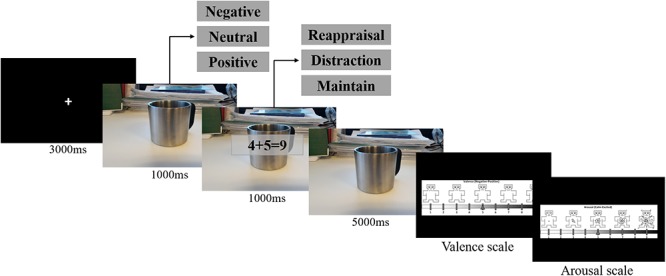
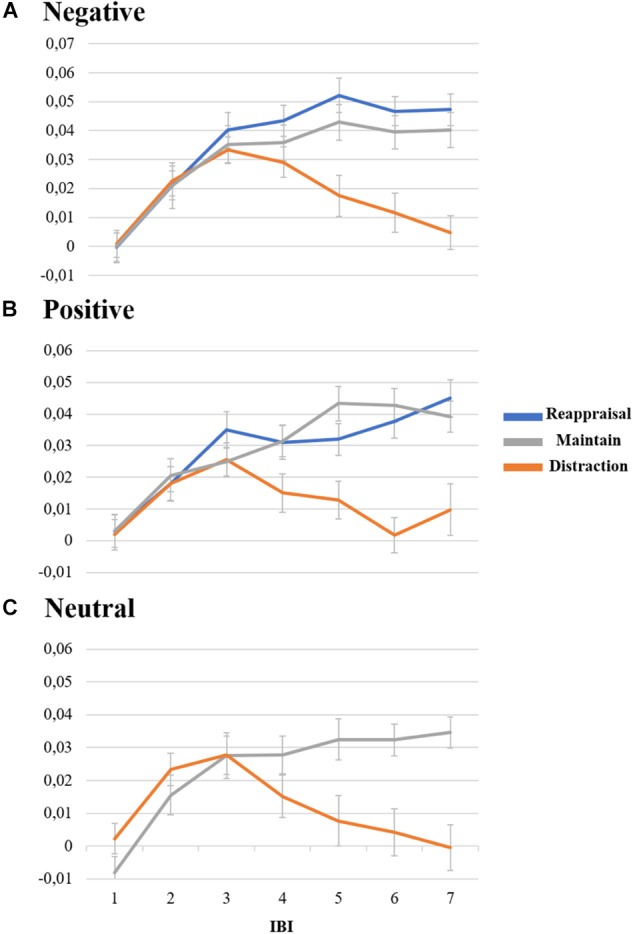
Among the various strategies for modulating the components of the emotional responses, the cognitive reappraisal and distraction are highlighted in current researches. As indicated in recent studies, the capacity for emotional regulation can be improved by mindfulness meditation practicing. This practice usually offers benefits to people's cognitive functioning and aims to improve a characteristic that is intrinsic to every human being: the ability to turn attention to the present moment. Importantly, positive emotions might also be effective on emotional regulation and several meditation practices make use of it. Thus, we aimed to compare two meditation modalities: one focused on attention only (mindfulness) and another focused-on attention toward positive emotions [Twin Hearts Meditation (THM)]. Ninety healthy subjects without any previous experience in meditation were enrolled in this experiment. Of these participants, 30 were submitted to the mindfulness practice with full attention on the observation of thoughts; 30 to the THM; and 30 to a control group (no meditation practice). After one session of meditation, all the participants completed emotional regulation task judging the valence and arousal of pictures with emotional content. In addition to the behavioral data, the participants' psychophysiological measures were recorded via electrocardiography (ECG). The results demonstrate a greater efficacy of THM in suppressing the negative valence of the negative pictures and amplifying the valence of the positive ones. No effect of meditation was observed for the ECG. Our findings indicate that contemplative meditation (THM) can positively influence the emotion regulation ability, even when performed by non-meditators and only once. However, in mindfulness meditation this same immediate effect was not found. Our findings reveal that faster effects of meditation practices can be obtained by practices that considers either the attentional processing and the positive emotions.
在调节情绪反应成分的各种策略中,认知重评和分心在当前研究中备受关注。正如最近的研究所表明的,通过正念冥想练习可以提高情绪调节能力。这种练习通常对人们的认知功能有益,旨在提高每个人都固有的一种特质:将注意力转向当下时刻的能力。重要的是,积极情绪可能对情绪调节也有效,并且一些冥想练习也利用了这一点。因此,我们旨在比较两种冥想方式:一种仅专注于注意力(正念),另一种专注于对积极情绪的注意力[双心冥想(THM)]。90名此前没有任何冥想经验的健康受试者参与了该实验。在这些参与者中,30人进行专注于观察思维的正念练习;30人进行双心冥想;30人作为对照组(不进行冥想练习)。经过一次冥想后,所有参与者完成情绪调节任务,判断带有情绪内容图片的效价和唤醒度。除了行为数据外,还通过心电图(ECG)记录参与者的心理生理指标。结果表明,双心冥想在抑制负面图片的负性效价和增强正面图片的效价方面具有更大的效果。未观察到冥想对心电图有影响。我们的研究结果表明,沉思冥想(双心冥想)即使由非冥想者进行且仅进行一次,也能对情绪调节能力产生积极影响。然而,在正念冥想中未发现同样的即时效果。我们的研究结果表明,通过考虑注意力加工和积极情绪的练习可以更快地获得冥想练习的效果。