Gao Yue, Xu Wenchun, Dou Xiaoyun, Wang Hong, Zhang Xuemei, Yang Shenghui, Liao Hongyi, Hu Xuexue, Wang Hong
Key Laboratory of Diagnostic Medicine Designated by the Ministry of Education, Chongqing Medical University, Chongqing, China.
School of Laboratory Medicine, Chongqing Medical University, Chongqing, China.
Front Microbiol. 2019 Mar 28;10:630. doi: 10.3389/fmicb.2019.00630. eCollection 2019.
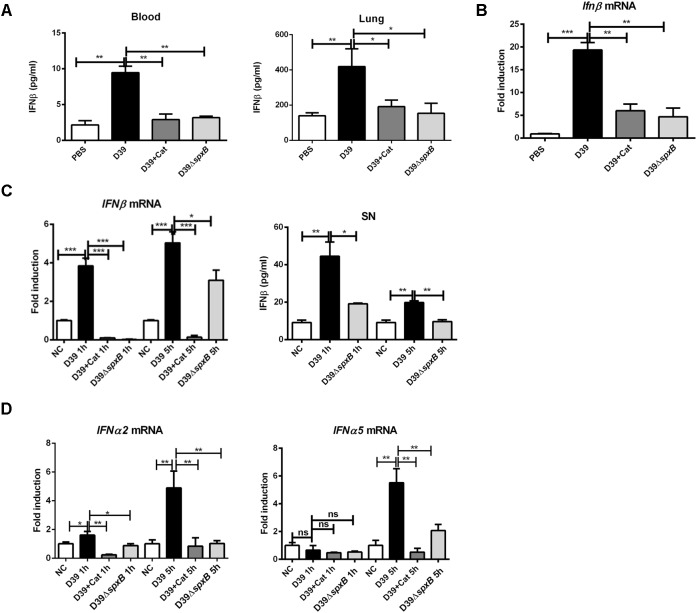
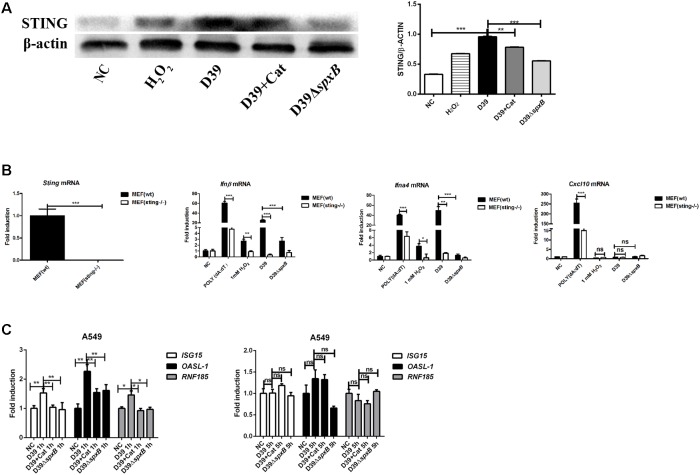
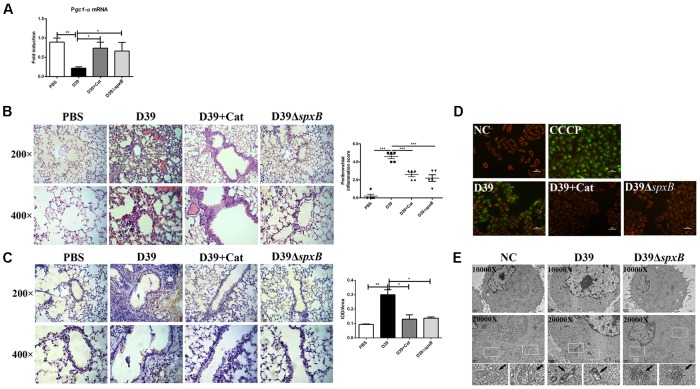
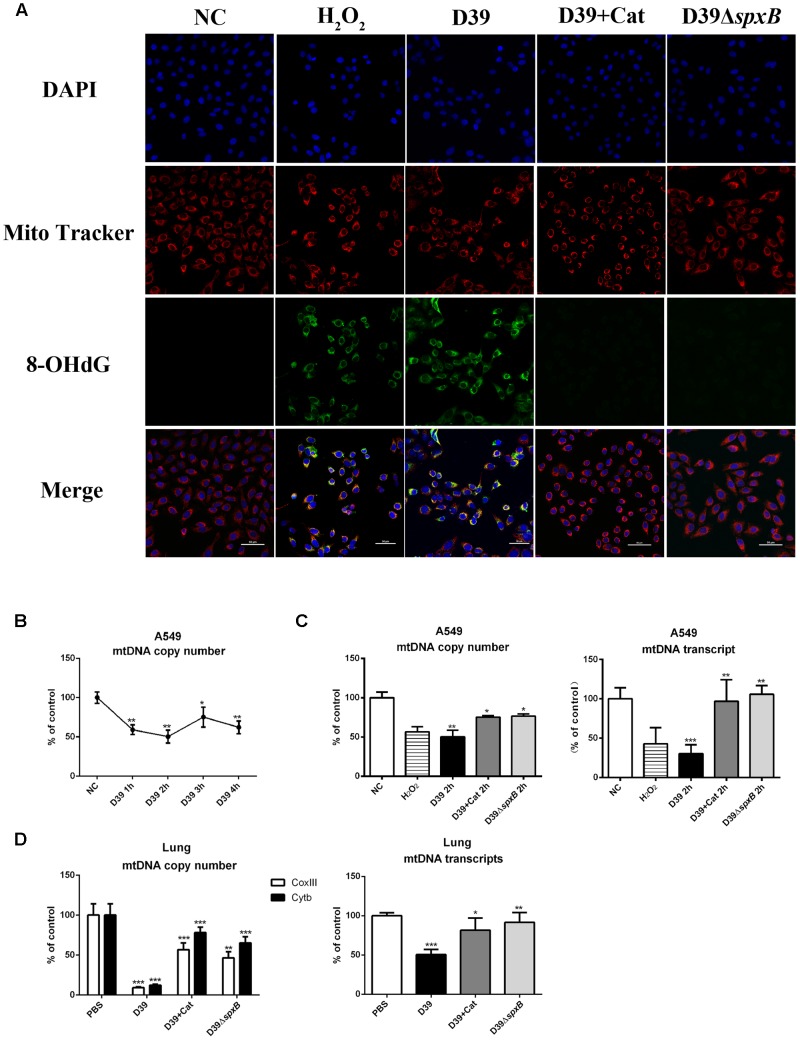
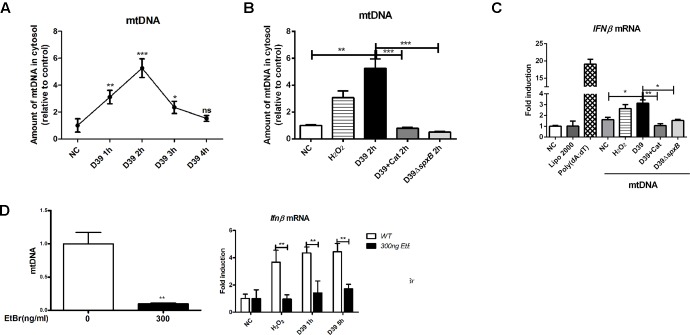
, the bacterial pathogen responsible for invasive pneumococcal diseases, is capable of producing substantial amounts of hydrogen peroxide. However, the impact of -secreted hydrogen peroxide (HO) on the host immune processes is not completely understood. Here, we demonstrated that -secreted HO caused mitochondrial damage and severe histopathological damage in mouse lung tissue. Additionally, -secreted HO caused not only oxidative damage to mitochondrial deoxyribonucleic acid (mtDNA), but also a reduction in the mtDNA content in alveolar epithelia cells. This resulted in the release of mtDNA into the cytoplasm, which subsequently induced type I interferons (IFN-I) expression. We also determined that stimulator of interferon genes (STING) signaling was probably involved in HO-inducing IFN-I expression in response to mtDNA damaged by -secreted HO. In conclusion, our study demonstrated that HO produced by resulted in mtDNA leakage from damaged mitochondria and IFN-I production in alveolar epithelia cells, and STING may be required in this process, and this is a novel mitochondrial damage mechanism by which potentiates the IFN-I cascade in infection.
引起侵袭性肺炎球菌疾病的细菌病原体能够产生大量过氧化氢。然而,该细菌分泌的过氧化氢(H₂O₂)对宿主免疫过程的影响尚未完全了解。在此,我们证明该细菌分泌的H₂O₂会导致小鼠肺组织中的线粒体损伤和严重的组织病理学损伤。此外,该细菌分泌的H₂O₂不仅对线粒体脱氧核糖核酸(mtDNA)造成氧化损伤,还会使肺泡上皮细胞中的mtDNA含量减少。这导致mtDNA释放到细胞质中,随后诱导I型干扰素(IFN-I)表达。我们还确定,干扰素基因刺激物(STING)信号通路可能参与了该细菌分泌的H₂O₂损伤mtDNA后诱导IFN-I表达的过程。总之,我们的研究表明,该细菌产生的H₂O₂导致受损线粒体的mtDNA泄漏以及肺泡上皮细胞中IFN-I的产生,并且在此过程中可能需要STING,这是一种新的线粒体损伤机制,通过该机制该细菌在感染过程中增强了IFN-I级联反应。