Giordano Luca, Ware Sarah A, Lagranha Claudia J, Kaufman Brett A
Center for Metabolism and Mitochondrial Medicine, Division of Cardiology, Department of Medicine, University of Pittsburgh, Pittsburgh, PA, USA.
Heart, Lung, and Blood Vascular Medicine Institute, University of Pittsburgh, Pittsburgh, PA, USA.
Cell Commun Signal. 2025 Apr 22;23(1):192. doi: 10.1186/s12964-025-02042-0.
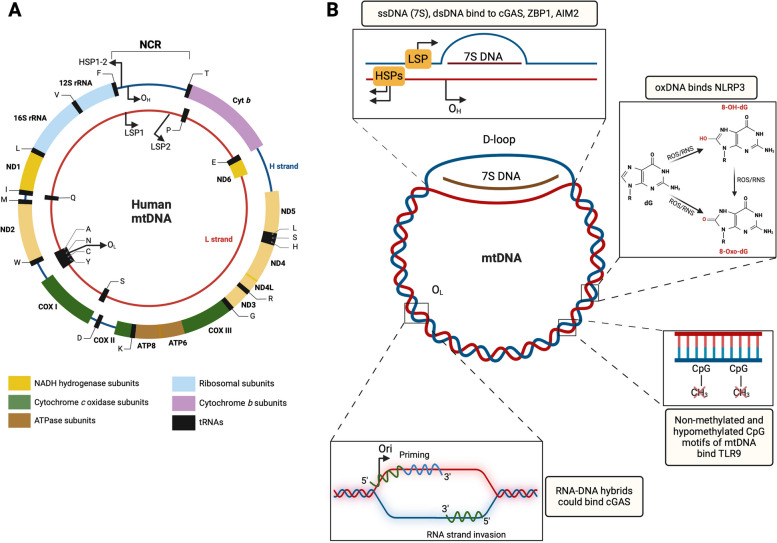
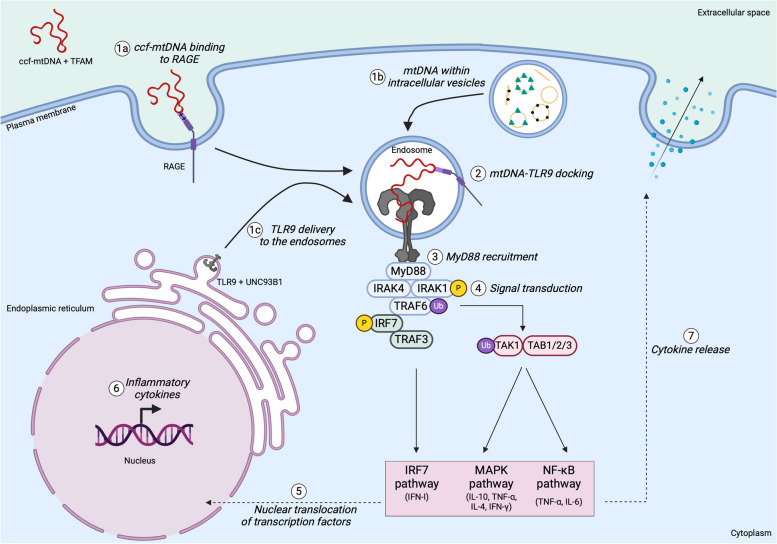
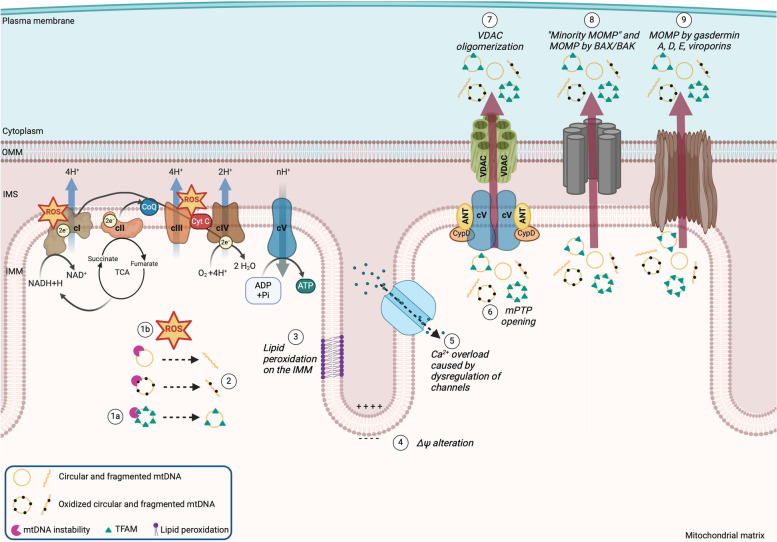
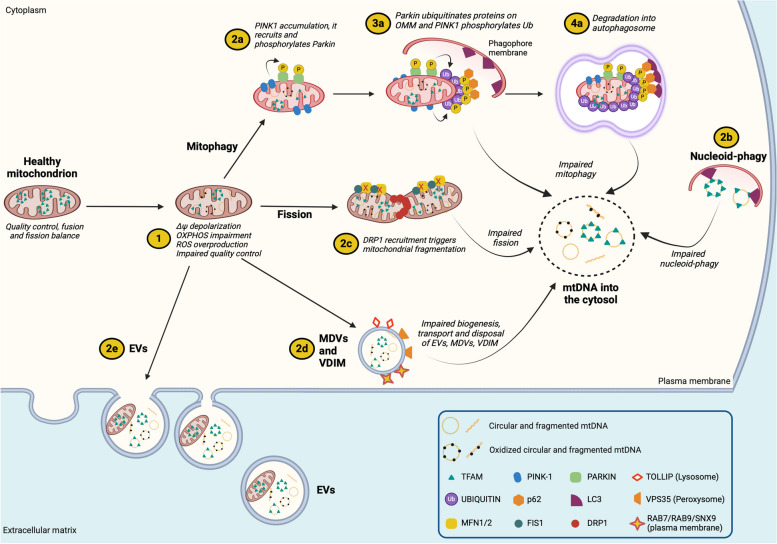
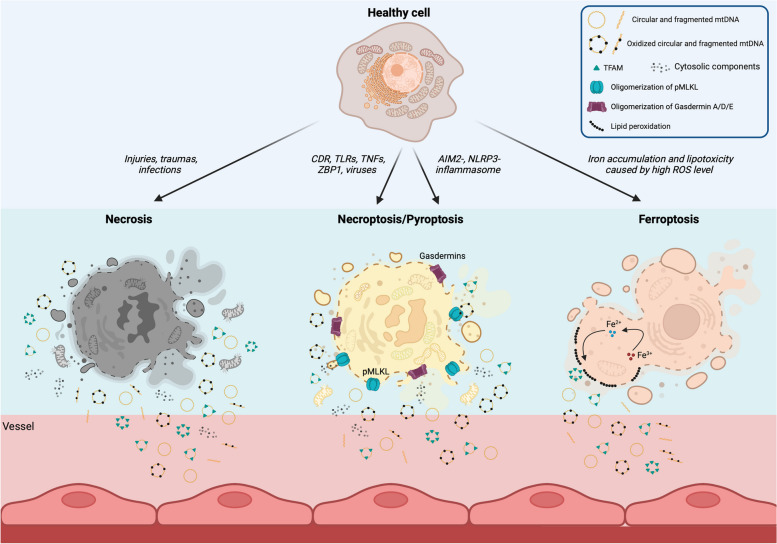
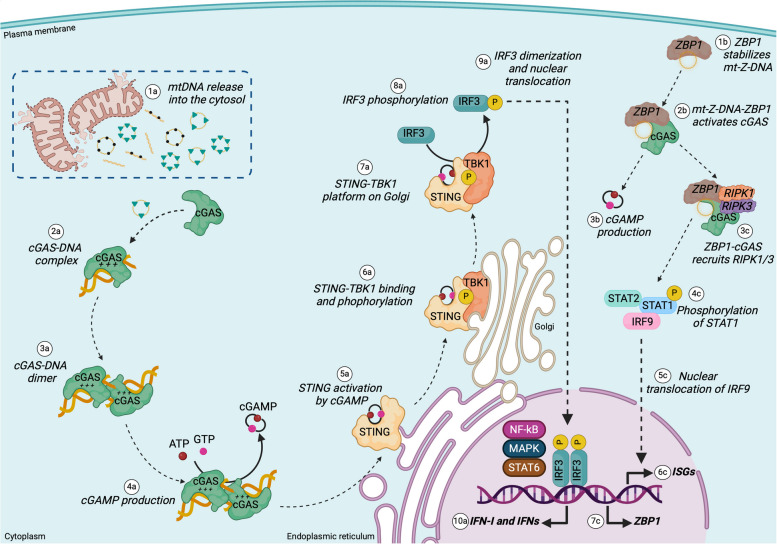
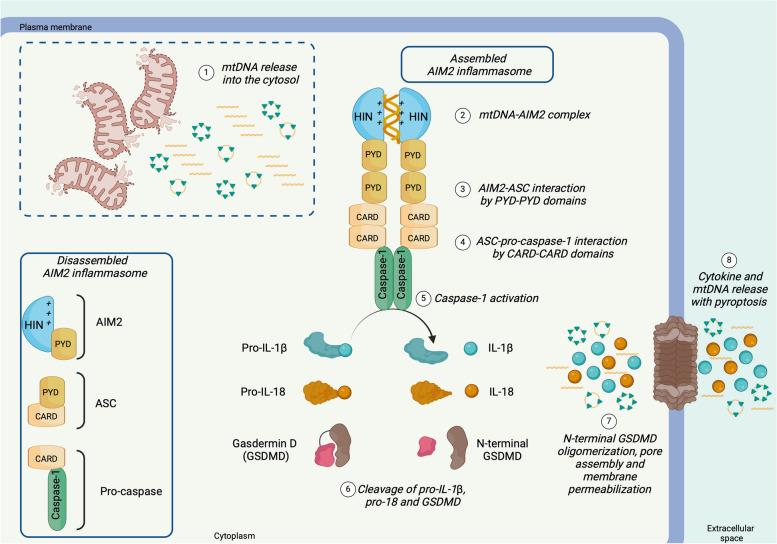
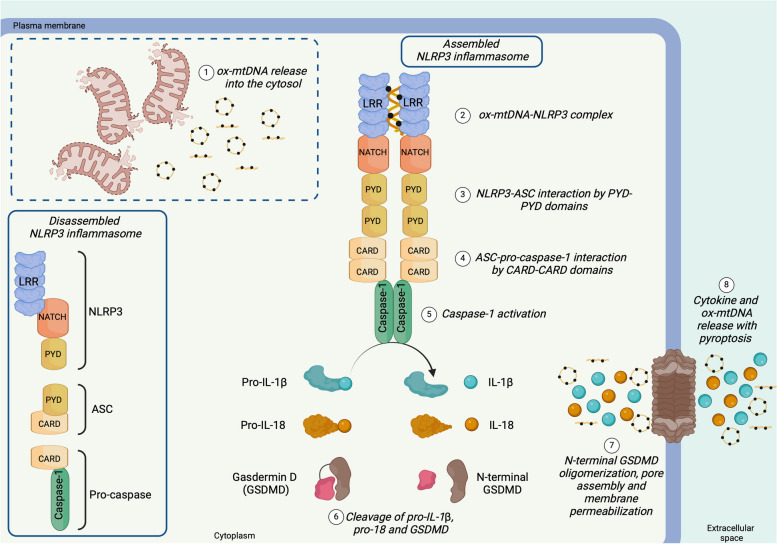
There has been a recent expansion in our understanding of DNA-sensing mechanisms. Mitochondrial dysfunction, oxidative and proteostatic stresses, instability and impaired disposal of nucleoids cause the release of mitochondrial DNA (mtDNA) from the mitochondria in several human diseases, as well as in cell culture and animal models. Mitochondrial DNA mislocalized to the cytosol and/or the extracellular compartments can trigger innate immune and inflammation responses by binding DNA-sensing receptors (DSRs). Here, we define the features that make mtDNA highly immunogenic and the mechanisms of its release from the mitochondria into the cytosol and the extracellular compartments. We describe the major DSRs that bind mtDNA such as cyclic guanosine-monophosphate-adenosine-monophosphate synthase (cGAS), Z-DNA-binding protein 1 (ZBP1), NOD-, LRR-, and PYD- domain-containing protein 3 receptor (NLRP3), absent in melanoma 2 (AIM2) and toll-like receptor 9 (TLR9), and their downstream signaling cascades. We summarize the key findings, novelties, and gaps of mislocalized mtDNA as a driving signal of immune responses in vascular, metabolic, kidney, lung, and neurodegenerative diseases, as well as viral and bacterial infections. Finally, we define common strategies to induce or inhibit mtDNA release and propose challenges to advance the field.
最近,我们对DNA传感机制的理解有了进一步拓展。在一些人类疾病以及细胞培养和动物模型中,线粒体功能障碍、氧化应激和蛋白质稳态应激、核仁的不稳定性及清除受损会导致线粒体DNA(mtDNA)从线粒体释放。定位错误到细胞质和/或细胞外区室的线粒体DNA可通过结合DNA传感受体(DSR)触发先天性免疫和炎症反应。在此,我们确定了使mtDNA具有高度免疫原性的特征以及其从线粒体释放到细胞质和细胞外区室的机制。我们描述了结合mtDNA的主要DSR,如环磷酸鸟苷-磷酸腺苷合酶(cGAS)、Z-DNA结合蛋白1(ZBP1)、含NOD、LRR和PYD结构域的蛋白3受体(NLRP3)、黑色素瘤缺乏因子2(AIM2)和Toll样受体9(TLR9),以及它们的下游信号级联反应。我们总结了定位错误的mtDNA作为血管、代谢、肾脏、肺部和神经退行性疾病以及病毒和细菌感染中免疫反应驱动信号的关键发现、新进展和空白。最后,我们确定了诱导或抑制mtDNA释放的常见策略,并提出了推动该领域发展的挑战。