Department of Medical Microbiology and Infection Prevention, University Medical Center Groningen, University of Groningen, Groningen, Netherlands.
Department of Microbiology and Immunology, Institute of Biomedicine, Gothenburg University, Gothenburg, Sweden.
Front Immunol. 2019 Mar 29;10:646. doi: 10.3389/fimmu.2019.00646. eCollection 2019.
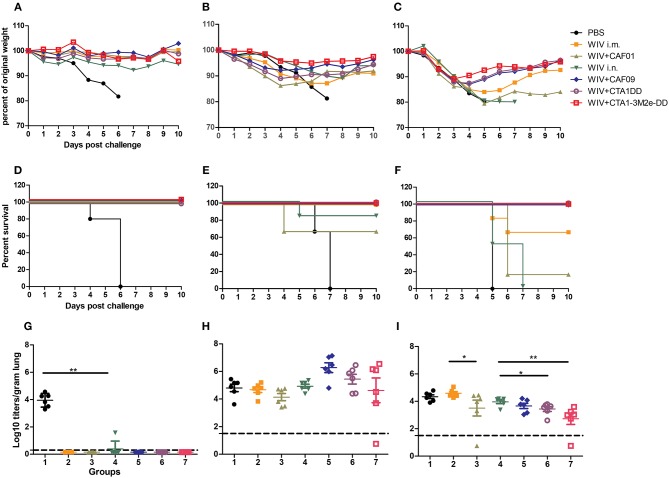
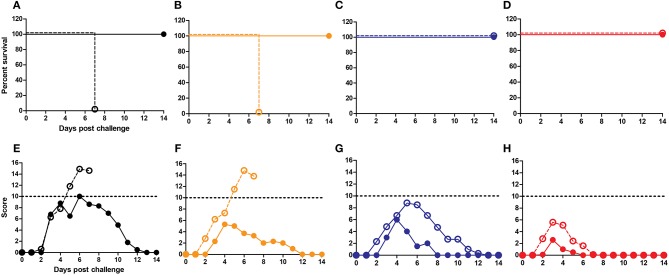
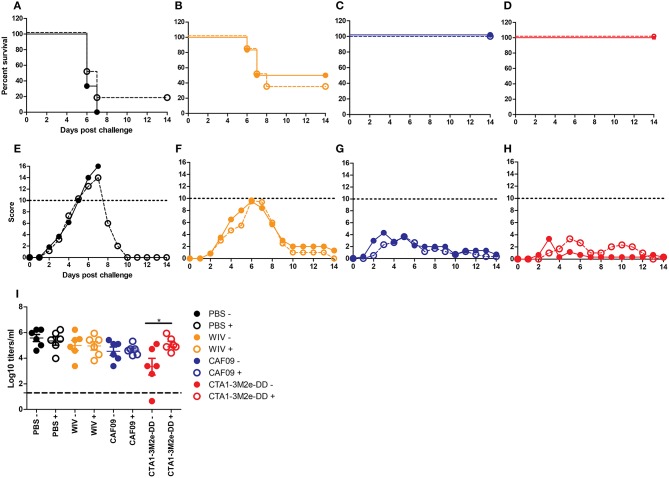
Adjuvanted whole inactivated virus (WIV) influenza vaccines show promise as broadly protective influenza vaccine candidates. Using WIV as basis we assessed the relative efficacy of different adjuvants by carrying out a head-to-head comparison of the liposome-based adjuvants CAF01 and CAF09 and the protein-based adjuvants CTA1-DD and CTA1-3M2e-DD and evaluated whether one or more of the adjuvants could induce broadly protective immunity. Mice were immunized with WIV prepared from A/Puerto Rico/8/34 (H1N1) virus intramuscularly with or without CAF01 or intranasally with or without CAF09, CTA1-DD, or CTA1-3M2e-DD, followed by challenge with homologous, heterologous or heterosubtypic virus. In general, intranasal immunizations were significantly more effective than intramuscular immunizations in inducing virus-specific serum-IgG, mucosal-IgA, and splenic IFNγ-producing CD4 T cells. Intranasal immunizations with adjuvanted vaccines afforded strong cross-protection with milder clinical symptoms and better control of virus load in lungs. Mechanistic studies indicated that non-neutralizing IgG antibodies and CD4 T cells were responsible for the improved cross-protection while IgA antibodies were dispensable. The role of CD4 T cells was particularly pronounced for CTA1-3M2e-DD adjuvanted vaccine as evidenced by CD4 T cell-dependent reduction of lung virus titers and clinical symptoms. Thus, intranasally administered WIV in combination with effective mucosal adjuvants appears to be a promising broadly protective influenza vaccine candidate.
佐剂全灭活病毒(WIV)流感疫苗有望成为广泛保护性流感疫苗候选物。我们以 WIV 为基础,通过对头对头比较基于脂质体的佐剂 CAF01 和 CAF09 以及基于蛋白的佐剂 CTA1-DD 和 CTA1-3M2e-DD,评估了不同佐剂的相对功效,并评估了一种或多种佐剂是否能诱导广泛保护性免疫。我们通过肌肉内注射或不注射 CAF01 或鼻内注射或不注射 CAF09、CTA1-DD 或 CTA1-3M2e-DD 用 A/Puerto Rico/8/34(H1N1)病毒制备的 WIV 免疫小鼠,然后用同源、异源或异亚型病毒进行攻毒。一般来说,鼻内免疫比肌肉内免疫更有效地诱导病毒特异性血清 IgG、粘膜 IgA 和脾 IFNγ产生的 CD4 T 细胞。用佐剂疫苗进行鼻内免疫可提供强大的交叉保护,症状较轻,肺部病毒载量控制较好。机制研究表明,非中和 IgG 抗体和 CD4 T 细胞是改善交叉保护的原因,而 IgA 抗体则是可有可无的。CD4 T 细胞在 CTA1-3M2e-DD 佐剂疫苗中的作用尤为明显,因为 CD4 T 细胞依赖性降低了肺部病毒滴度和临床症状。因此,鼻内给予 WIV 联合有效的粘膜佐剂似乎是一种有前途的广泛保护性流感疫苗候选物。