NHC Key Laboratory of Radiobiology, School of Public Health, Jilin University, Changchun 130021, China.
Oxid Med Cell Longev. 2019 Mar 7;2019:4528616. doi: 10.1155/2019/4528616. eCollection 2019.
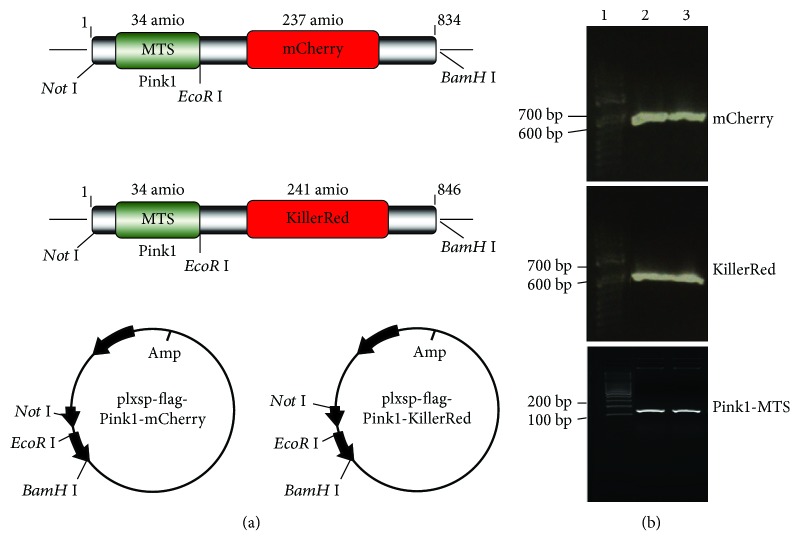
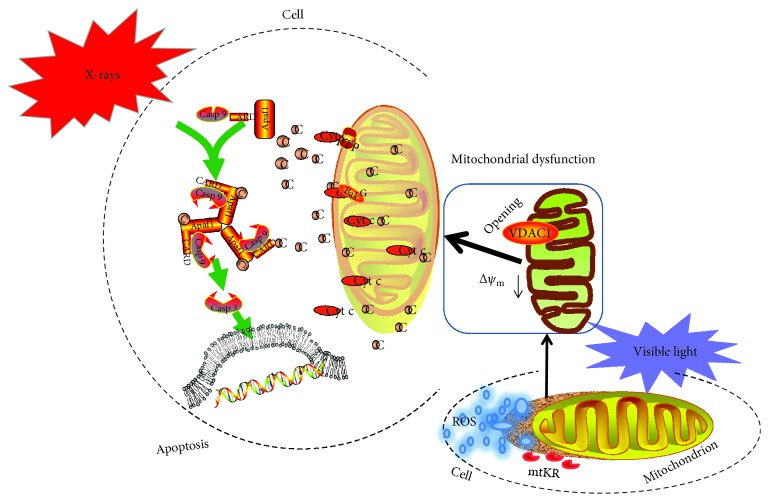
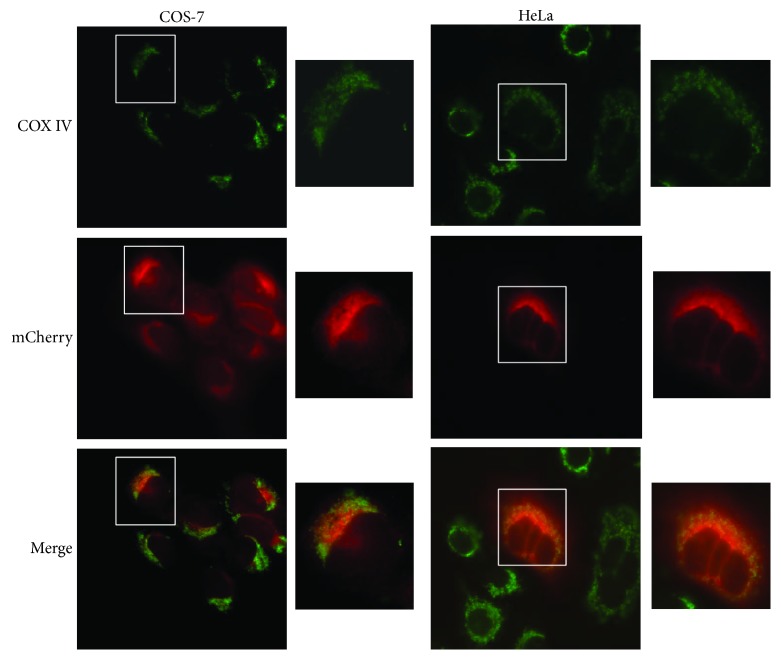
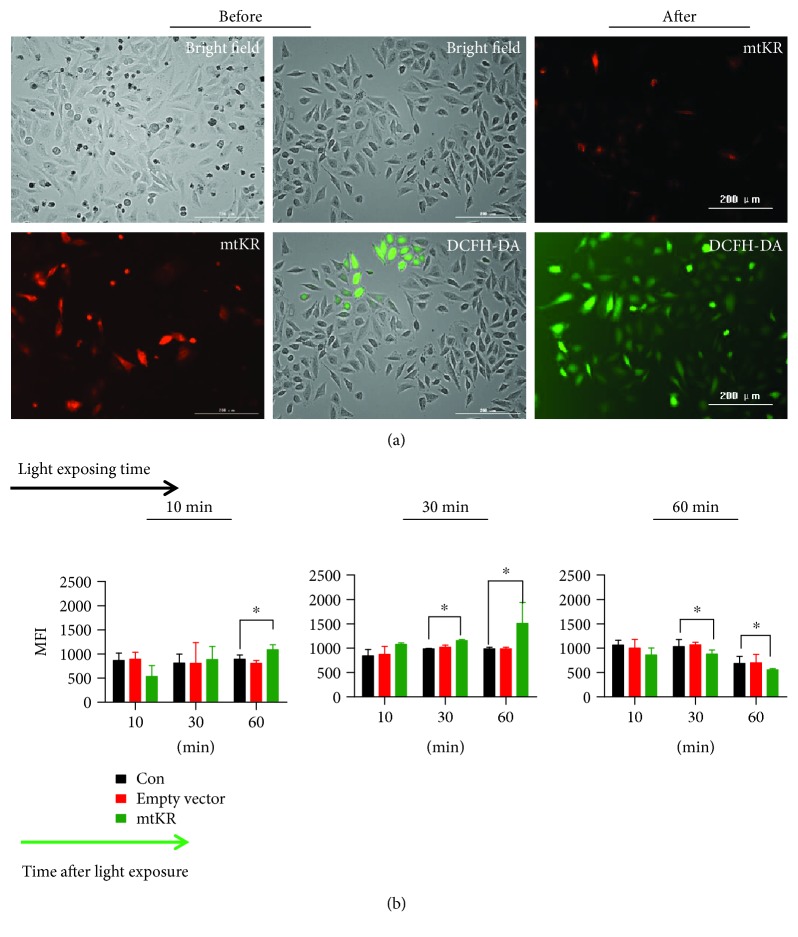
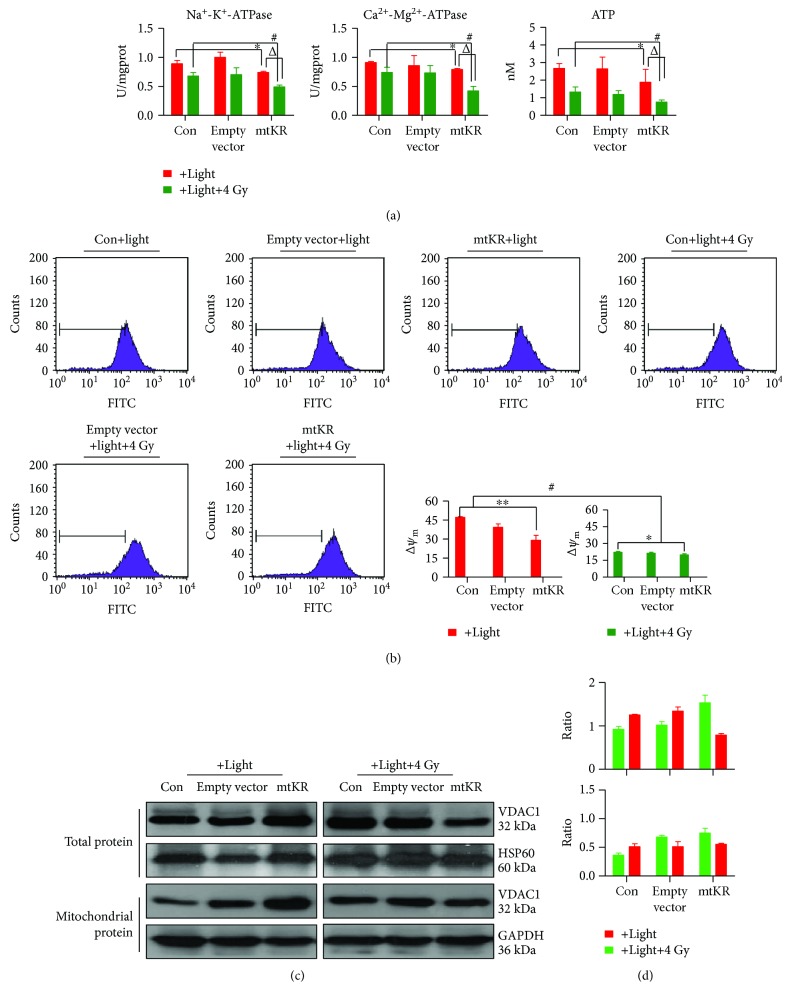
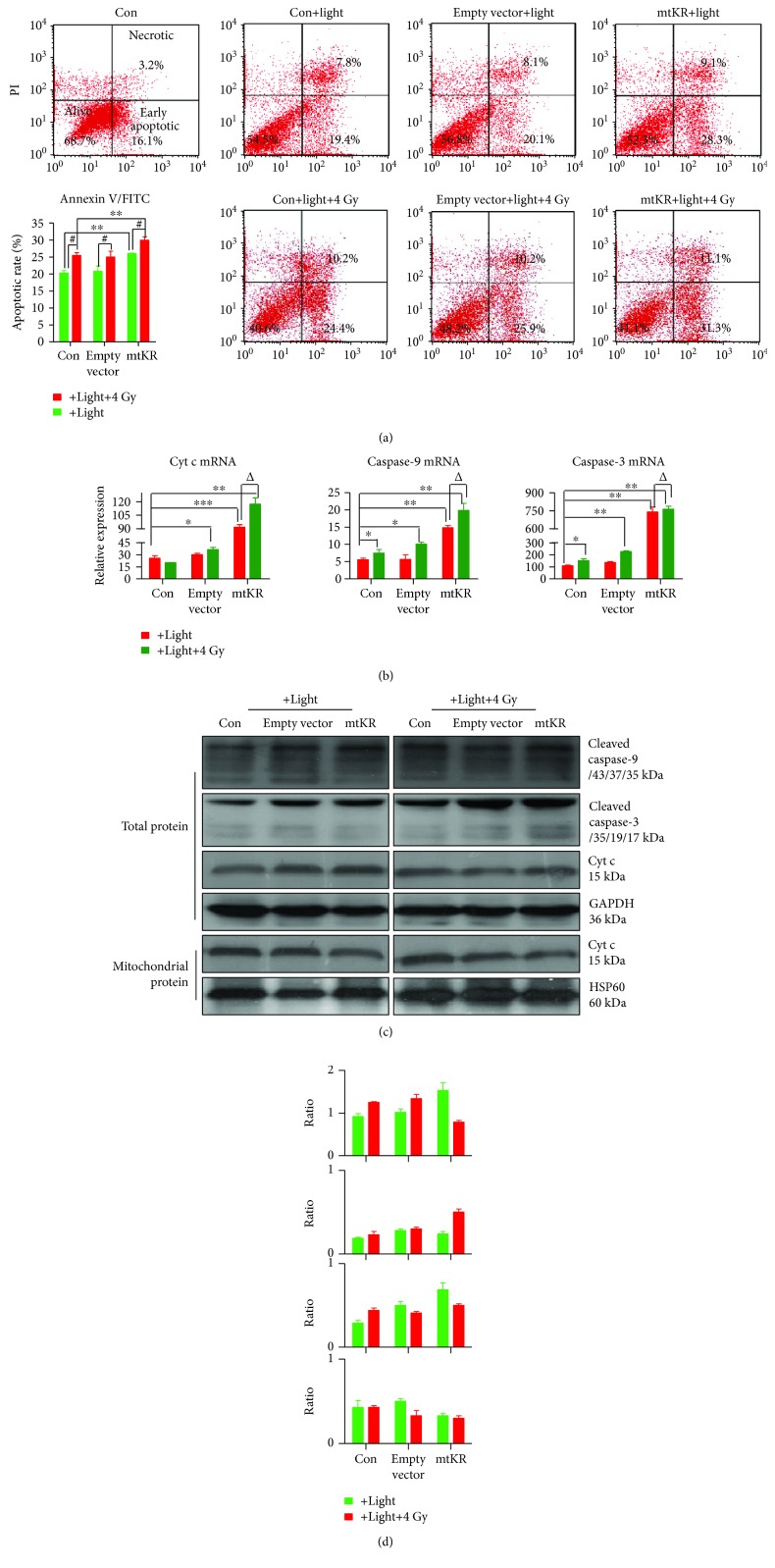
During radiotherapy, reactive oxygen species- (ROS-) induced apoptosis is one of the main mechanism of radiation. Based on KillerRed which can induce ROS burst in different cell substructures, here we hypothesized that KillerRed targeting mitochondria (mtKR) could induce ROS to enhance apoptosis by radiation. In this study, empty vector, mtKR, and mtmCherry plasmids were successfully constructed, and mitochondrial localization were detected in COS-7 and HeLa cells. After HeLa cells were transfected and irradiated by visible light and X-rays, ROS levels, mitochondrial membrane potential (Δ ), ATPase activities, adenosine triphosphate (ATP) content, apoptosis, and the expressions of mRNA and protein were measured, respectively. Data demonstrated that the ROS levels significantly increased after light exposure, and adding extra radiation, voltage-dependent anion channel 1 (VDAC1) protein increased in the mitochondria, while Na-K and Ca-Mg ATPase activities, ATP content, and Δ significantly reduced. Additionally, the cell apoptotic rates dramatically increased, which referred to the increase of cytochrome c (Cyt c), caspase-9, and caspase-3 mRNA expressions, and Cyt c protein was released from the mitochondria into the cytoplasm; caspase-9 and -3 were activated. These results indicated that mtKR can increase the production of ROS, enhance mitochondrial dysfunction, and strengthen apoptosis by radiation via Cyt c/caspase-3 pathway.
在放射治疗中,活性氧物质(ROS)诱导的细胞凋亡是辐射的主要机制之一。基于可以在不同细胞亚结构中诱导 ROS 爆发的 KillerRed,我们假设靶向线粒体的 KillerRed(mtKR)可以通过辐射诱导 ROS 来增强细胞凋亡。在这项研究中,成功构建了空载体、mtKR 和 mtmCherry 质粒,并在 COS-7 和 HeLa 细胞中检测到了线粒体定位。在转染 HeLa 细胞并用光和 X 射线照射后,分别测量了 ROS 水平、线粒体膜电位(Δ )、ATP 酶活性、三磷酸腺苷(ATP)含量、细胞凋亡以及 mRNA 和蛋白质的表达。数据表明,光暴露后 ROS 水平显著增加,额外的辐射增加了线粒体中的电压依赖性阴离子通道 1(VDAC1)蛋白,而 Na-K 和 Ca-Mg ATP 酶活性、ATP 含量和 Δ 显著降低。此外,细胞凋亡率显著增加,这表明细胞色素 c(Cyt c)、半胱天冬酶-9 和半胱天冬酶-3 的 mRNA 表达增加,Cyt c 蛋白从线粒体释放到细胞质中;半胱天冬酶-9 和 -3 被激活。这些结果表明,mtKR 通过 Cyt c/caspase-3 途径可以增加 ROS 的产生,增强线粒体功能障碍,并通过辐射增强细胞凋亡。