Porter Chad K, Riddle Mark S, Gutierrez Ramiro L, Princen Fred, Strauss Rick, Telesco Shannon E, Torres Joana, Choung Rok Seon, Laird Renee M, Leon Francisco, Colombel Jean-Frédéric, Murray Joseph A
Enteric Diseases Department, Naval Medical Research Center, Silver Spring, MD, USA.
Prometheus Laboratories Inc, San Diego, CA, USA.
Contemp Clin Trials Commun. 2019 Mar 26;14:100345. doi: 10.1016/j.conctc.2019.100345. eCollection 2019 Jun.
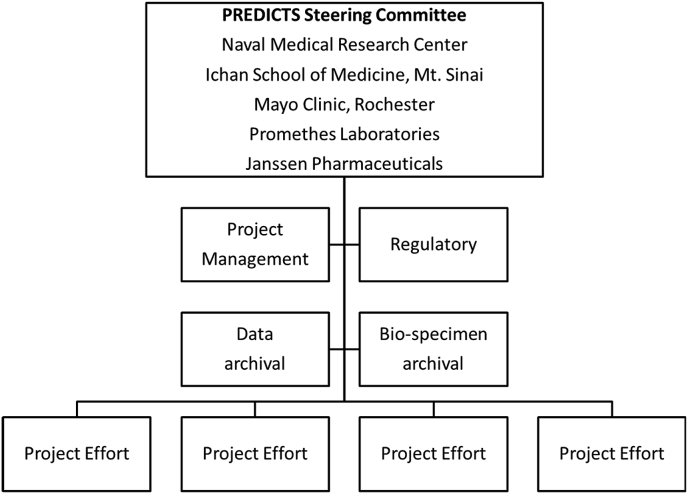
The etiology of Inflammatory Bowel Disease (IBD) remains currently unknown but evidence would suggest that it results from a complex interplay between genetic susceptibility genes, the intestinal microbiome and the environment, resulting in an increased response towards microbial and self-antigens, followed by the development of pre-clinical intestinal inflammation as a precursor to overt clinical disease. Efforts are needed to provide insights into the characterization of the disease, the possible prediction of complications, and the detection of a pre-clinical disease state where, through early screening and intervention, disease course can be reversed, attenuated or even prevented. A consortium of academic, industry and governmental organization investigators initiated this study to enable an assessment of pre-disease biomarkers in patients newly diagnosed with Crohn's disease (CD) and ulcerative colitis (UC).
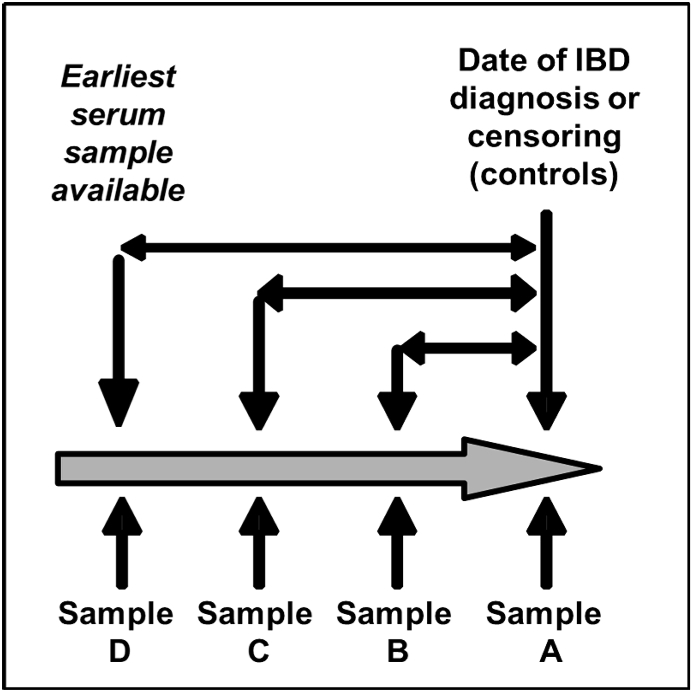
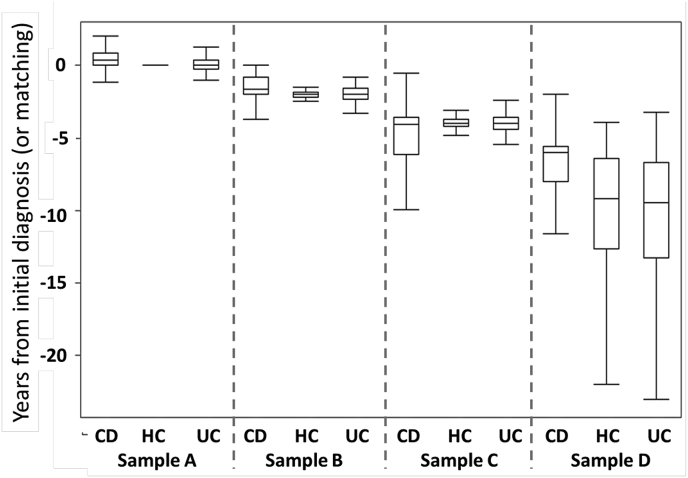
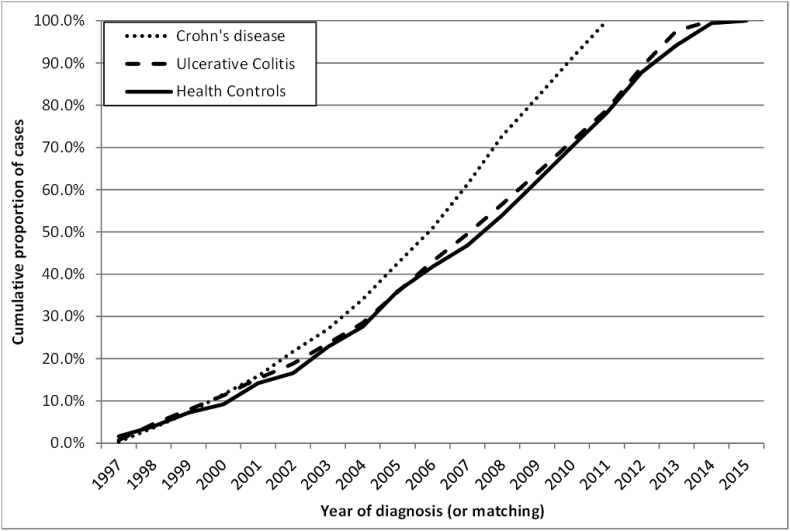
A retrospective cohort of 1000 UC and 1000 CD cases with 500 matched controls was drawn from an active duty US military personnel population with relevant inclusion criteria with three associated pre-disease and a single disease-associated archived serum samples.
The PREDICTS study has been established as a biorepository platform study to perform novel discovery and analysis efforts in the field of IBD and proteomic systems biology.
This study is poised to enable the assessment of novel biomarkers within the serum compartment to be analyzed with the goal of identifying pre-disease signals that ultimately predict disease risk, and further elucidate disease pathogenesis in the early stages of the disease process, and identify novel exposures that increase disease risk.
炎症性肠病(IBD)的病因目前仍不清楚,但有证据表明,它是由遗传易感基因、肠道微生物群和环境之间复杂的相互作用导致的,从而使机体对微生物和自身抗原的反应增强,随后出现临床前期肠道炎症,这是显性临床疾病的先兆。需要努力深入了解该疾病的特征、并发症的可能预测以及临床前期疾病状态的检测,通过早期筛查和干预,扭转、减轻甚至预防疾病进程。一个由学术、产业和政府组织研究人员组成的联盟发起了这项研究,以评估新诊断为克罗恩病(CD)和溃疡性结肠炎(UC)患者的疾病前生物标志物。
从符合相关纳入标准的现役美国军事人员群体中选取了1000例UC病例和1000例CD病例的回顾性队列,并与500例匹配对照,这些病例有三个相关的疾病前和一个与疾病相关的存档血清样本。
PREDICTS研究已被确立为一项生物样本库平台研究,旨在对IBD和蛋白质组系统生物学领域进行新的发现和分析。
这项研究准备评估血清中的新型生物标志物,目标是识别最终预测疾病风险的疾病前信号,进一步阐明疾病早期阶段的发病机制,并识别增加疾病风险的新暴露因素。