Volicer Ladislav
School of Aging Studies, University of South Florida, Tampa, FL 34639, USA.
The 3rd Medical Faculty, Charles University, 11000 Prague, Czech Republic.
Healthcare (Basel). 2019 Apr 15;7(2):62. doi: 10.3390/healthcare7020062.
Persons with advanced dementia cannot initiate activities because of the executive dysfunction. The lack of activities was identified as one of the most important factors contributing to behavioral problems of these persons. The unmet needs were boredom/sensory deprivation, loneliness/need for social interaction, and need for meaningful activities. There is a need for activities designed specifically for residents with advanced dementia.
A description of patient's needs and of programs that intend to maintain quality of life for people with dementia and facing death.
A literature review of programs used for persons with advanced dementia and residing in long-term facilities, using the PubMed data base and collateral sources.
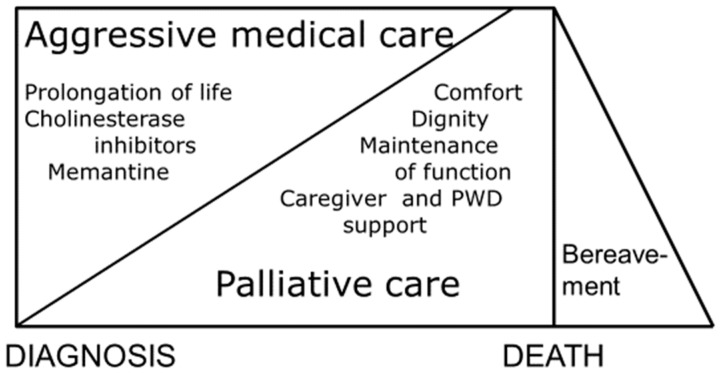
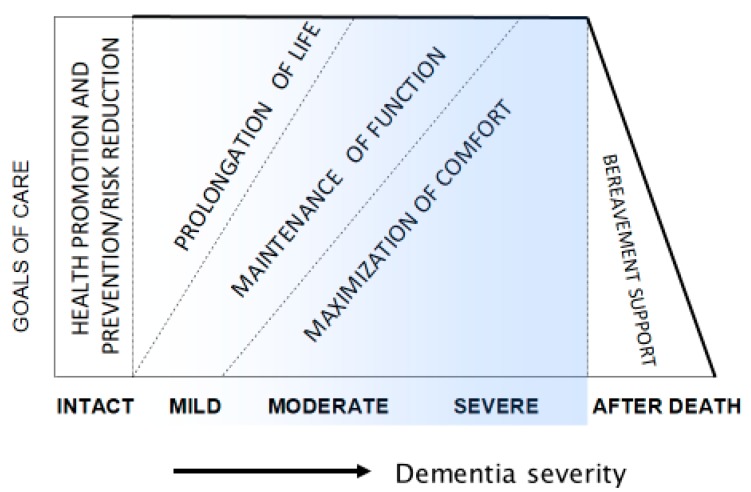
Since palliative care is appropriate for persons with advanced dementia, attention has to be paid to three following important aspects of care: Medical issues, behavioral symptoms, and meaningful activities. Medical interventions should be limited to those which have more benefits than burdens, behavioral symptoms should be distinguished according to the context in which they occur, and treated by non-pharmacological interventions that involve meaningful activities. This review describes four programs that may promote the quality of life in persons with advanced dementia and facing death. They are designed for persons with advanced dementia, taking into account their functional impairments. Most of these programs involve short infrequent sessions. In contrast, Namaste Care is a daily extended program of enhanced nursing care that can provide quality of life until the last breath.
It is possible to maintain quality life for people with advanced dementia if a special program of activities is available.
晚期痴呆患者由于执行功能障碍无法发起活动。活动缺乏被认为是导致这些患者行为问题的最重要因素之一。未满足的需求包括无聊/感觉剥夺、孤独/社交互动需求以及有意义活动的需求。需要专门为晚期痴呆患者设计的活动。
描述患者需求以及旨在为患有痴呆症且面临死亡的人维持生活质量的项目。
使用PubMed数据库及相关来源,对用于晚期痴呆患者且居住在长期护理机构中的项目进行文献综述。
由于姑息治疗适用于晚期痴呆患者,因此必须关注护理的以下三个重要方面:医疗问题、行为症状和有意义的活动。医疗干预应限于那些益处大于负担的干预措施,行为症状应根据其发生的背景进行区分,并通过涉及有意义活动的非药物干预进行治疗。本综述描述了四个可能提高晚期痴呆患者且面临死亡者生活质量的项目。它们是为晚期痴呆患者设计的,考虑到了他们的功能障碍。这些项目大多涉及简短且不频繁的疗程。相比之下,合十礼护理是一项每日延长的强化护理项目,可在患者生命的最后一刻提供生活质量保障。
如果有专门的活动项目,为晚期痴呆患者维持生活质量是可能的。