1 Ocean and Earth Science, National Oceanography Centre Southampton, University of Southampton , Waterfront Campus, European Way, Southampton SO14 3ZH , UK.
2 Biological Sciences, University of Southampton , Highfield Campus, Southampton SO17 1BJ , UK.
Proc Biol Sci. 2019 Apr 24;286(1901):20190287. doi: 10.1098/rspb.2019.0287.
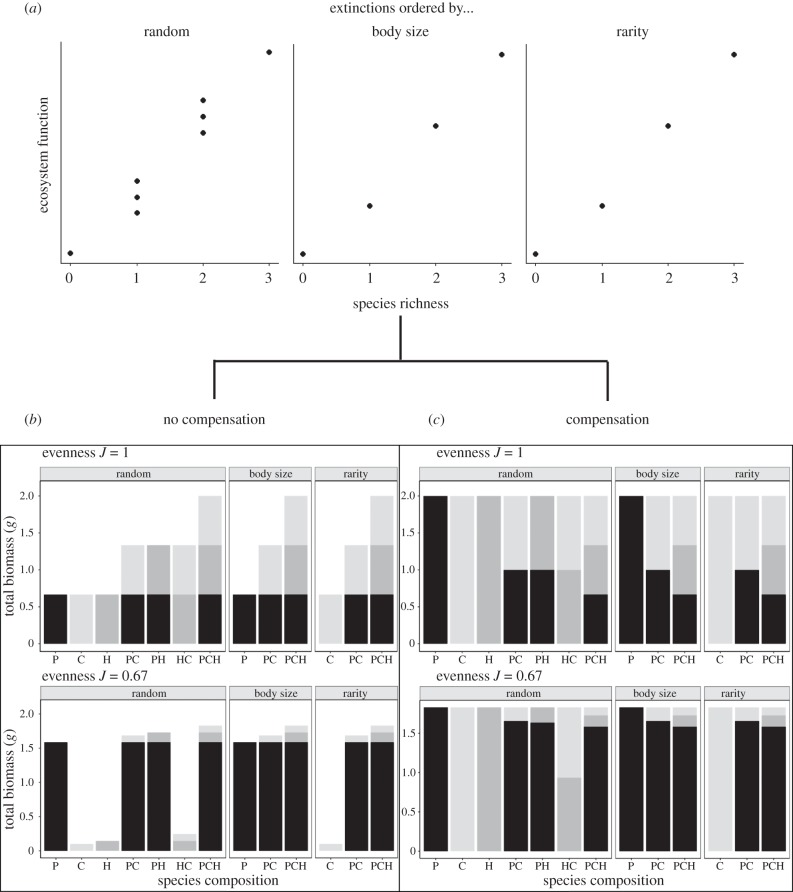
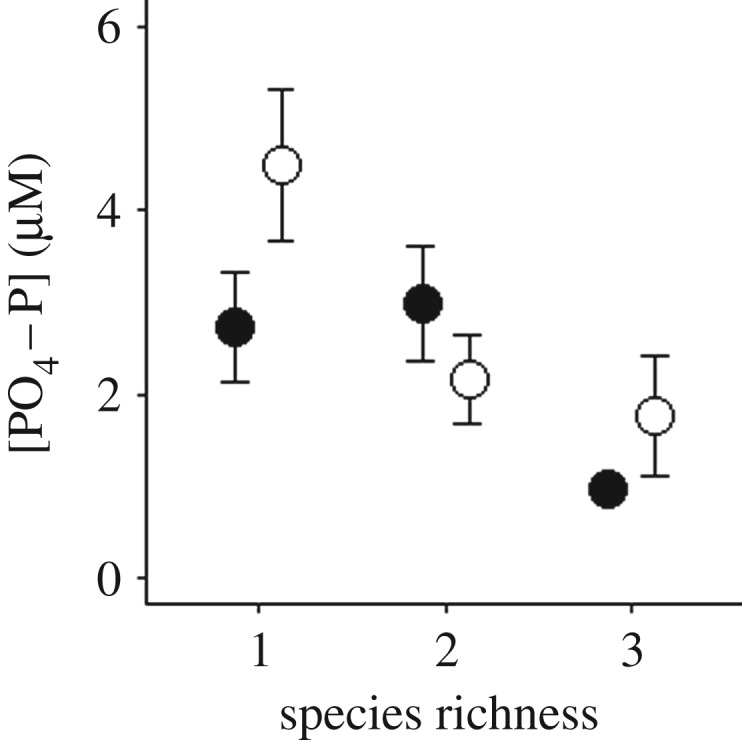
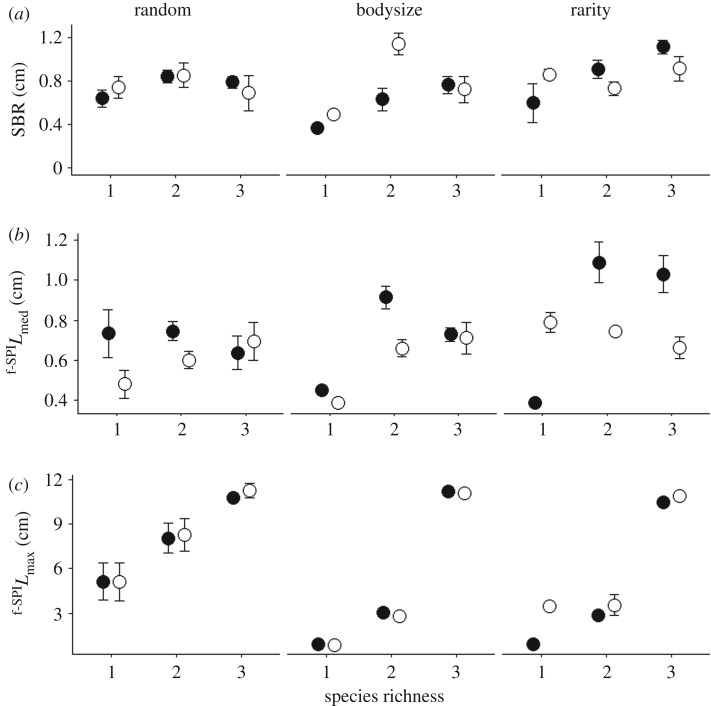
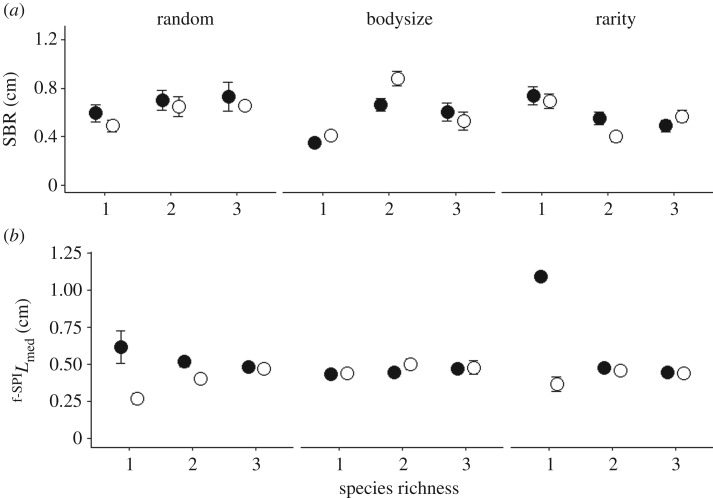
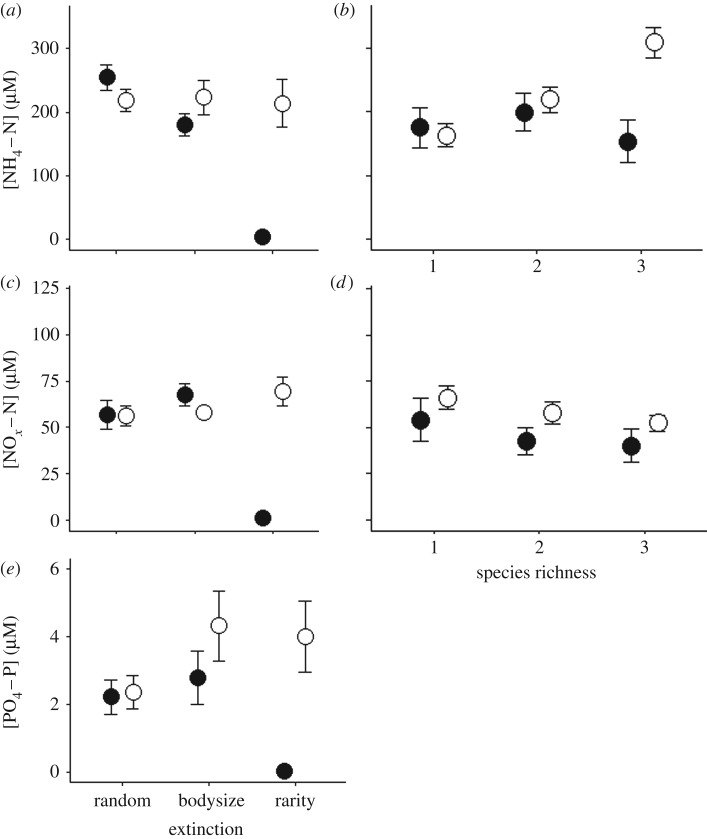
There is now strong evidence that ecosystem properties are influenced by alterations in biodiversity. The consensus that has emerged from over two decades of research is that the form of the biodiversity-functioning relationship follows a saturating curve. However, the foundation from which these conclusions are drawn mostly stems from empirical investigations that have not accounted for post-extinction changes in community composition and structure, or how surviving species respond to new circumstances and modify their contribution to functioning. Here, we use marine sediment-dwelling invertebrate communities to experimentally assess whether post-extinction compensatory mechanisms (simulated by increasing species biomass) have the potential to alter biodiversity-ecosystem function relations. Consistent with recent numerical simulations, we find that the form of the biodiversity-function curve is dependent on whether or not compensatory responses are present, the cause and extent of extinction, and species density. When species losses are combined with the compensatory responses of surviving species, both community composition, dominance structure, and the pool and relative expression of functionally important traits change and affect species interactions and behaviour. These observations emphasize the importance of post-extinction community composition in determining the stability of ecosystem functioning following extinction. Our results caution against the use of the generalized biodiversity-function curve when generating probabilistic estimates of post-extinction ecosystem properties for practical application.
现在有强有力的证据表明,生态系统的特性受到生物多样性变化的影响。二十多年来的研究得出的共识是,生物多样性与功能关系的形式遵循饱和曲线。然而,这些结论的基础主要来自于没有考虑到群落组成和结构在灭绝后的变化,以及幸存物种如何应对新环境并改变它们对功能的贡献的实证研究。在这里,我们使用海洋沉积物栖息的无脊椎动物群落来实验评估灭绝后补偿机制(通过增加物种生物量来模拟)是否有可能改变生物多样性-生态系统功能关系。与最近的数值模拟一致,我们发现生物多样性功能曲线的形式取决于是否存在补偿响应、灭绝的原因和程度以及物种密度。当物种损失与幸存物种的补偿响应相结合时,群落组成、优势结构以及功能重要特征的库和相对表达都会发生变化,并影响物种相互作用和行为。这些观察结果强调了灭绝后群落组成在确定生态系统功能稳定性方面的重要性。我们的结果告诫人们,在为实际应用生成灭绝后生态系统特性的概率估计时,不要使用广义的生物多样性功能曲线。