Clinical Research Group for Brain, Cognition and Behavior, Consorci Sanitari de Terrassa, Carretera Torrebonica, S/N, 08227, Terrassa, Spain.
Department of Mathematics and Computer Science, University of Barcelona, Barcelona, Spain.
BMC Geriatr. 2019 Apr 16;19(1):110. doi: 10.1186/s12877-019-1132-0.
The main objective of this research was to evaluate the acceptance of technology based on a wearable lifelogging camera in a sample of older adults diagnosed with mild cognitive impairment (MCI).
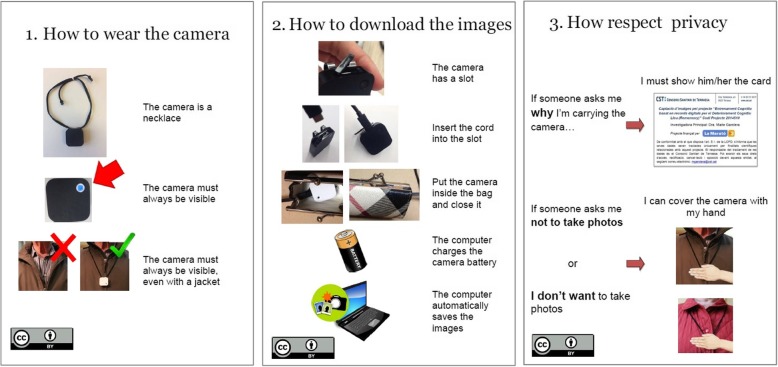
A mixed-method design was used, consisting of a self-report questionnaire, numerous images taken by users, and a series of focus group discussions. The patients were involved in an individualized training programme.
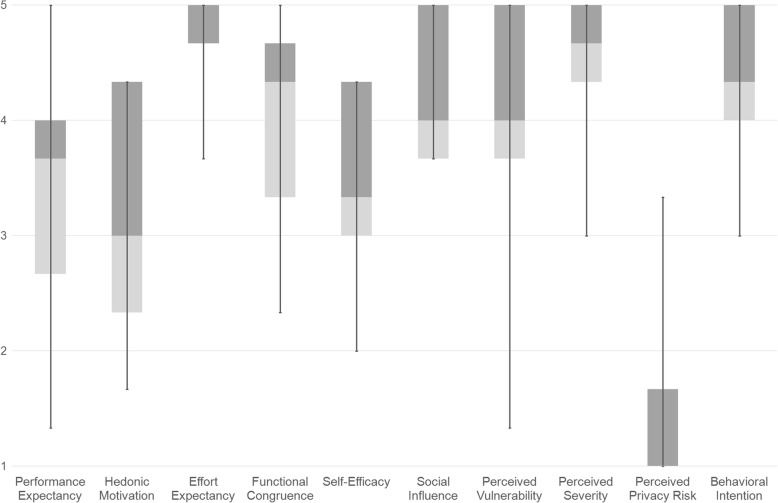
Nine MCI patients and their caregiver relatives were included. They showed good acceptance of the camera and downloaded an appropriate number of images on a daily basis. Perceived severity and ease of use were the main factors associated with the intention to use the device.
Older adults with MCI can become competent users of lifelogging wearable cameras with a good level of acceptance. Privacy concerns are outweighed by the potential benefits for memory. Limitations, strengths and implications for future research are discussed.
本研究的主要目的是评估在轻度认知障碍(MCI)患者样本中对基于可穿戴式生活记录相机的技术的接受程度。
采用混合方法设计,包括自我报告问卷、用户拍摄的大量图像以及一系列焦点小组讨论。患者参与了个性化培训计划。
纳入了 9 名 MCI 患者及其照顾亲属。他们对相机表现出良好的接受程度,并且每天都下载了适当数量的图像。感知的严重程度和易用性是与使用设备的意愿相关的主要因素。
MCI 老年人可以成为生活记录可穿戴相机的合格用户,接受度较高。隐私问题被记忆的潜在益处所抵消。讨论了局限性、优势以及对未来研究的影响。