Institute of Rocket Force Medicine, State Key Laboratory of Trauma, Burns and Combined Injury, Third Military Medical University, Chongqing, 400038, China.
Institute of Immunology, Third Military Medical University, Chongqing, 400038, China.
Cell Commun Signal. 2019 Apr 16;17(1):36. doi: 10.1186/s12964-019-0348-0.
The human positive cofactor 4 (PC4) is initially identified as a transcriptional cofactor and has an important role in embryonic development and malignant transformation. However, the clinical significance and the molecular mechanisms of PC4 in breast cancer development and progression are still unknown.
We investigated PC4 expression in 114 cases of primary breast cancer and matched normal breast tissue specimens, and studied the impact of PC4 expression as well as the molecular mechanisms of this altered expression on breast cancer growth and metastasis both in vitro and in vivo.
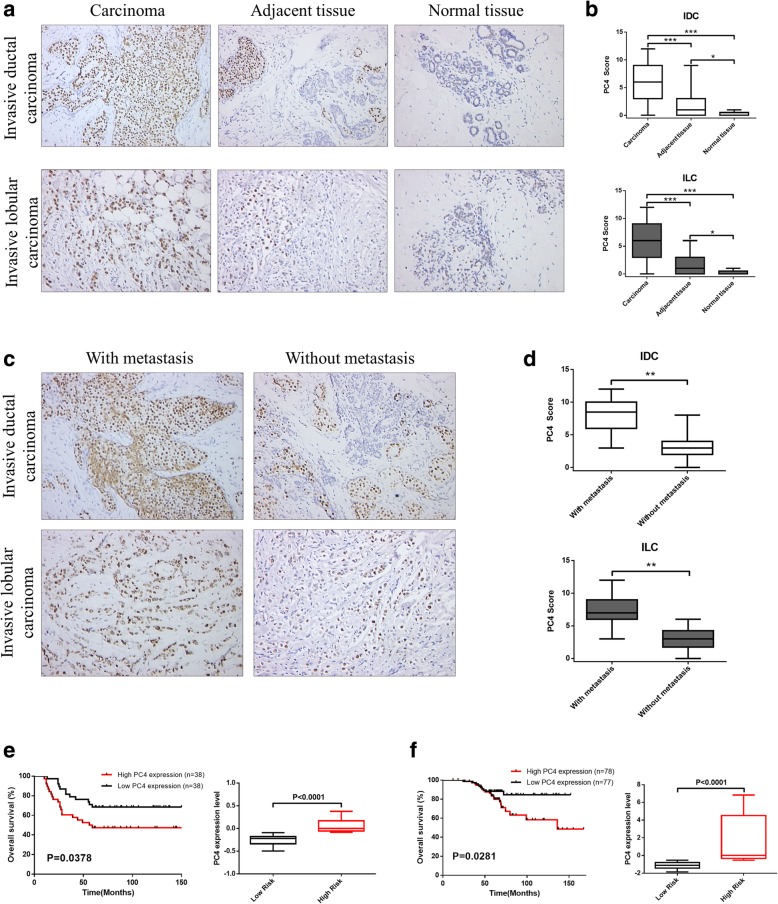
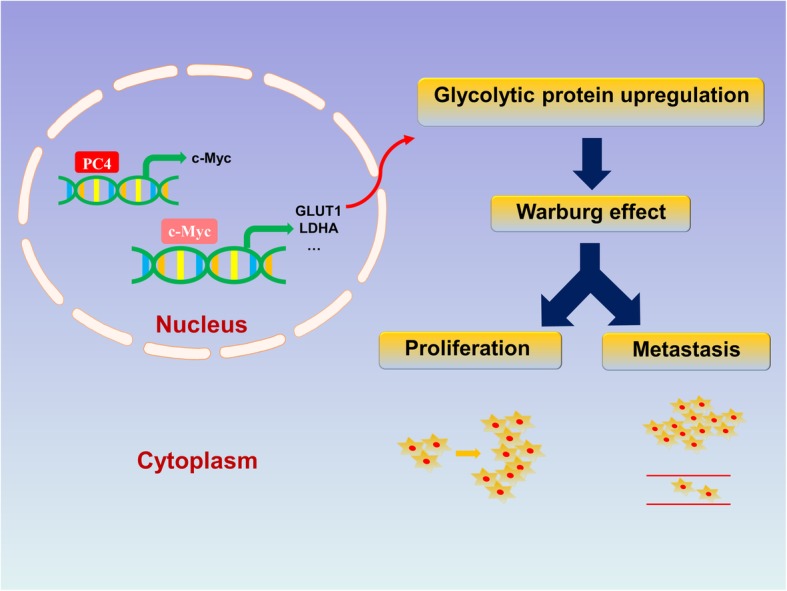
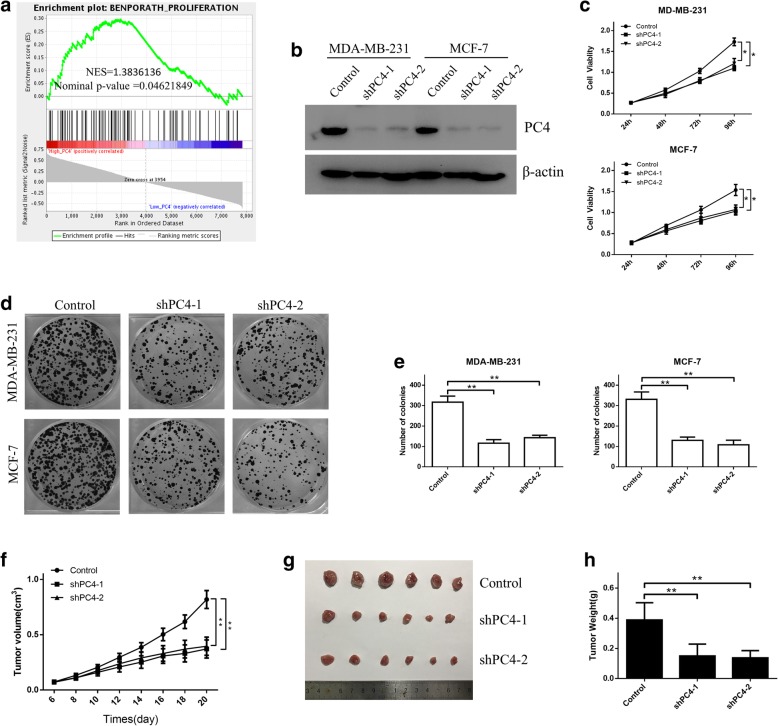
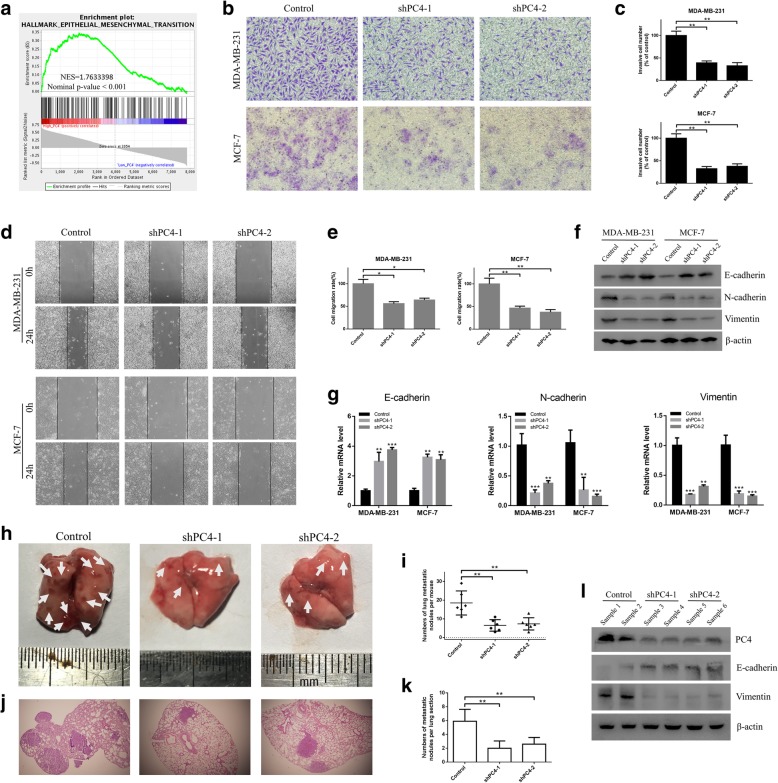
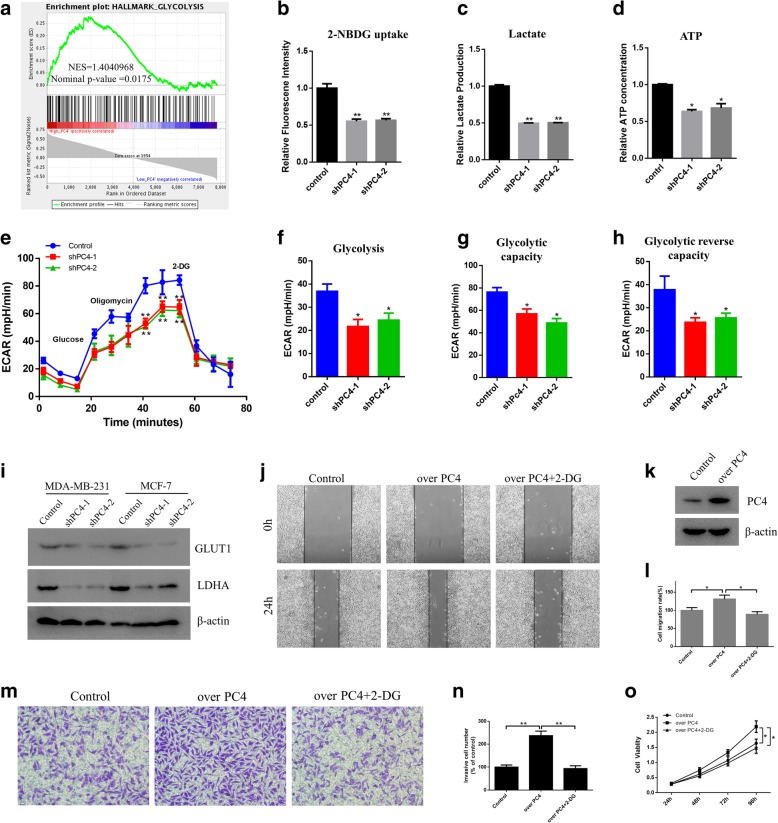
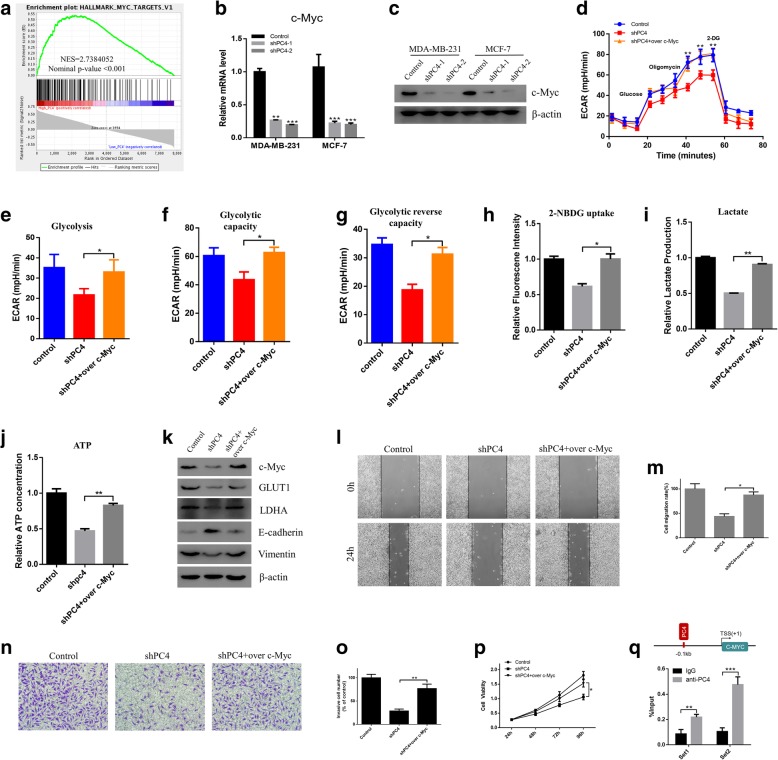
PC4 was significantly upregulated in breast cancer and high PC4 expression was positively correlated with metastasis and poor prognosis of patients. Gene set enrichment analysis (GSEA) demonstrated that the gene sets of cell proliferation and Epithelial-Mesenchymal Transition (EMT) were positively correlated with elevated PC4 expression. Consistently, loss of PC4 markedly inhibited the growth and metastasis of breast cancer both in vitro and in vivo. Mechanistically, PC4 exerted its oncogenic functions by directly binding to c-Myc promoters and inducing Warburg effect.
Our study reveals for the first time that PC4 promotes breast cancer progression by directly regulating c-Myc transcription to promote Warburg effect, implying a novel therapeutic target for breast cancer.
人类阳性共因子 4(PC4)最初被鉴定为转录共因子,在胚胎发育和恶性转化中具有重要作用。然而,PC4 在乳腺癌发展和进展中的临床意义和分子机制尚不清楚。
我们研究了 114 例原发性乳腺癌和配对的正常乳腺组织标本中的 PC4 表达,并研究了 PC4 表达的影响以及这种表达改变对乳腺癌体外和体内生长和转移的分子机制。
PC4 在乳腺癌中显著上调,高 PC4 表达与转移和患者预后不良呈正相关。基因集富集分析(GSEA)表明,细胞增殖和上皮间质转化(EMT)的基因集与升高的 PC4 表达呈正相关。一致地,PC4 的缺失显著抑制了乳腺癌在体外和体内的生长和转移。从机制上讲,PC4 通过直接结合 c-Myc 启动子并诱导瓦伯格效应来发挥致癌功能。
我们的研究首次揭示,PC4 通过直接调节 c-Myc 转录来促进瓦伯格效应,从而促进乳腺癌的进展,这为乳腺癌提供了一个新的治疗靶点。