Department of Radiotherapy, National Clinical Research Center for Cancer, Tianjin's Clinical Research Center for Cancer, Key Laboratory of Cancer Prevention and Therapy, Tianjin Medical University Cancer Institute and Hospital, Tianjin, China.
Department of Radiotherapy, Tianjin Hospital, Tianjin, China.
Cancer Med. 2018 Apr;7(4):1326-1337. doi: 10.1002/cam4.1332. Epub 2018 Mar 9.
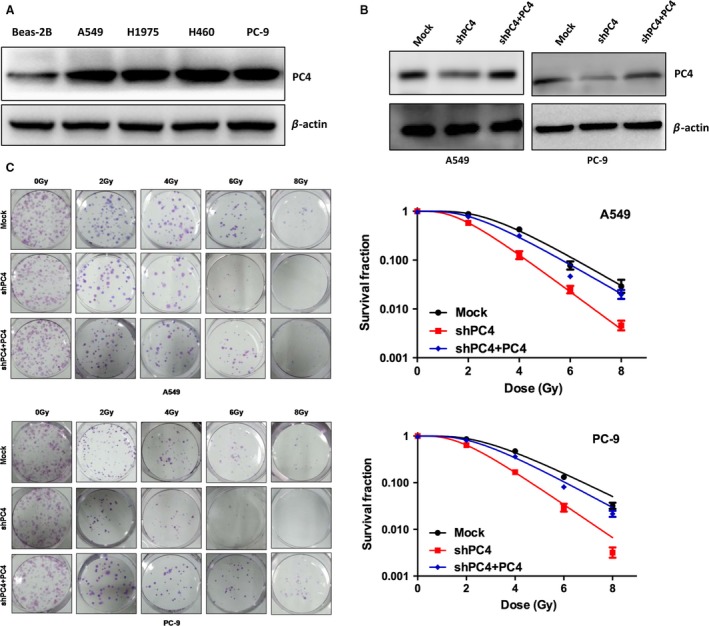
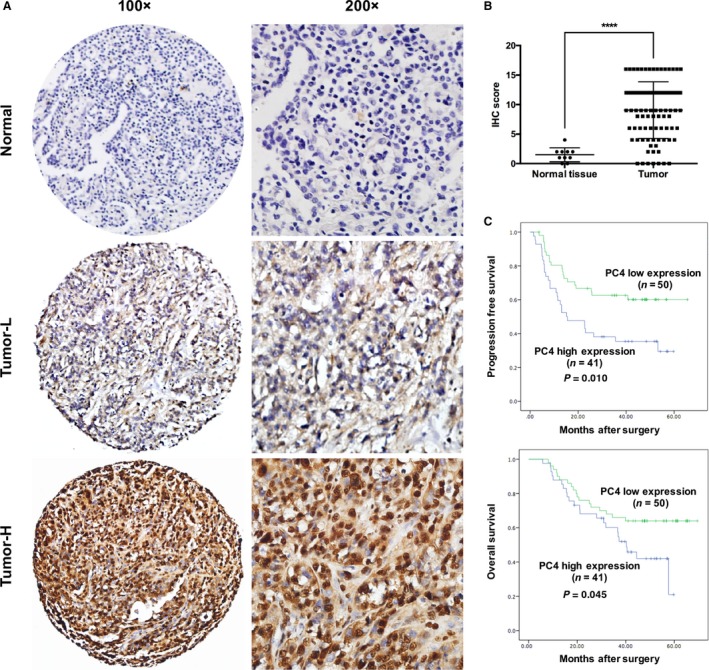
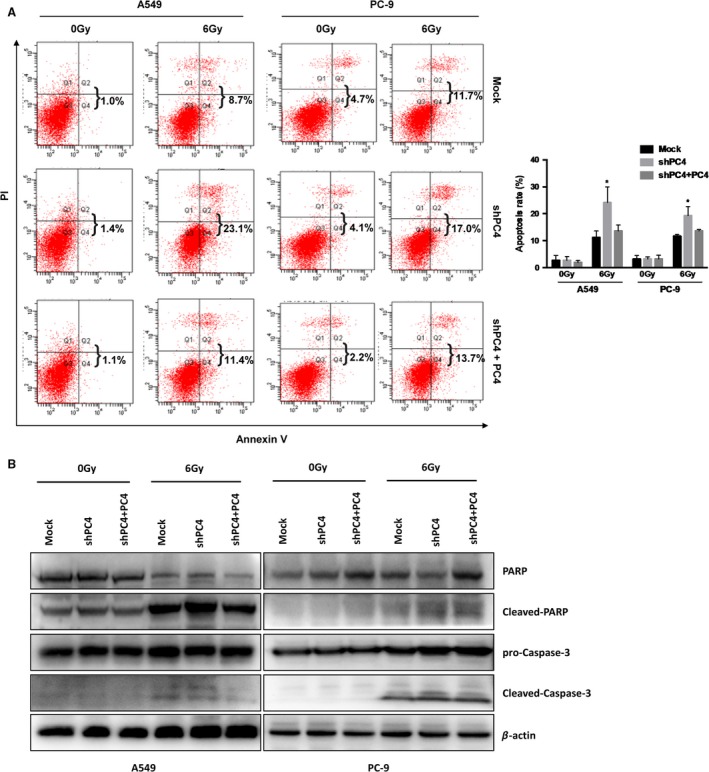
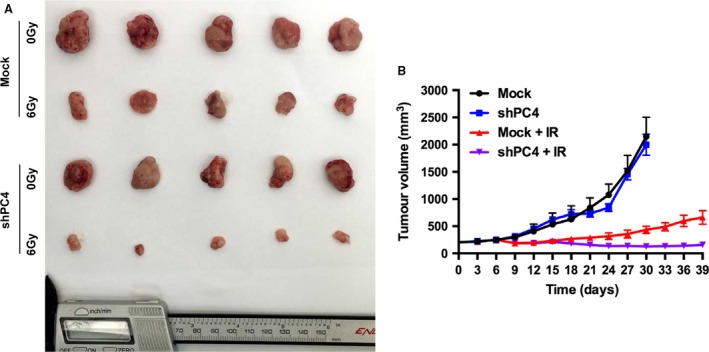
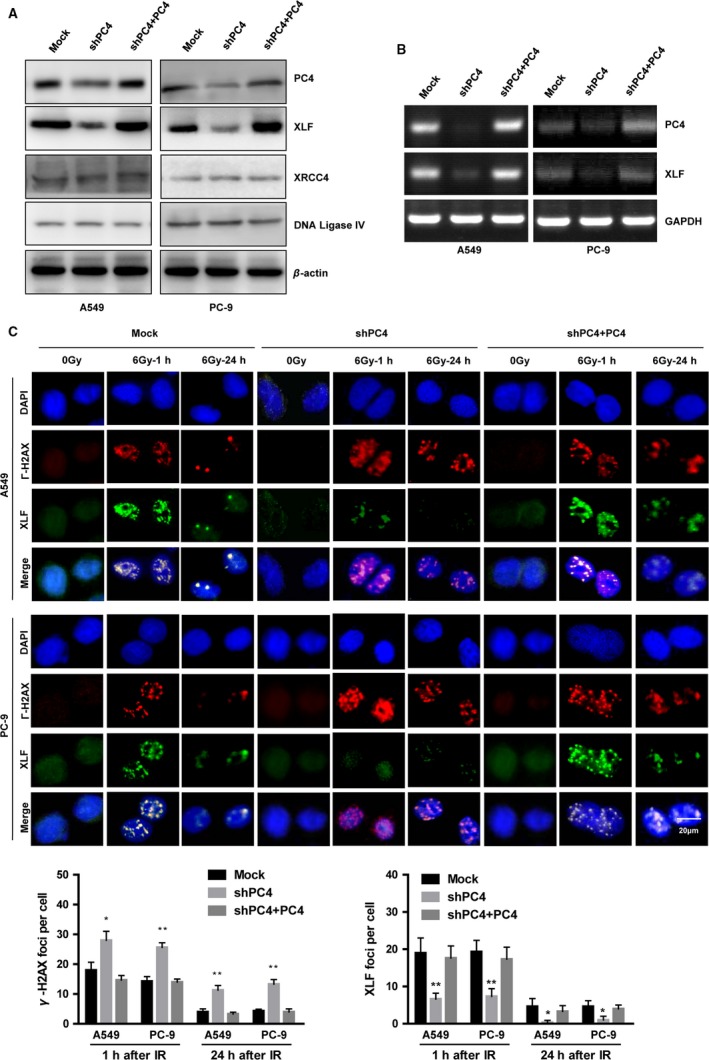
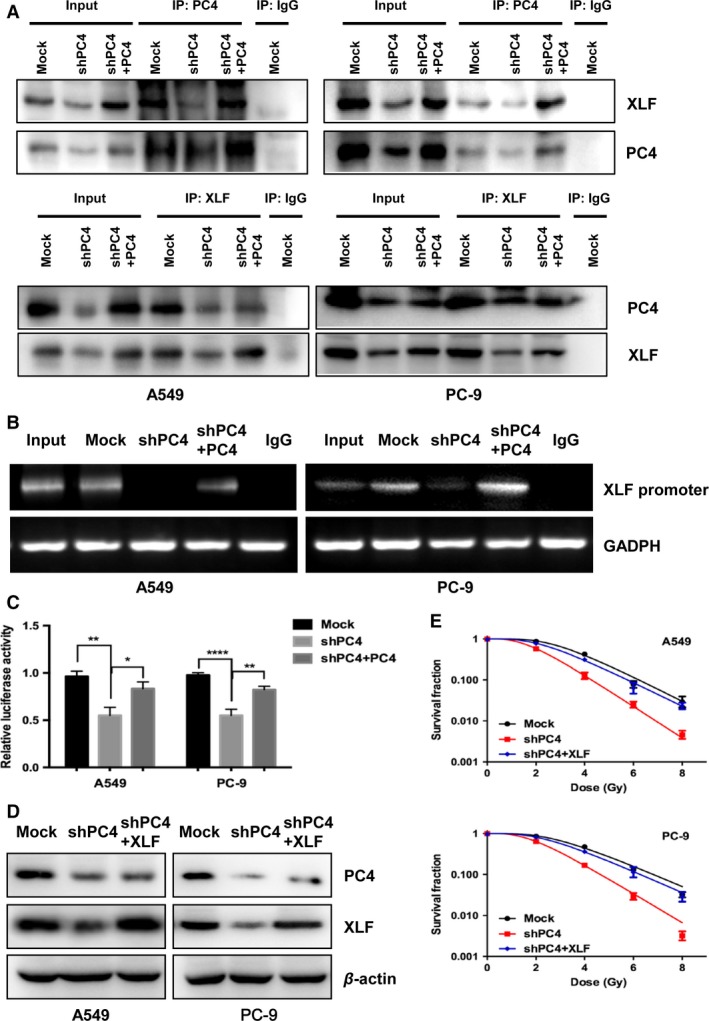
Positive cofactor 4 (PC4) participates in DNA damage repair and involved in nonhomologous end joining (NHEJ). Our previous results demonstrated that knockdown of PC4 downregulated the expression of XRCC4-like factor (XLF) in esophageal squamous cell carcinoma. However, the mechanism how PC4 regulates the expression of XLF remains unclear. Here, we found that knockdown of PC4 increased radiosensitivity of non-small cell lung cancer (NSCLC) both in vivo and in vitro. Furthermore, we found that PC4 knockdown downregulated the expression of XLF, whereas recovering XLF expression restored radioresistance in the PC4-knockdown NSCLC cells. In addition, PC4 knockdown inhibited XLF expression by transcriptionally suppressing of XLF. Moreover, PC4 expression correlated with radiosensitivity and was an independent prognostic factor of progression-free survival (PFS) in patients with NSCLC. These findings suggest that PC4 could be used as a promising therapeutic target for NSCLC.
阳性共因子 4(PC4)参与 DNA 损伤修复,并参与非同源末端连接(NHEJ)。我们之前的结果表明,PC4 的敲低下调了食管鳞状细胞癌中 XRCC4 样因子(XLF)的表达。然而,PC4 调节 XLF 表达的机制尚不清楚。在这里,我们发现 PC4 的敲低增加了非小细胞肺癌(NSCLC)在体内和体外的放射敏感性。此外,我们发现 PC4 的敲低下调了 XLF 的表达,而恢复 XLF 的表达则恢复了 PC4 敲低 NSCLC 细胞的放射抗性。此外,PC4 的敲低通过转录抑制 XLF 来抑制 XLF 的表达。此外,PC4 的表达与放射敏感性相关,是 NSCLC 患者无进展生存期(PFS)的独立预后因素。这些发现表明,PC4 可作为 NSCLC 的有前途的治疗靶点。