Cancer Center, Union Hospital, Tongji Medical College, Huazhong University of Science and Technology, Wuhan, 430022, China.
Pharmacy Department, Union Hospital, Tongji Medical College, Huazhong University of Science and Technology, Wuhan, 430022, China.
Biol Res. 2019 Apr 16;52(1):22. doi: 10.1186/s40659-019-0231-x.
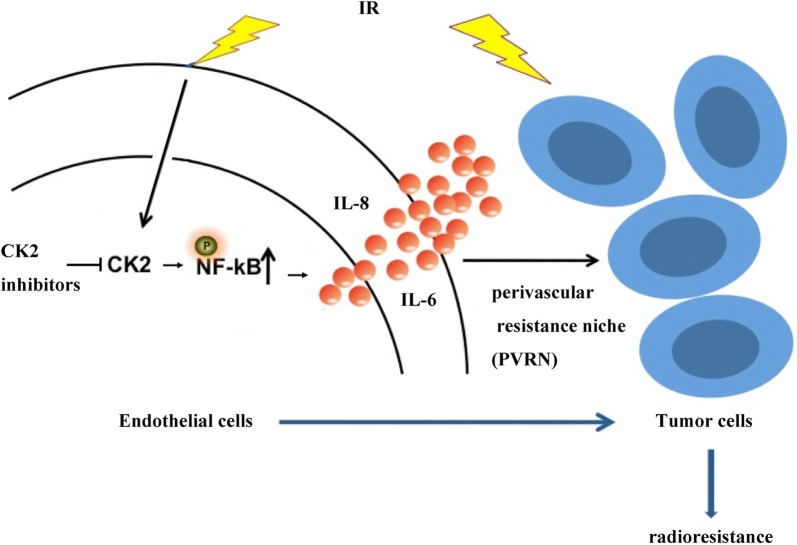
Tumor microenvironment (TME) plays a vital role in determining the outcomes of radiotherapy. As an important component of TME, vascular endothelial cells are involved in the perivascular resistance niche (PVRN), which is formed by inflammation or cytokine production induced by ionizing radiation (IR). Protein kinase CK2 is a constitutively active serine/threonine kinase which plays a vital role in cell proliferation and inflammation. In this study, we investigated the potential role of CK2 in PVRN after IR exposure.
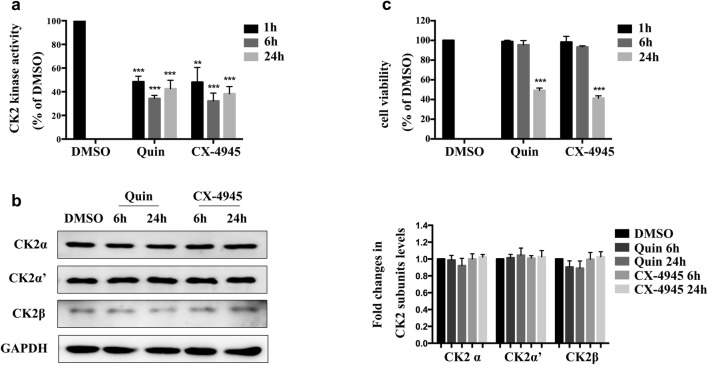
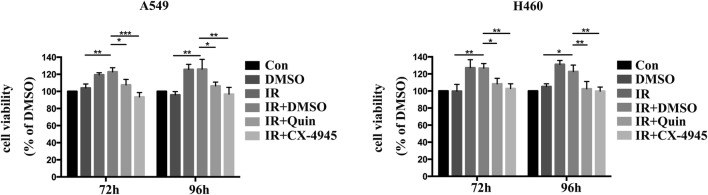
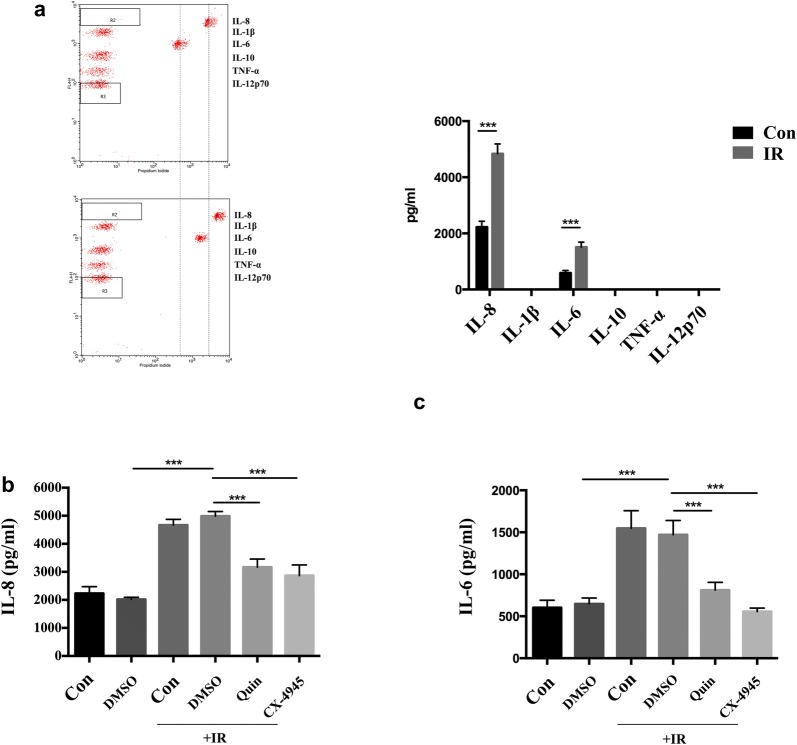
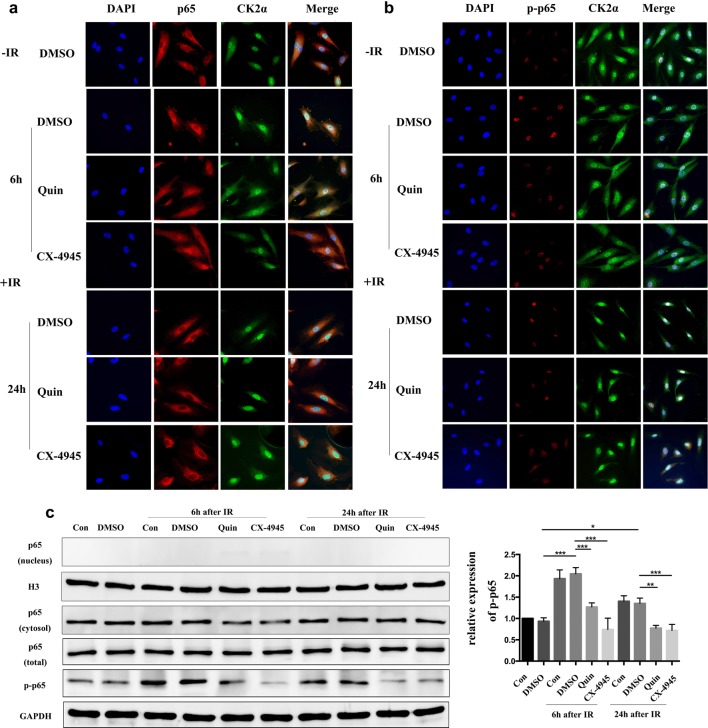
Specific CK2 inhibitors, Quinalizarin and CX-4945, were employed to effectively suppressed the kinase activity of CK2 in human umbilical vein endothelial cells (HUVECs) without affecting their viability. Results showing that conditioned medium from IR-exposed HUVECs increased cell viability of A549 and H460 cells, and the pretreatment of CK2 inhibitors slowed down such increment. The secretion of IL-8 and IL-6 in HUVECs was induced after exposure with IR, but significantly inhibited by the addition of CK2 inhibitors. Furthermore, IR exposure elevated the nuclear phosphorylated factor-κB (NF-κB) p65 expression in HUVECs, which was a master factor regulating cytokine production. But when pretreated with CK2 inhibitors, such elevation was significantly suppressed.
This study indicated that protein kinase CK2 is involved in the key process of the IR induced perivascular resistant niche, namely cytokine production, by endothelial cells, which finally led to radioresistance of non-small cell lung cancer cells. Thus, the inhibition of CK2 may be a promising way to improve the outcomes of radiation in non-small cell lung cancer cells.
肿瘤微环境(TME)在决定放疗结果方面起着至关重要的作用。作为 TME 的重要组成部分,血管内皮细胞参与了由电离辐射(IR)引起的炎症或细胞因子产生的血管周围抵抗小生境(PVRN)。蛋白激酶 CK2 是一种组成性激活的丝氨酸/苏氨酸激酶,在细胞增殖和炎症中起着至关重要的作用。在这项研究中,我们研究了 CK2 在 IR 暴露后 PVRN 中的潜在作用。
特异性 CK2 抑制剂 Quinalizarin 和 CX-4945 被用于有效地抑制人脐静脉内皮细胞(HUVEC)中的 CK2 激酶活性,而不影响其活力。结果表明,IR 暴露后的 HUVEC 条件培养基增加了 A549 和 H460 细胞的活力,而 CK2 抑制剂的预处理减缓了这种增加。IR 暴露后 HUVEC 中 IL-8 和 IL-6 的分泌增加,但添加 CK2 抑制剂后显著抑制。此外,IR 暴露后 HUVEC 中核磷酸化因子-κB(NF-κB)p65 表达升高,这是调节细胞因子产生的主要因子。但当用 CK2 抑制剂预处理时,这种升高被显著抑制。
这项研究表明,蛋白激酶 CK2 参与了内皮细胞诱导的 IR 诱导的血管周围抵抗小生境的关键过程,即细胞因子的产生,这最终导致非小细胞肺癌细胞的放射抵抗。因此,抑制 CK2 可能是改善非小细胞肺癌细胞放疗效果的一种有前途的方法。