Centre of Medical Genetics, University of Antwerp and Antwerp University Hospital, Edegem, Belgium.
Centre for Oncological Research, University of Antwerp and Antwerp University Hospital, Edegem, Belgium.
Cancer Med. 2019 May;8(5):2133-2145. doi: 10.1002/cam4.2103. Epub 2019 Apr 16.
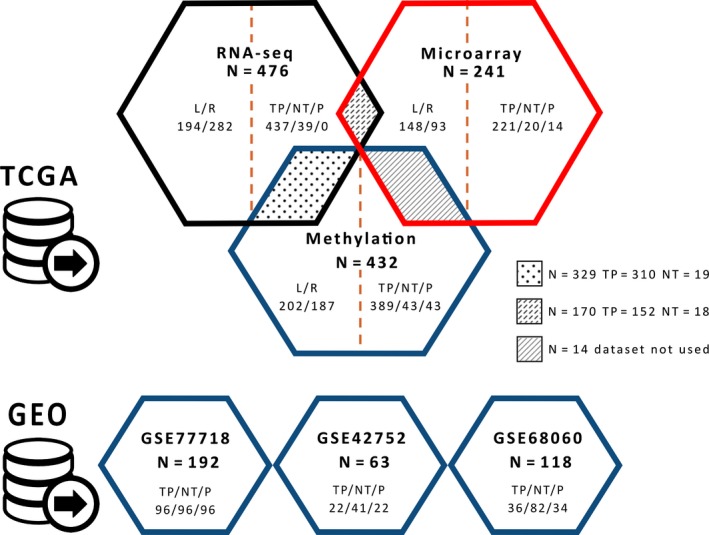
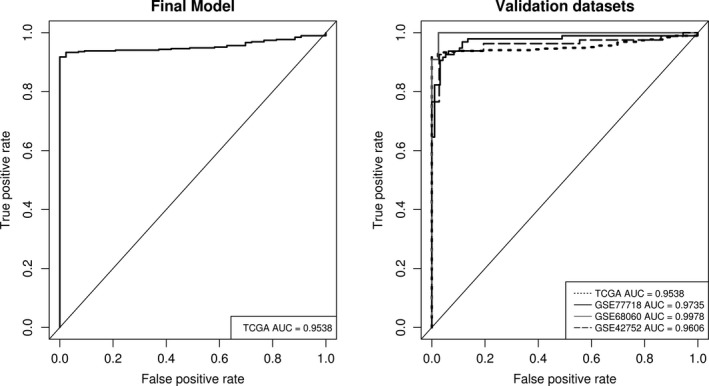
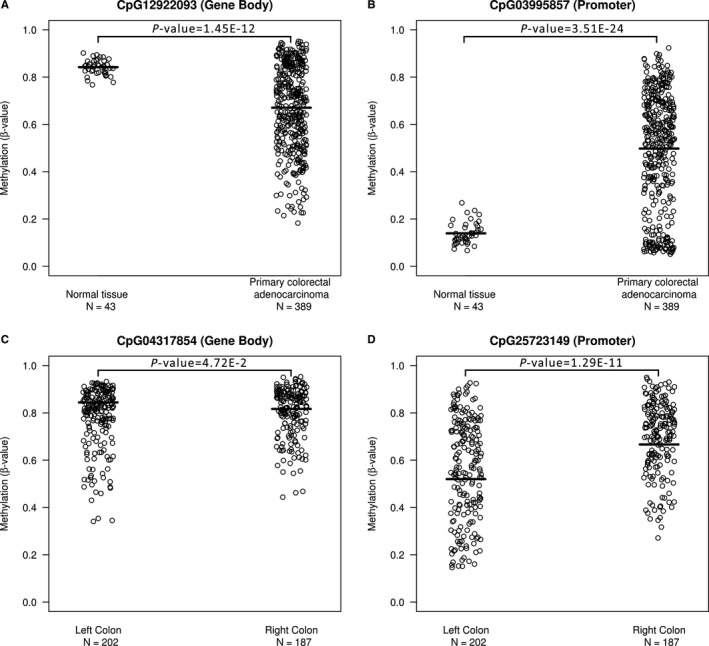
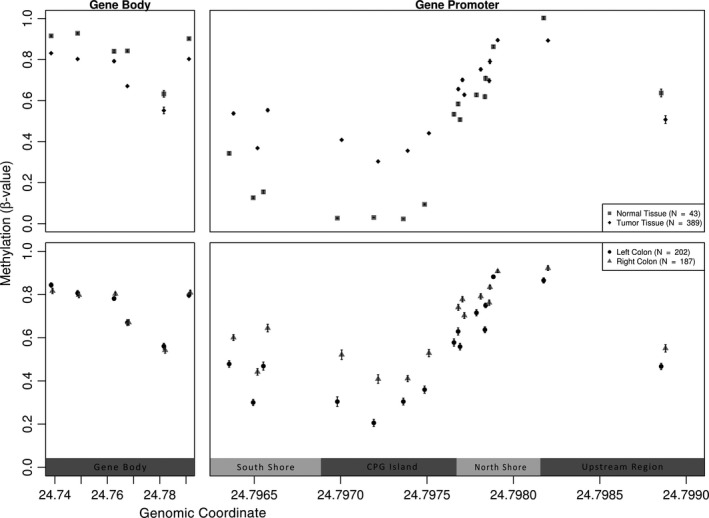
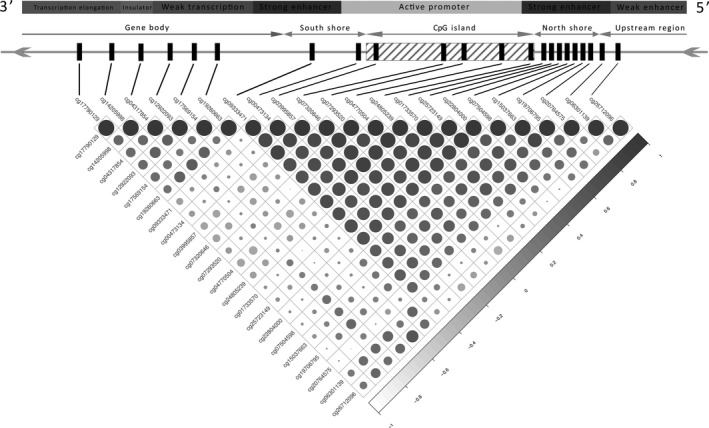
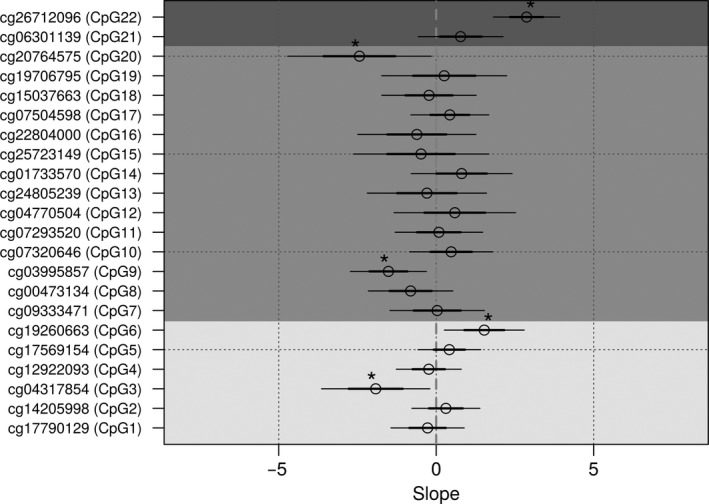
In addition to its implication in hereditary hearing loss, the Gasdermin E (GSDME) gene is also a tumor suppressor involved in cancer progression through programmed cell death. GSDME epigenetic silencing through methylation has been shown in some cancer types, but studies are yet to fully explore its diagnostic/prognostic potential in colorectal cancer on a large-scale. We used public data from The Cancer Genome Atlas (TCGA) to investigate differences in GSDME methylation and expression between colorectal cancer and normal colorectal tissue, and between left- and right-sided colorectal cancers in 432 samples. We also explored GSDME's diagnostic capacity as a biomarker for colorectal cancer. We observed differential methylation in all 22 GSDME CpGs between tumor and normal tissues, and in 18 CpGs between the left- and right-sided groups. In the cancer tissue, putative promoter probes were hypermethylated and gene body probes were hypomethylated, while this pattern was inversed in normal tissues. Both putative promoter and gene body CpGs correlated well together but formed distinct methylation patterns with the putative promoter exhibiting the most pronounced methylation differences between tumor and normal tissues. Clinicopathological parameters, excluding age, did not show any effect on CpG methylation. Although the methylation of 5 distinct probes was a good predictor of gene expression, we could not identify an association between GSDME methylation and expression in general. Survival analysis showed no association between GSDME methylation and expression on 5-year patient survival. Through logistic regression, we identified a combination of 2 CpGs, that can discriminate between cancer and normal tissue with high accuracy (AUC = 0.95) irrespective of age and tumor stage. We also validated our model in 3 external methylation datasets, from the Gene Expression Omnibus database, and similar results were reached. Our results suggest that GSDME is a promising biomarker for the detection of colorectal cancer.
除了与遗传性听力损失有关外,Gasdermin E(GSDME)基因也是一种肿瘤抑制因子,通过程序性细胞死亡参与癌症的进展。在一些癌症类型中,已经观察到 GSDME 通过甲基化的表观遗传沉默,但研究尚未在大规模上充分探索其在结直肠癌中的诊断/预后潜力。我们使用来自癌症基因组图谱(TCGA)的公共数据,研究了 432 个样本中结直肠癌与正常结直肠组织以及左右侧结直肠癌之间 GSDME 甲基化和表达的差异。我们还探讨了 GSDME 作为结直肠癌生物标志物的诊断能力。我们观察到在肿瘤组织和正常组织之间,所有 22 个 GSDME CpG 都存在差异甲基化,而在左侧和右侧组之间有 18 个 CpG 存在差异甲基化。在癌症组织中,假定启动子探针被高度甲基化,基因体探针被低甲基化,而在正常组织中则相反。假定启动子和基因体 CpG 之间相关性良好,但形成不同的甲基化模式,假定启动子与肿瘤和正常组织之间的甲基化差异最为显著。除年龄外,临床病理参数对 CpG 甲基化没有影响。尽管 5 个不同探针的甲基化是基因表达的良好预测因子,但我们无法确定 GSDME 甲基化与表达之间的一般关联。生存分析显示,GSDME 甲基化与表达与 5 年患者生存率之间没有关联。通过逻辑回归,我们确定了 2 个 CpG 组合,可以在不考虑年龄和肿瘤分期的情况下,以高准确性(AUC=0.95)区分癌症和正常组织。我们还在来自基因表达综合数据库的 3 个外部甲基化数据集上验证了我们的模型,得出了相似的结果。我们的结果表明,GSDME 是检测结直肠癌的有前途的生物标志物。