1 University Paris Descartes , ComUE Sorbonne Paris Cité, Paris, France.
2 Institut national de la santé et de la recherche médicale (INSERM, National Institute of Health & Medical Research) UMR S-1124 , Paris, France.
Environ Health Perspect. 2019 Apr;127(4):47005. doi: 10.1289/EHP4200.
Available toxicity data can be optimally interpreted if they are integrated using computational approaches such as systems biology modeling. Such approaches are particularly warranted in cases where regulatory decisions have to be made rapidly.
The study aims at developing and applying a new integrative computational strategy to identify associations between bisphenol S (BPS), a substitute for bisphenol A (BPA), and components of adverse outcome pathways (AOPs).
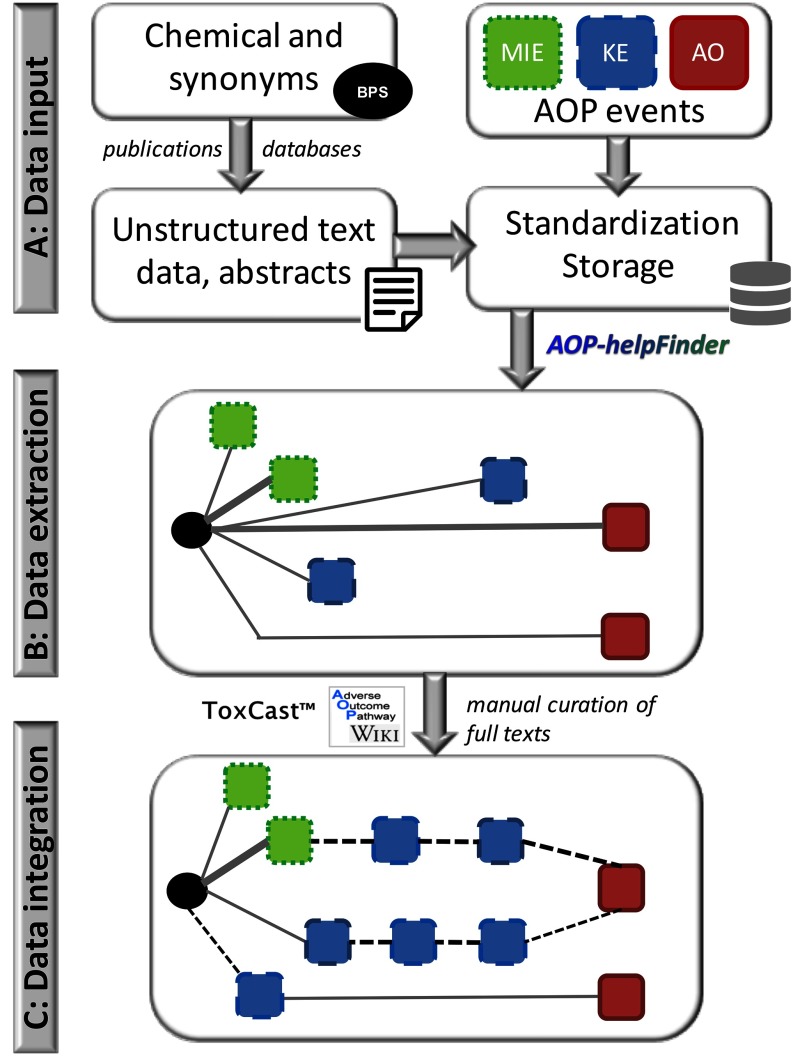
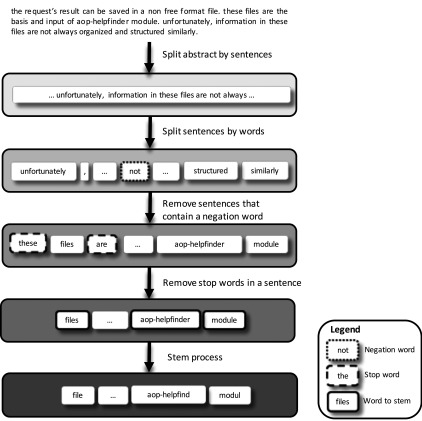
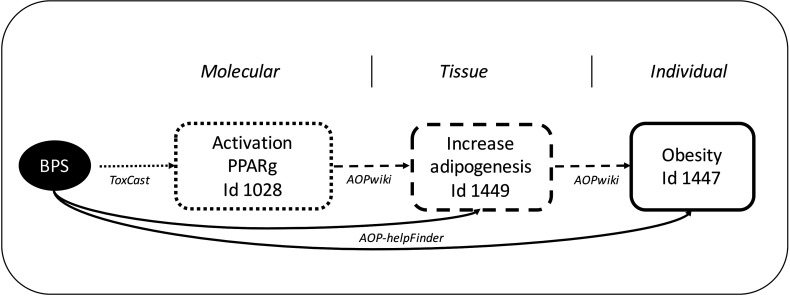
The proposed approach combines a text mining (TM) procedure and integrative systems biology to comprehensively analyze the scientific literature to enrich AOPs related to environmental stressors. First, to identify relevant associations between BPS and different AOP components, a list of abstracts was screened using the developed text-mining tool AOP-helpFinder, which calculates scores based on the graph theory to prioritize the findings. Then, to fill gaps between BPS, biological events, and adverse outcomes (AOs), a systems biology approach was used to integrate information from the AOP-Wiki and ToxCast databases, followed by manual curation of the relevant publications.
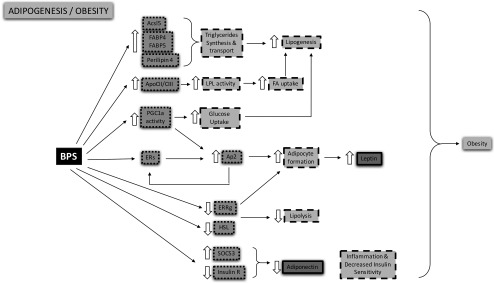
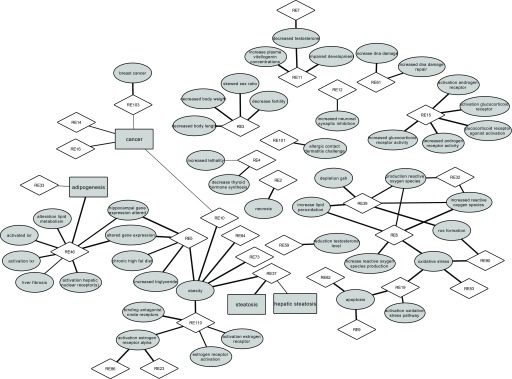
Links between BPS and 48 AOP key events (KEs) were identified and scored via 31 references. The main outcomes were related to reproductive health, endocrine disruption, impairments of metabolism, and obesity. We then explicitly analyzed co-mention of the terms BPS and obesity by data integration and manual curation of the full text of the publications. Several molecular and cellular pathways were identified, which allowed the proposal of a biological explanation for the association between BPS and obesity.
By analyzing dispersed information from the literature and databases, our novel approach can identify links between stressors and AOP KEs. The findings associating BPS and obesity illustrate the use of computational tools in predictive toxicology and highlight the relevance of the approach to decision makers assessing substituents to toxic chemicals. https://doi.org/10.1289/EHP4200.
如果使用计算方法(如系统生物学建模)来整合现有毒性数据,就可以对其进行最佳解释。在需要快速做出监管决策的情况下,尤其需要采用这种方法。
本研究旨在开发并应用一种新的综合计算策略,以确定双酚 S(BPS)与不良结局途径(AOP)组件之间的关联,BPS 是双酚 A(BPA)的替代品。
该方法结合文本挖掘(TM)程序和综合系统生物学,全面分析科学文献,以丰富与环境应激源相关的 AOP。首先,使用开发的文本挖掘工具 AOP-helpFinder 筛选出一系列摘要,该工具基于图论计算分数,对结果进行优先级排序,以确定 BPS 与不同 AOP 组件之间的相关关联。然后,为了填补 BPS、生物事件和不良结局(AO)之间的空白,使用系统生物学方法整合来自 AOP-Wiki 和 ToxCast 数据库的信息,并对相关文献进行手动整理。
通过 31 篇参考文献,确定并对 BPS 与 48 个 AOP 关键事件(KE)之间的联系进行了评分。主要结果与生殖健康、内分泌干扰、代谢损伤和肥胖有关。然后,我们通过数据集成和对文献全文进行手动整理,明确分析了 BPS 和肥胖这两个术语共同出现的情况。确定了几个分子和细胞途径,这为 BPS 和肥胖之间的关联提供了生物学解释。
通过分析文献和数据库中分散的信息,我们的新方法可以确定应激源与 AOP KE 之间的联系。将 BPS 与肥胖联系起来的发现说明了计算工具在预测毒理学中的应用,并强调了该方法对评估有毒化学品替代品的决策者的相关性。https://doi.org/10.1289/EHP4200.