Department of Anthropology, University of Alberta, Edmonton, Alberta, Canada.
PLoS One. 2019 Apr 17;14(4):e0214575. doi: 10.1371/journal.pone.0214575. eCollection 2019.
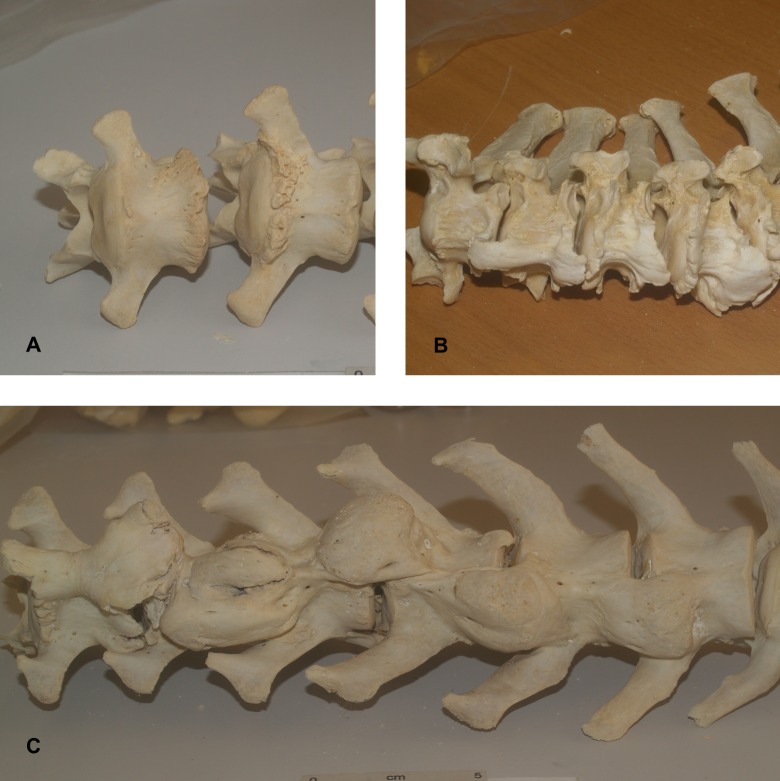
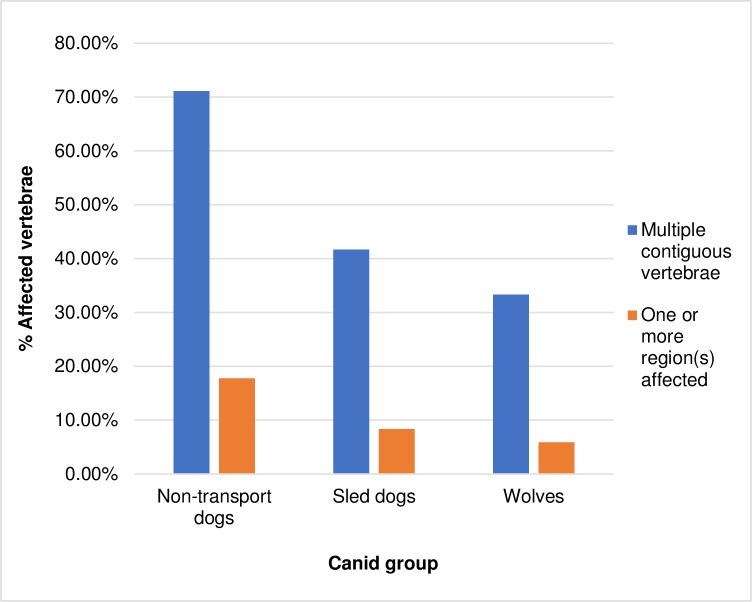
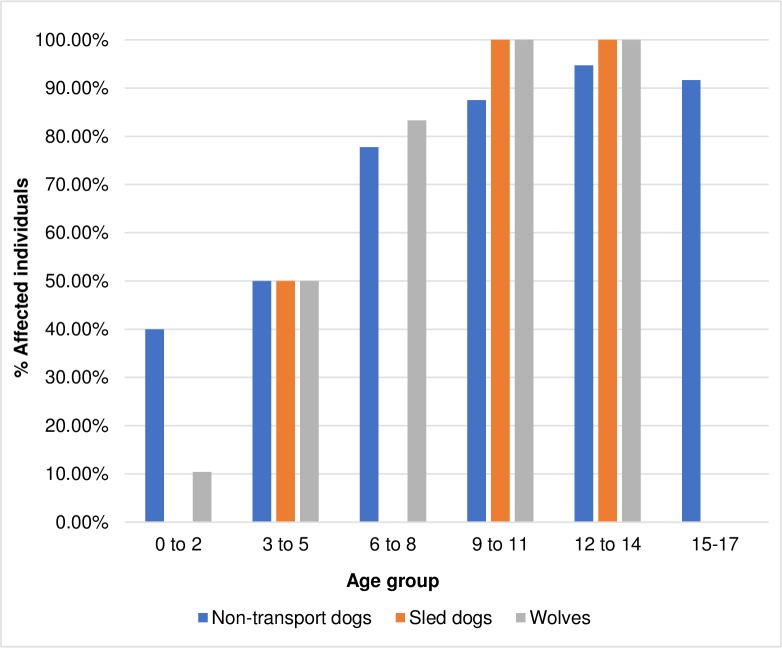
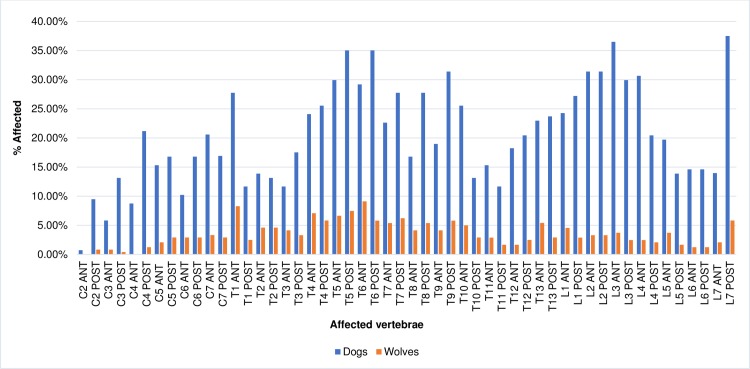
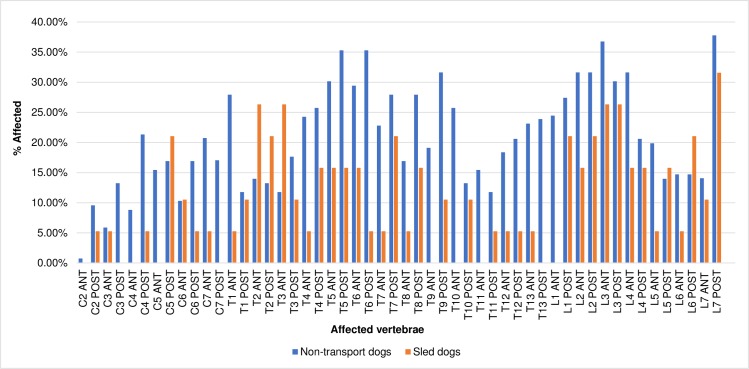
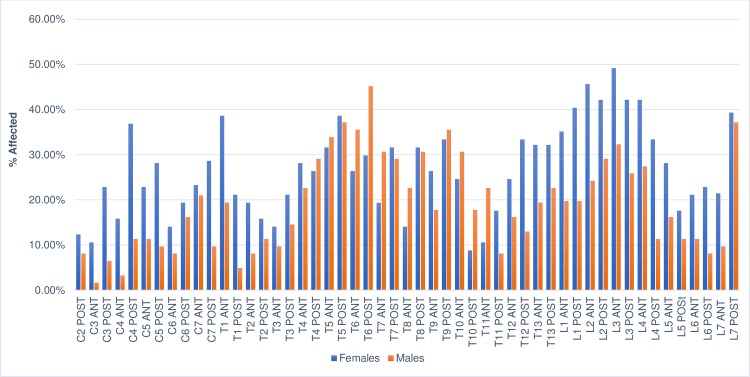
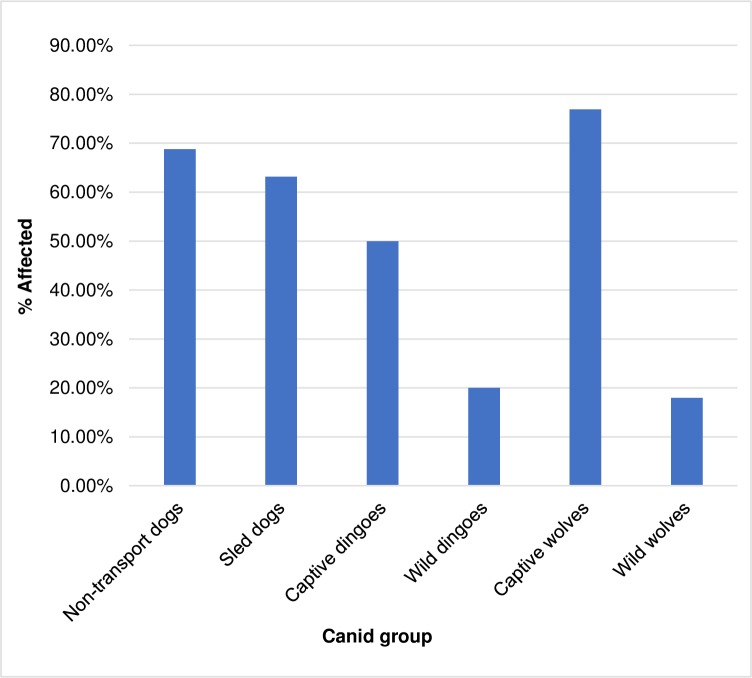
Over the past several decades archaeologists have used the spinal pathology spondylosis deformans as an indicator that archaeological dogs were used to pull or carry loads. This interpretive approach is largely based upon observations of prehistoric dog remains and archaeologist's interpretations of veterinary literature on recent sled dogs and other draft animals. However, no comparative large-scale studies of the occurrence of spondylosis deformans in wild canids, transport dogs, and dogs never involved in pulling or carrying loads have been published. To evaluate the reliability of spondylosis deformans in archaeological dogs as an indicator of participation in transport activities, 136 modern non-transport dogs, 19 sled dogs, and 241 wolves were systematically analyzed for the occurrence of spondylosis deformans. Our results indicate this pathology is not a reliable skeletal indicator of dog transport because the disease is prevalent in both dogs and wolves, regardless of their occupational histories. Numerous factors correlate with the occurrence and manifestation of this disease in canids, including age, body size, sex, and inbreeding. As such, it remains extremely challenging to identify specific etiologies for spondylosis deformans in archaeological specimens.
在过去的几十年里,考古学家一直将脊柱病变变形性骨关节炎作为考古犬用于拖拽或搬运货物的指标。这种解释方法主要基于对史前犬类遗骸的观察以及考古学家对现代雪橇犬和其他役用动物兽医文献的解释。然而,目前还没有关于野生犬科动物、运输犬和从未参与过拖拽或搬运货物的犬类中变形性骨关节炎发生情况的大规模比较研究发表。为了评估在考古犬中变形性骨关节炎作为参与运输活动的指标的可靠性,我们对 136 只现代非运输犬、19 只雪橇犬和 241 只狼进行了系统分析,以确定变形性骨关节炎的发生情况。我们的研究结果表明,这种病理学并不能可靠地作为犬类运输的骨骼指标,因为无论其职业历史如何,这种疾病在犬类和狼中都很普遍。许多因素与犬类中这种疾病的发生和表现相关,包括年龄、体型、性别和近亲繁殖。因此,要确定考古标本中变形性骨关节炎的具体病因仍然极具挑战性。