State Key Laboratory for Conservation and Utilization of Subtropical Agro-bioresources, College of Life Science and Technology, Guangxi University, Nanning Guangxi, China.
PLoS One. 2019 Apr 17;14(4):e0215039. doi: 10.1371/journal.pone.0215039. eCollection 2019.
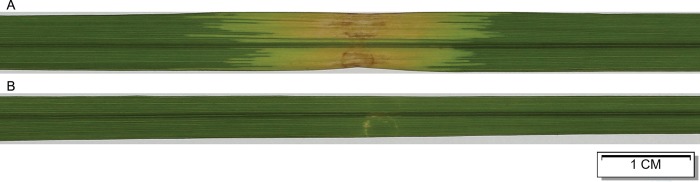
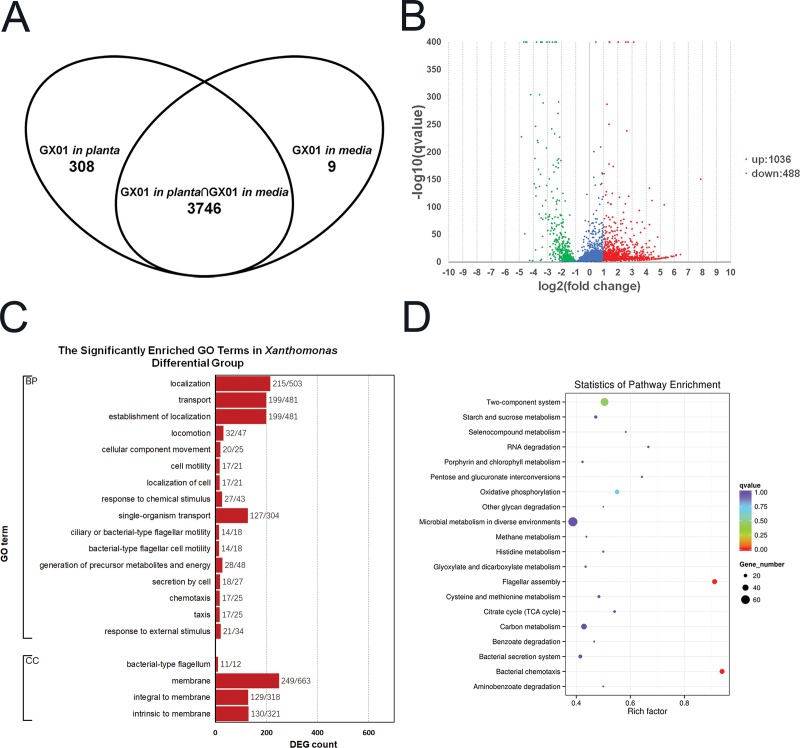
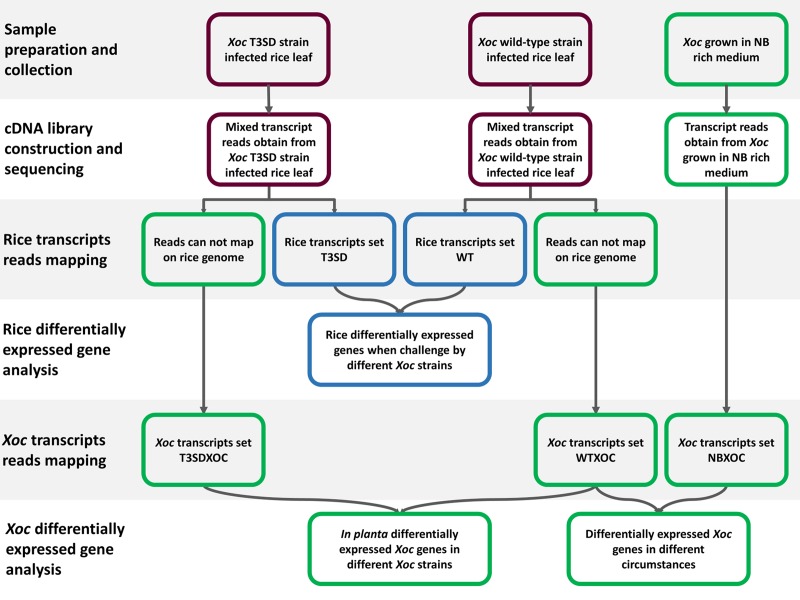
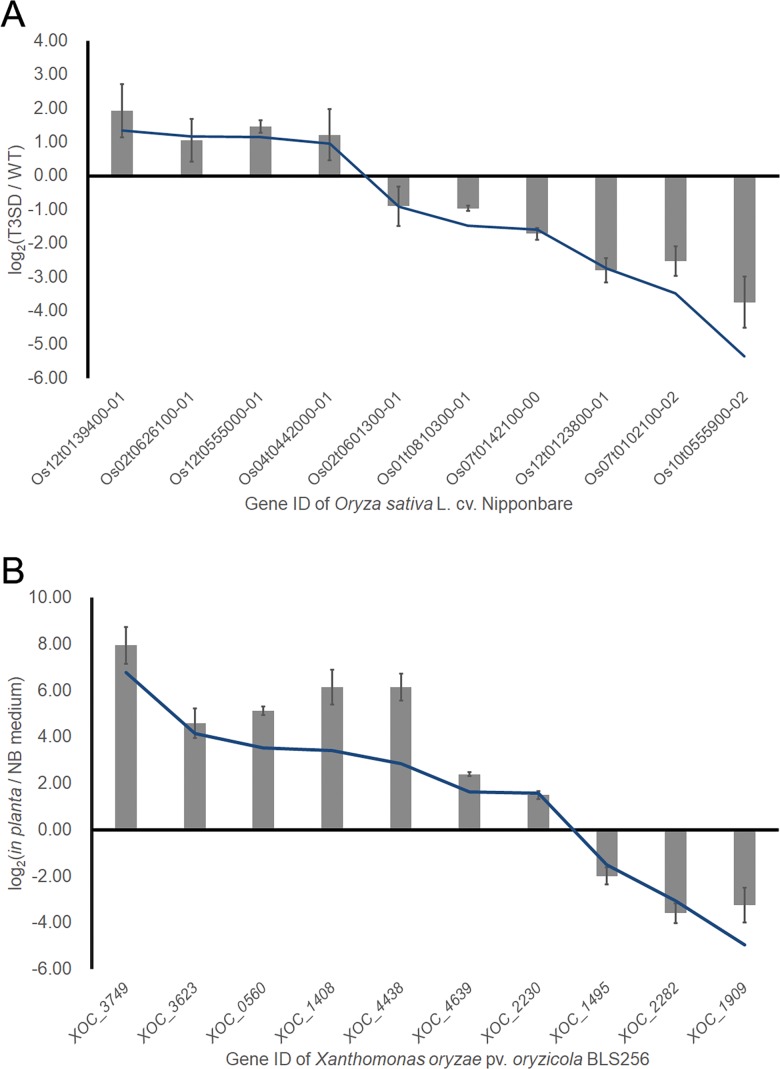
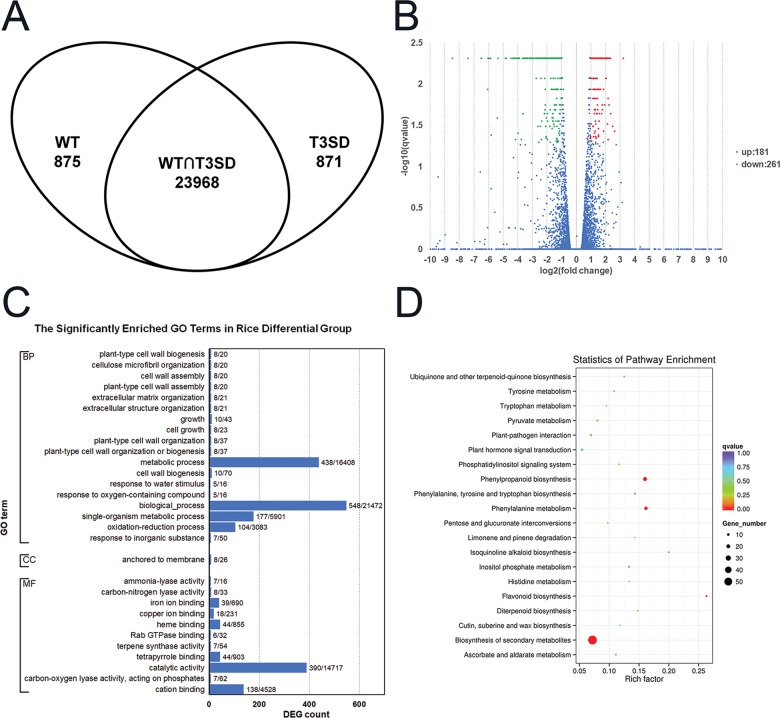
The Gram-negative bacterium Xanthomonas oryzae pv. oryzicola (Xoc) is the causal agent of rice bacterial leaf streak (BLS), one of the most destructive diseases of rice (Oryza sativa L.) that is the important staple crop. Xoc can invade host leaves via stomata and wounds and its type three secretion system (T3SS) is pivotal to its pathogenic lifestyle. In this study, using a novel dual RNA-seq approach, we examined transcriptomes of rice and Xoc in samples inoculated with wild type Xoc GX01 and its T3SS defective strain (T3SD), to investigate the global transcriptional changes in both organisms. Compared with T3SD strain, rice inoculated with wild type Xoc GX01 resulted in significant expression changes of a series of plant defence related genes, including ones altered in plant signalling pathway, and downregulated in phenylalanine metabolism, flavonoid and momilactone biosynthesis, suggesting repression of plant defence response and reduction in both callose deposition and phytoalexin accumulation. Also, some known transcription activator-like effector (TALE) targets were induced by Xoc GX01, e.g. OsSultr3;6 which contributes to rice susceptibility. Some cell elongation related genes, including several expansin genes, were induced by GX01 too, suggesting that Xoc may exploit this pathway to weaken cell wall strength, beneficial for bacterial infection. On the other hand, compared with wild type, the T3SD strain transcriptome in planta was characterized by downregulation of ATP, protein and polysaccharide synthesis, and upregulation of antioxidation and detoxification related genes, revealing that T3SD strain faced serious starvation and oxidation stresses in planta without a functional T3SS. In addition, comparative global transcript profiles of Xoc in planta and in medium revealed an upregulation of virulence factor synthesis and secretion in planta in favour of bacterial infection. Collectively, this study provides a comprehensive representation of cross talk between the host and bacterial pathogen, revealing insights into the Xoc-rice pathogenic dynamic and reveals novel strategies exploited by this important pathogen to cause disease.
革兰氏阴性细菌稻黄单胞菌 pv.oryzicola(Xoc)是水稻细菌性条斑病(BLS)的病原体,BLS 是水稻(Oryza sativa L.)最重要的主食作物中最具破坏性的疾病之一。Xoc 可以通过气孔和伤口侵入宿主叶片,其 III 型分泌系统(T3SS)对其致病生活方式至关重要。在这项研究中,我们使用一种新的双 RNA-seq 方法,研究了用野生型 Xoc GX01 和其 T3SS 缺陷型菌株(T3SD)接种的水稻和 Xoc 的转录组,以研究两种生物的全局转录变化。与 T3SD 菌株相比,用野生型 Xoc GX01 接种的水稻导致一系列植物防御相关基因的表达发生显著变化,包括参与植物信号通路的基因,以及苯丙氨酸代谢、类黄酮和乳香内酯生物合成下调,表明植物防御反应受到抑制,几丁质沉积和植保素积累减少。此外,一些已知的转录激活样效应物(TALE)靶基因被 Xoc GX01 诱导,例如 OsSultr3;6,它有助于水稻易感性。GX01 还诱导了一些细胞伸长相关基因,包括几个扩展蛋白基因的表达,这表明 Xoc 可能利用该途径削弱细胞壁强度,有利于细菌感染。另一方面,与野生型相比,T3SD 菌株在植物体内的转录组特征是 ATP、蛋白质和多糖合成下调,抗氧化和解毒相关基因上调,表明 T3SD 菌株在没有功能 T3SS 的情况下,在植物体内面临严重的饥饿和氧化应激。此外,在植物体内和培养基中比较 Xoc 的全基因组转录谱表明,在植物体内有利于细菌感染的毒力因子合成和分泌上调。总之,这项研究提供了宿主和细菌病原体之间相互作用的全面描述,揭示了 Xoc-水稻致病动态的新见解,并揭示了这种重要病原体致病的新策略。