Chinese Academy of Agricultural Sciences, Institute of Vegetables and Flowers, Beijing, 100081, China.
Citrus Research and Education Center, Department of Microbiology and Cell Science, University of Florida, Lake Alfred, FL, 33850, USA.
BMC Genomics. 2019 Jan 17;20(1):55. doi: 10.1186/s12864-018-5384-4.
The gram-negative Xanthomonas genus contains a large group of economically important plant pathogens, which cause severe diseases on many crops worldwide. The diffusible signal factor (DSF) - mediated quorum sensing (QS) system coordinates expression of virulence factors in plant pathogenic Xanthomonas spp. However, the regulatory effects of this system during the Xanthomonas- plant interactions remain unclear from both the pathogen and host aspects.
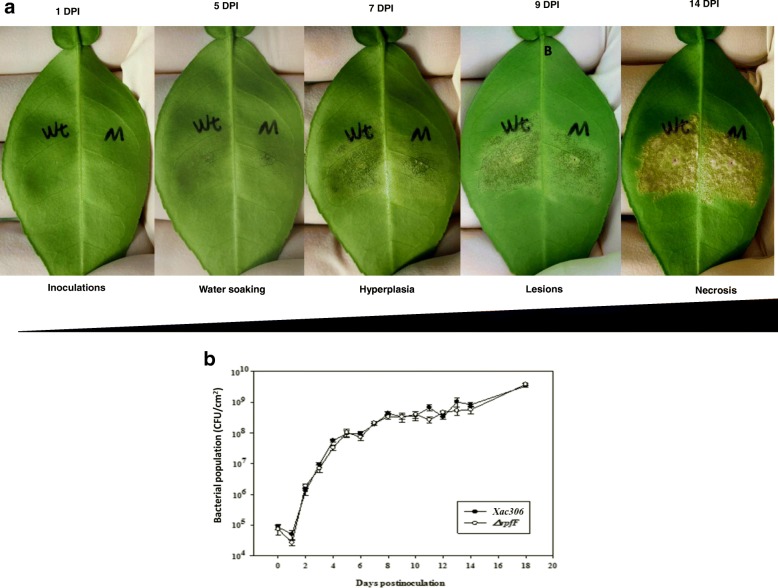
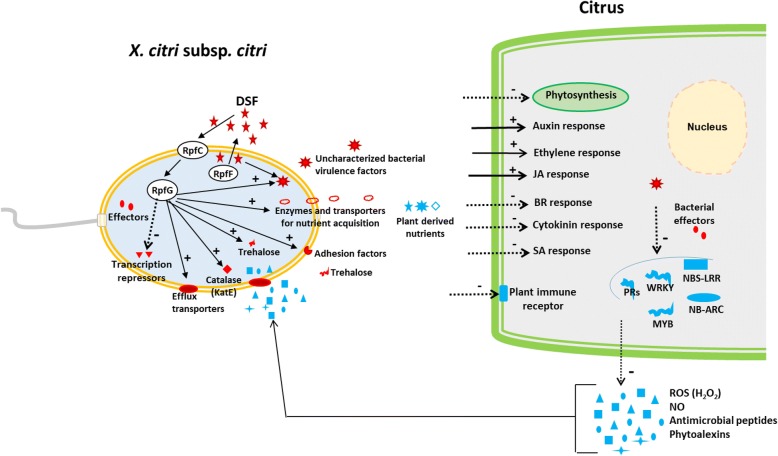
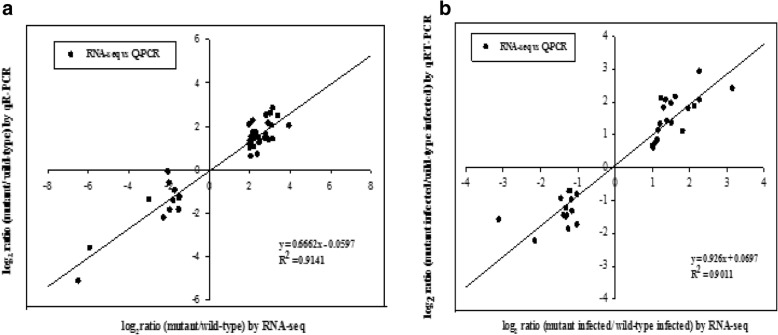
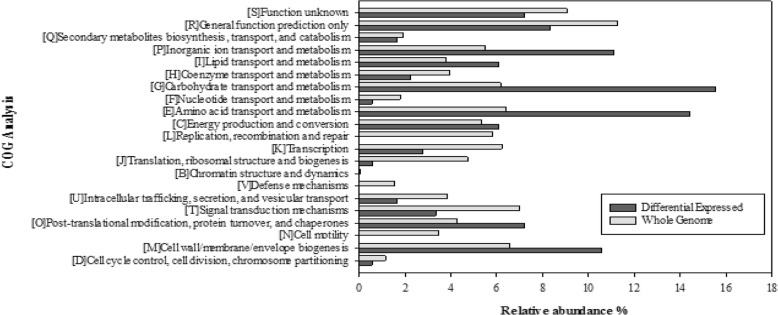
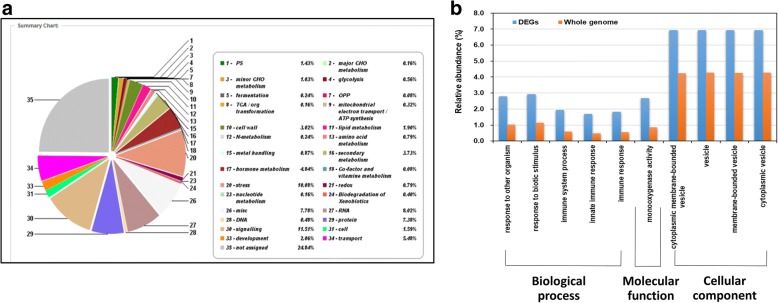
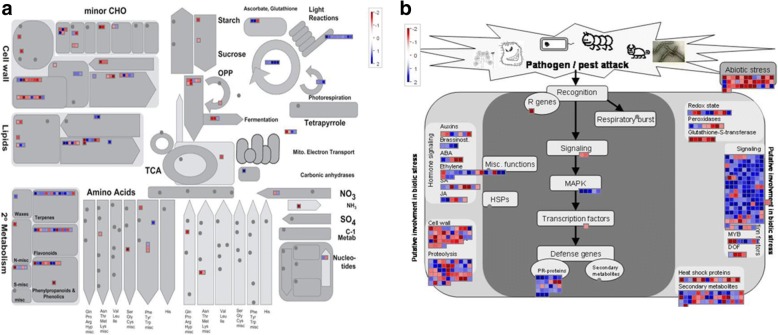
In this study, we investigated the in planta DSF- mediated QS regulon of X. citri subsp. citri (Xac), the causal agent of citrus canker. We also characterized the transcriptional responses of citrus plants to DSF-mediated Xac infection via comparing the gene expression patterns of citrus trigged by wild type Xac strain 306 with those trigged by its DSF- deficient (∆rpfF) mutant using the dual RNA-seq approach. Comparative global transcript profiles of Xac strain 306 and the ∆rpfF mutant during host infection revealed that DSF- mediated QS specifically modulates bacterial adaptation, nutrition uptake and metabolisms, stress tolerance, virulence, and signal transduction to favor host infection. The transcriptional responses of citrus to DSF-mediated Xac infection are characterized by downregulation of photosynthesis genes and plant defense related genes, suggesting photosynthetically inactive reactions and repression of defense responses. Alterations of phytohormone metabolism and signaling pathways were also triggered by DSF-mediated Xac infection to benefit the pathogen.
Collectively, our findings provide new insight into the DSF- mediated QS regulation during plant-pathogen interactions and advance the understanding of traits used by Xanthomonas to promote infection on host plants.
革兰氏阴性黄单胞菌属包含一大组具有重要经济意义的植物病原菌,它们在全球范围内引起许多作物的严重疾病。可扩散信号因子(DSF)介导的群体感应(QS)系统协调植物病原黄单胞菌属中毒力因子的表达。然而,从病原体和宿主两个方面来看,该系统在黄单胞菌与植物相互作用过程中的调控作用尚不清楚。
在本研究中,我们研究了柑橘溃疡病病原菌柑橘溃疡病黄单胞菌(Xac)的植物内 DSF 介导的 QS 调控组。我们还通过比较野生型 Xac 菌株 306 和其 DSF 缺陷(∆rpfF)突变体触发柑橘的基因表达模式,通过比较柑橘的基因表达模式,表征了柑橘植物对 DSF 介导的 Xac 感染的转录反应。使用双 RNA-seq 方法。在宿主感染过程中,Xac 菌株 306 和 ∆rpfF 突变体的比较全基因组转录谱显示,DSF 介导的 QS 特异性调节细菌适应、营养吸收和代谢、应激耐受、毒力和信号转导,有利于宿主感染。柑橘对 DSF 介导的 Xac 感染的转录反应的特征是光合作用基因和植物防御相关基因下调,表明光合作用不活跃反应和防御反应抑制。DSF 介导的 Xac 感染还触发了植物激素代谢和信号转导途径的改变,以有利于病原体。
总的来说,我们的研究结果为植物-病原体相互作用过程中 DSF 介导的 QS 调控提供了新的见解,并深入了解了黄单胞菌用于促进宿主植物感染的特性。