Department of Cellular and Molecular Physiology, Yale University School of Medicine, New Haven, CT 06510, USA.
Cells. 2019 Apr 16;8(4):357. doi: 10.3390/cells8040357.
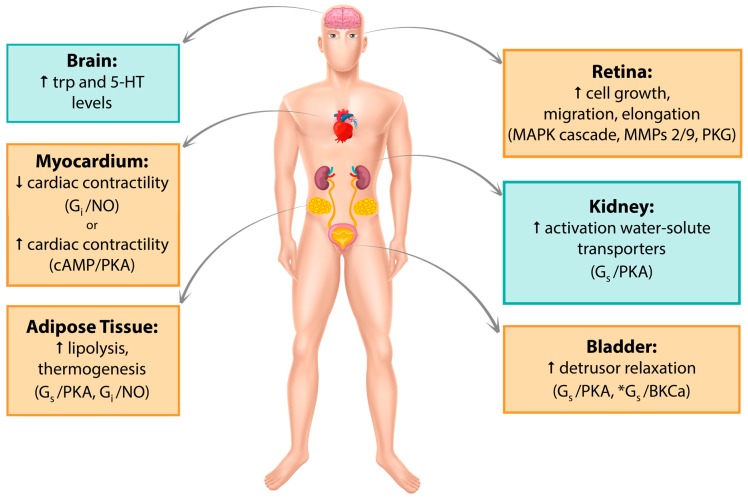
The beta-3 adrenergic receptor (β-AR) is by far the least studied isotype of the beta-adrenergic sub-family. Despite its study being long hampered by the lack of suitable animal and cellular models and inter-species differences, a substantial body of literature on the subject has built up in the last three decades and the physiology of β-AR is unraveling quickly. As will become evident in this work, β-AR is emerging as an appealing target for novel pharmacological approaches in several clinical areas involving metabolic, cardiovascular, urinary, and ocular disease. In this review, we will discuss the most recent advances regarding β-AR signaling and function and summarize how these findings translate, or may do so, into current clinical practice highlighting β-AR's great potential as a novel therapeutic target in a wide range of human conditions.
β-3 肾上腺素能受体(β-AR)是迄今为止β-肾上腺素能亚家族中研究最少的亚型。尽管由于缺乏合适的动物和细胞模型以及种间差异,其研究长期受到阻碍,但在过去三十年中,关于该主题的大量文献已经积累起来,β-AR 的生理学也在迅速阐明。正如本工作中所明显的那样,β-AR 正在成为涉及代谢、心血管、泌尿和眼部疾病的几个临床领域中新型药理学方法的有吸引力的靶标。在这篇综述中,我们将讨论β-AR 信号和功能的最新进展,并总结这些发现如何转化(或可能转化)为当前的临床实践,突出β-AR 在广泛的人类疾病中作为新型治疗靶标的巨大潜力。