Wang Wen-Yan, Cao Yun-Xia, Zhou Xiao, Wei Bing, Zhan Lei, Sun Shi-Ying
1Department of Obstetrics and Gynecology, The Second Hospital of Anhui Medical University, Hefei, 230601 People's Republic of China.
2Teaching and Research Group of Obstetrics & Gynecology, Anhui Medical University, No. 81, Meishan Road, Hefei, 230032 Anhui People's Republic of China.
Cancer Cell Int. 2019 Apr 5;19:86. doi: 10.1186/s12935-019-0780-7. eCollection 2019.
Ovarian cancer is known as one of the most common cancers in the world among women. ST6GALNAC1 is highly expressed in cancer stem cells (CSCs), which correlates to high tumor-initiating, self-renewal and differentiation abilities. This present study aims to investigate how ST6GALNAC1 affects ovarian cancer stem cells (OCSCs).
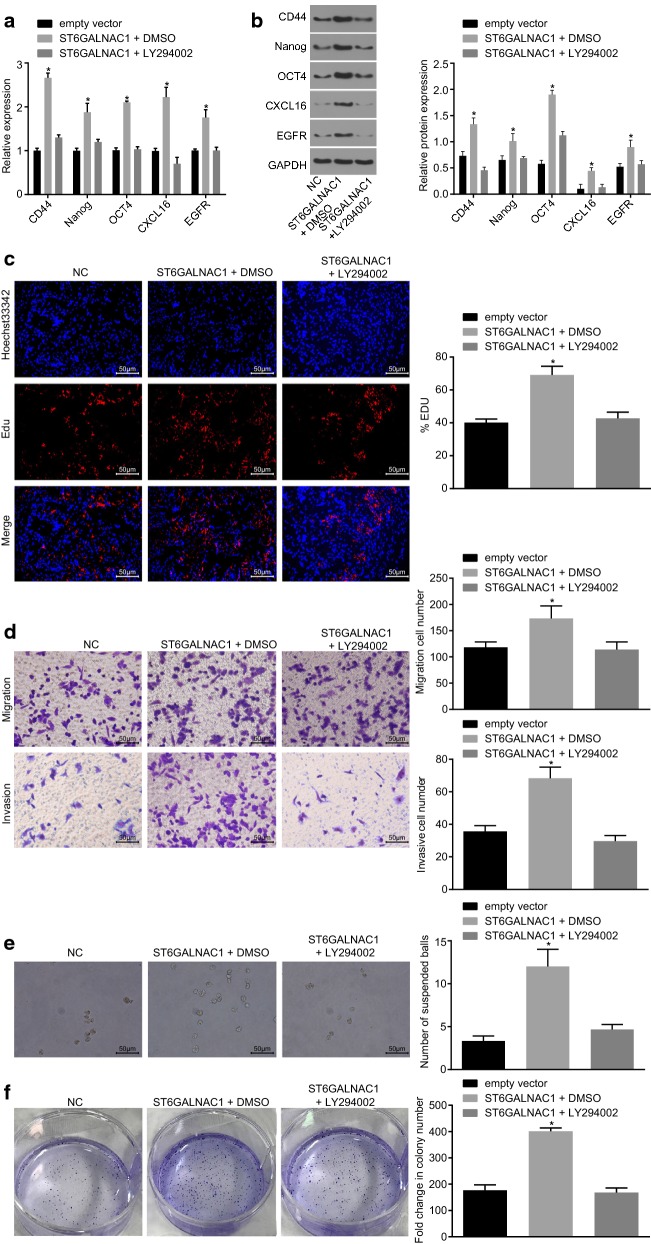
In order to identify the differentially expressed genes related to ovarian cancer, microarray-based gene expression profiling of ovarian cancer was used, and ST6GALANC1 was one of the identified targets. After that, levels of ST6GALNAC1 in OCSCs and ovarian cancer cells were examined. Subsequently, an Akt signaling pathway inhibitor LY294002 was introduced into the cluster of differentiation 90 (CD90) stem cells, and cell proliferation, migration and invasion, levels of CXCL16, EGFR, CD44, Nanog and Oct4, as well as tumorigenicity of OCSCs were examined.
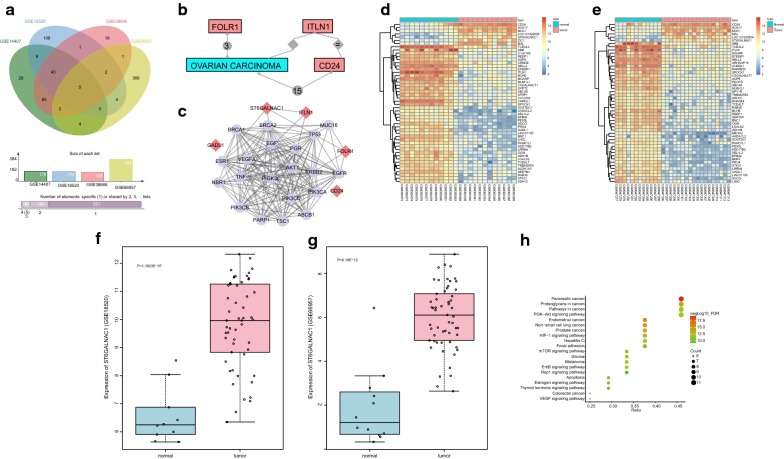
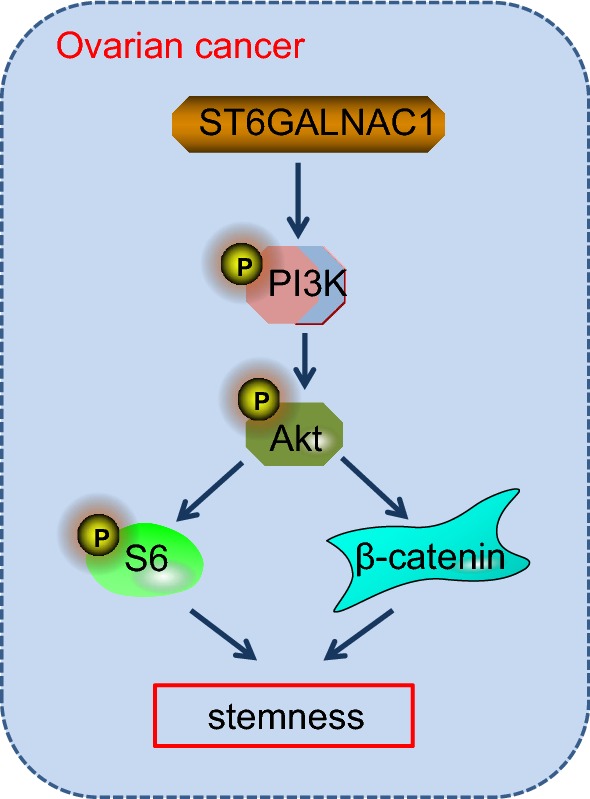
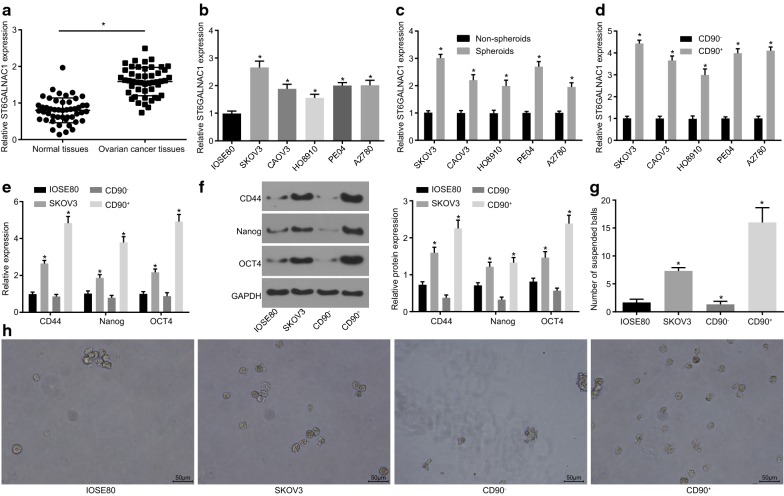
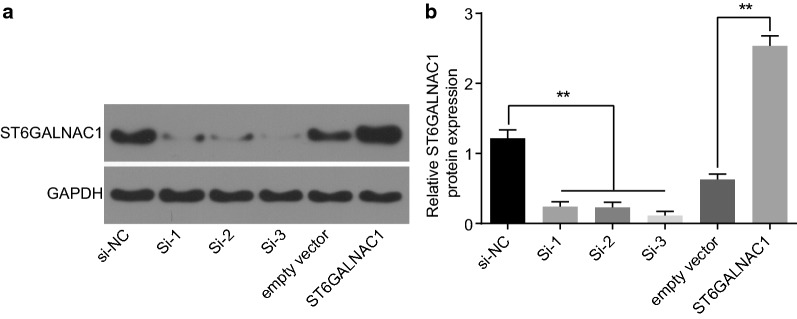
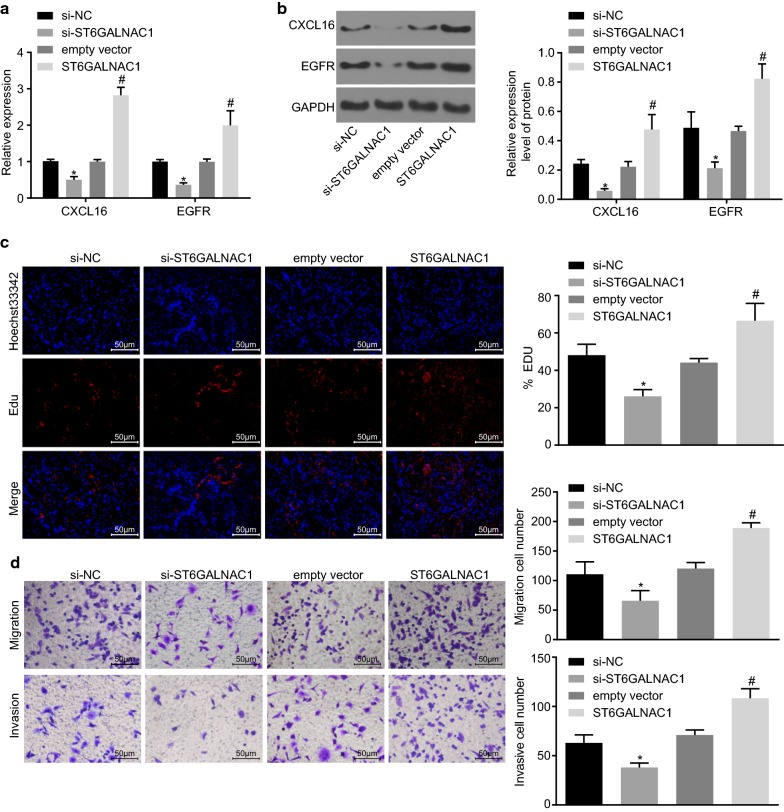
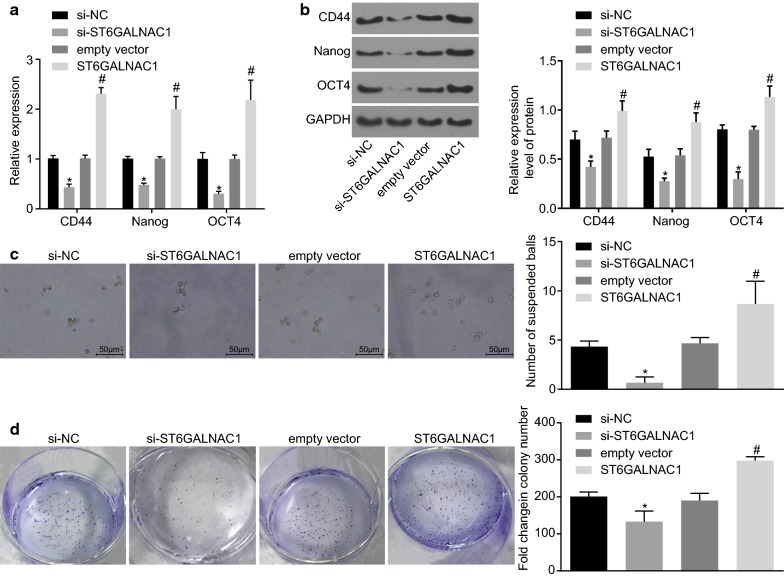
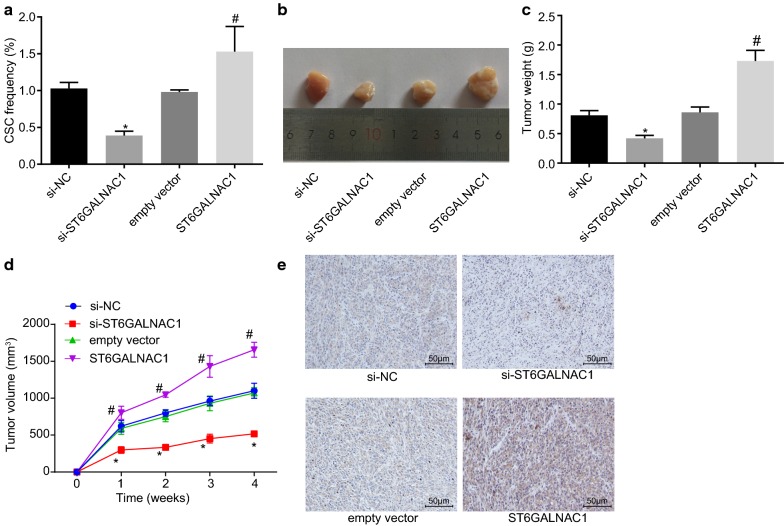
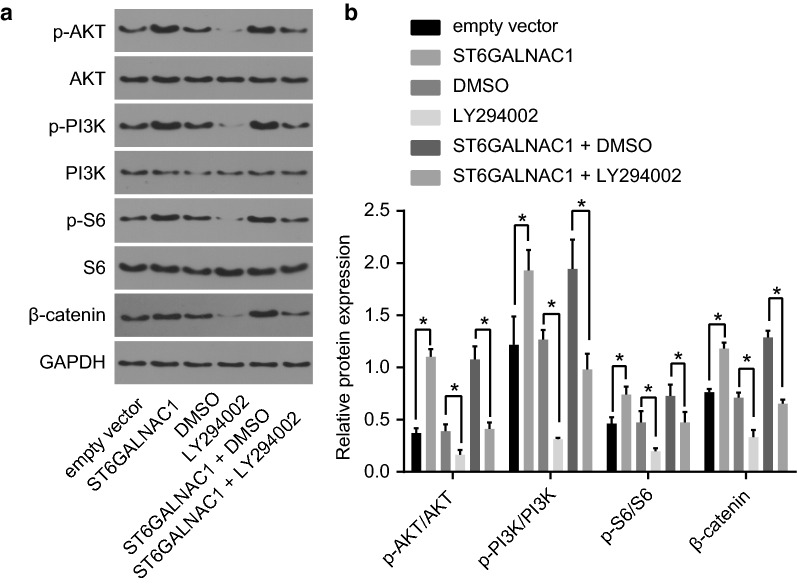
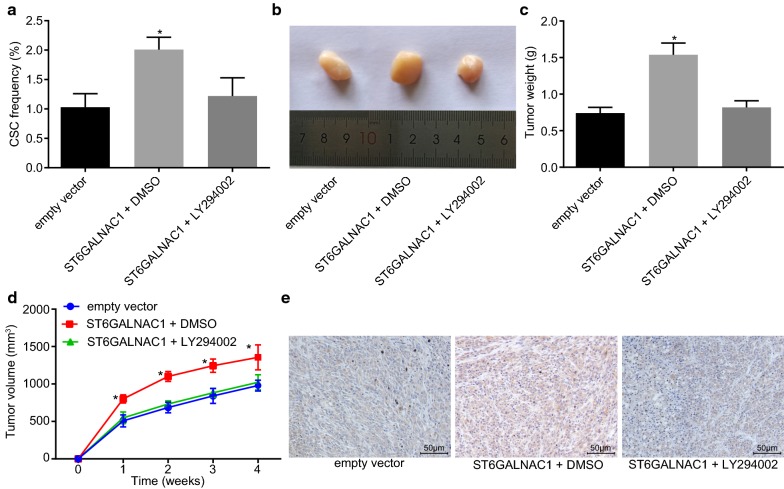
By using a comprehensive microarray analysis, it was determined that ST6GALNAC1 was highly expressed in ovarian cancer and it regulated the Akt signaling pathway. High levels of ST6GALNAC1 were observed in OCSCs and ovarian cancer cells. Silencing ST6GALNAC1 was shown to be able to reduce cell proliferation, migration, invasion, self-renewal ability, tumorigenicity of OCSCs. In accordance with these results, the effects of ST6GALNAC1 in OCSCs were dependent on the Akt signaling pathway.
When taken together, our findings defined the potential stimulative roles of ST6GALNAC1 in ovarian cancer and OCSCs, which relied on the Akt signaling pathway.
卵巢癌是世界上女性中最常见的癌症之一。ST6GALNAC1在癌症干细胞(CSCs)中高表达,这与高肿瘤起始、自我更新和分化能力相关。本研究旨在探讨ST6GALNAC1如何影响卵巢癌干细胞(OCSCs)。
为了鉴定与卵巢癌相关的差异表达基因,使用了基于微阵列的卵巢癌基因表达谱分析,ST6GALANC1是鉴定出的靶点之一。之后,检测了OCSCs和卵巢癌细胞中ST6GALNAC1的水平。随后,将Akt信号通路抑制剂LY294002引入分化簇90(CD90)干细胞中,并检测了OCSCs的细胞增殖、迁移和侵袭、CXCL16、EGFR、CD44、Nanog和Oct4的水平以及致瘤性。
通过全面的微阵列分析,确定ST6GALNAC1在卵巢癌中高表达并调节Akt信号通路。在OCSCs和卵巢癌细胞中观察到高水平的ST6GALNAC1。沉默ST6GALNAC1能够降低OCSCs的细胞增殖、迁移、侵袭、自我更新能力和致瘤性。根据这些结果,ST6GALNAC1在OCSCs中的作用依赖于Akt信号通路。
综上所述,我们的研究结果确定了ST6GALNAC1在卵巢癌和OCSCs中的潜在刺激作用,这依赖于Akt信号通路。