Bankole Paul O, Adekunle Adedotun A, Govindwar Sanjay P
Department of Pure and Applied Botany, College of Biosciences, Federal University of Agriculture Abeokuta, Ogun State, Nigeria.
Lancaster Environment Centre, Lancaster University LA1 4YQ, Lancaster, United Kingdom.
Biotechnol Rep (Amst). 2019 Mar 28;23:e00327. doi: 10.1016/j.btre.2019.e00327. eCollection 2019 Sep.
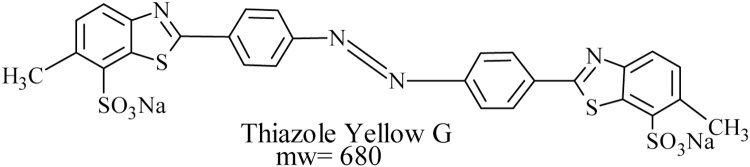
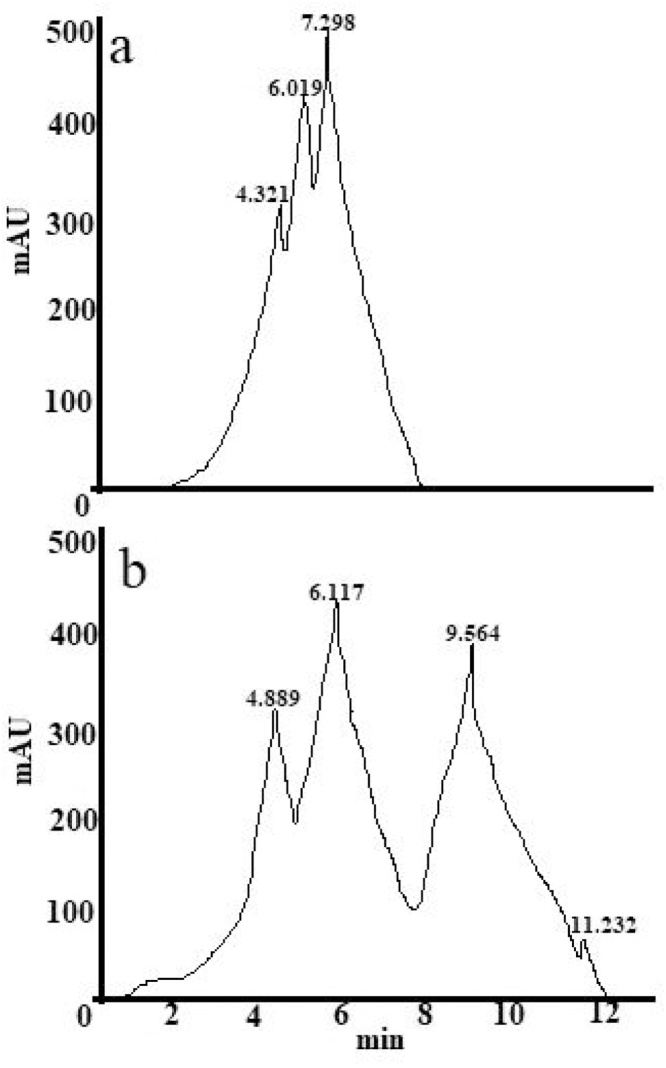
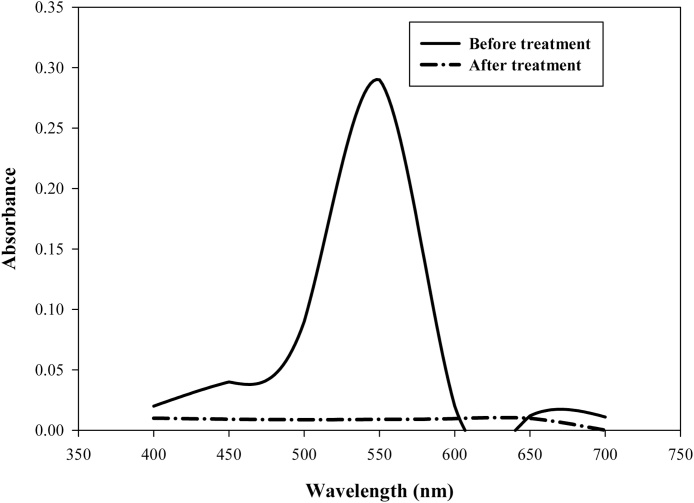
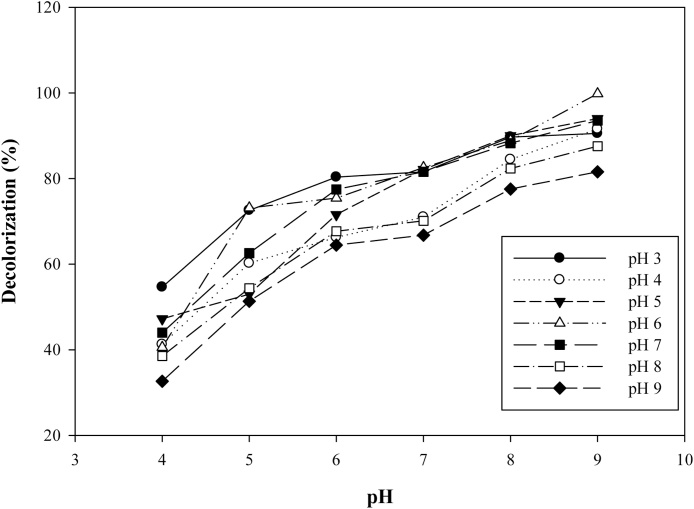
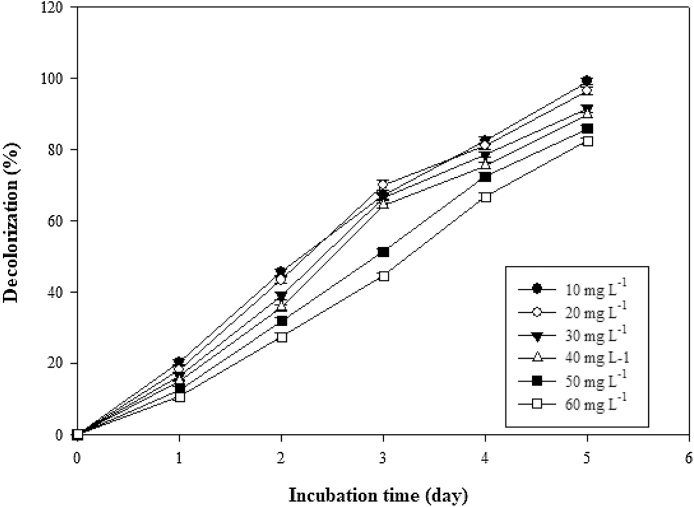
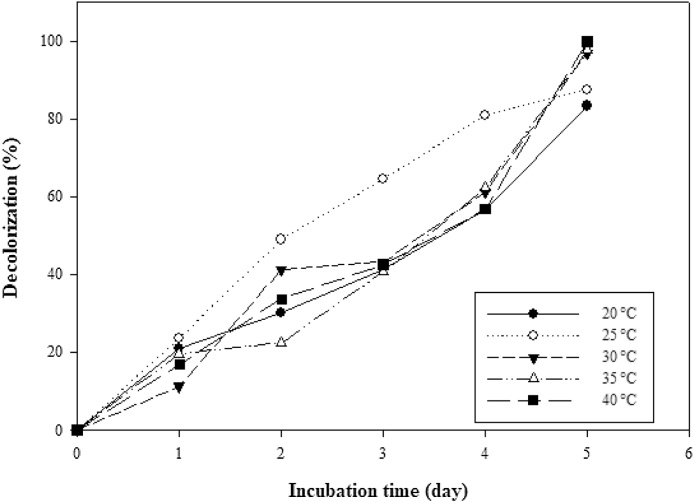
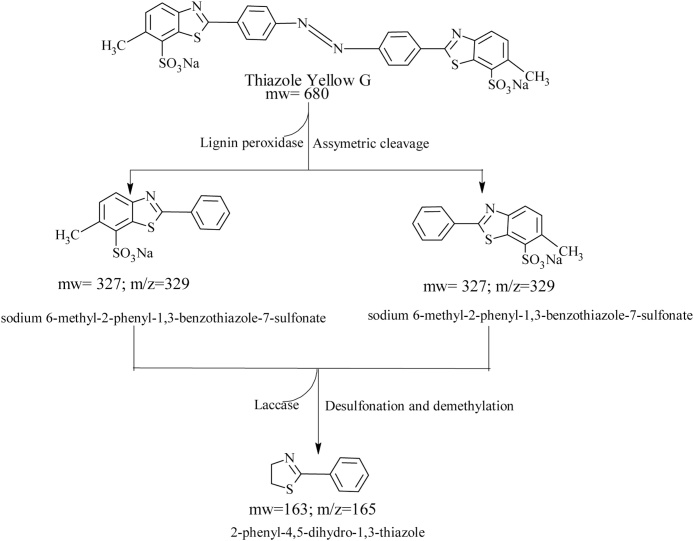
Filamentous fungi perform tremendously in adsorption of dyes from polluted environment. In this study, LAG decolorized thiazole yellow G dye within 5 days. Scale up studies done revealed that maximum decolorization (98%) was achieved at a concentration (10 mg L), temperature (35 °C) and pH 6. The fungus exhibited significant inductions in laccase (71%) and lignin peroxidase (48%) respectively. Spectrometric analysis (UV-vis, HPLC and gas chromatography-mass spectrometry) was used in analyzing the degraded products of the dye. The GCMS analysis revealed the production of two metabolites; sodium 6-methyl-2-phenyl-1,3-benzothiazole-7-sulfonate and 2-phenyl-4,5-dihydro-1,3-thiazole after degradation of thiazole yellow G dye. A metabolic pathway of thiazole yellow G dye degradation by was proposed. Significant growth in plumule and radicle couple with an attendant increase in germination further confirmed the detoxified status of the dye after degradation.
丝状真菌在从污染环境中吸附染料方面表现出色。在本研究中,LAG在5天内使噻唑黄G染料脱色。扩大规模研究表明,在浓度为10 mg/L、温度为35°C和pH值为6时实现了最大脱色率(98%)。该真菌分别在漆酶(71%)和木质素过氧化物酶(48%)方面表现出显著诱导作用。使用光谱分析(紫外可见光谱、高效液相色谱和气相色谱-质谱联用)来分析染料的降解产物。气相色谱-质谱联用分析表明,噻唑黄G染料降解后产生了两种代谢物;6-甲基-2-苯基-1,3-苯并噻唑-7-磺酸钠和2-苯基-4,5-二氢-1,3-噻唑。提出了LAG降解噻唑黄G染料的代谢途径。胚芽和胚根的显著生长以及随之而来的发芽率增加进一步证实了染料降解后的解毒状态。