Billings Catherine G, Lewis Robert, Hurdman Judith A, Condliffe Robin, Elliot Charlie A, Thompson A A Roger, Smith Ian A, Austin Matthew, Armstrong Iain J, Hamilton Neil, Charalampopoulos Athanasios, Sabroe Ian, Swift Andrew J, Rothman Alexander M, Wild Jim M, Lawrie Allan, Waterhouse Judith C, Kiely David G
1 Sheffield Pulmonary Vascular Disease Unit, Sheffield Teaching Hospitals NHS Foundation Trust, Royal Hallamshire Hospital, Sheffield, UK.
2 Department of Infection, Immunity and Cardiovascular Disease, University of Sheffield, Medical School, Sheffield, UK.
Pulm Circ. 2019 Apr-Jun;9(2):2045894019848649. doi: 10.1177/2045894019848649.
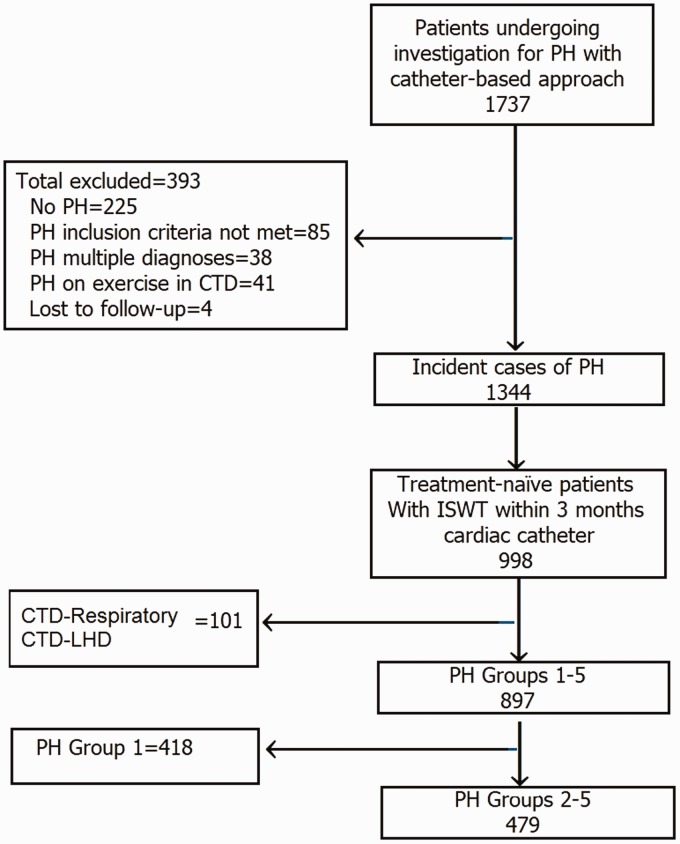
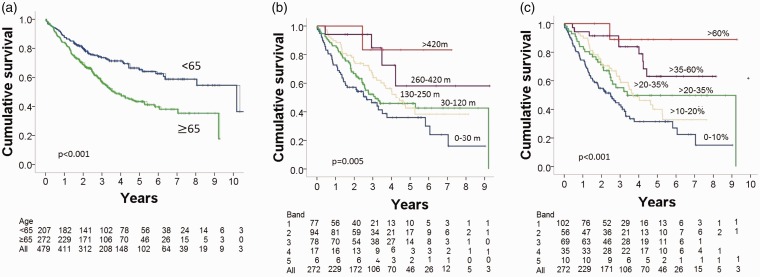
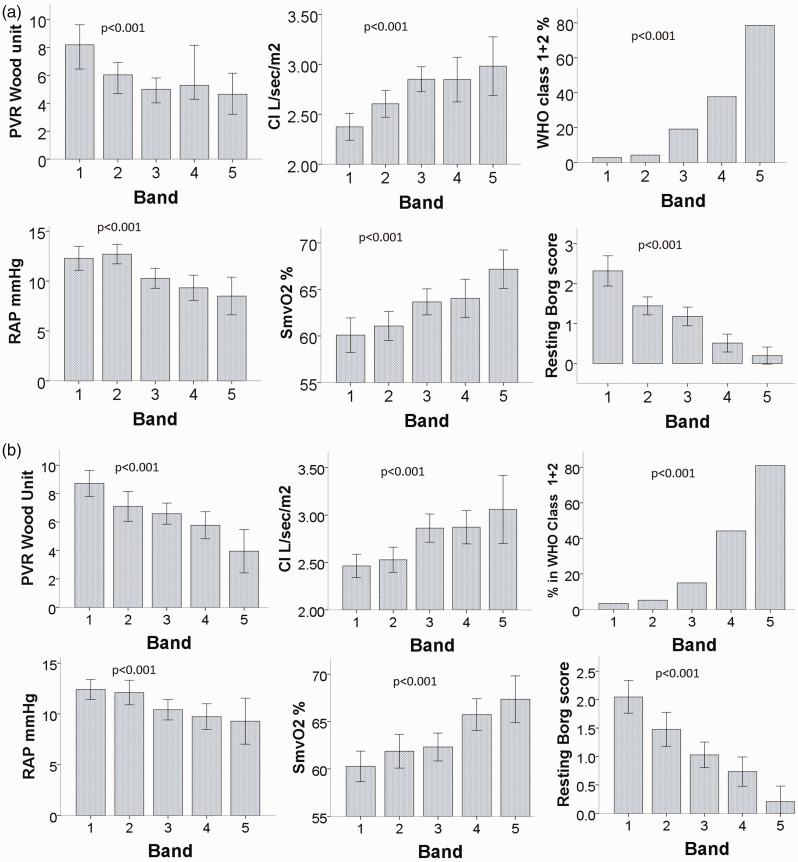
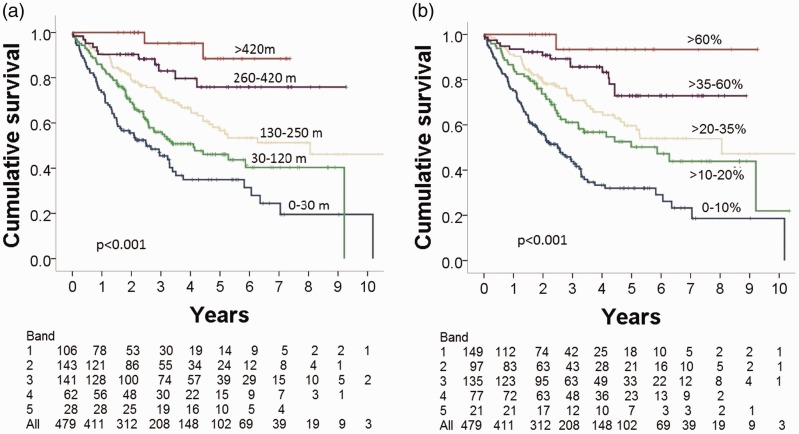
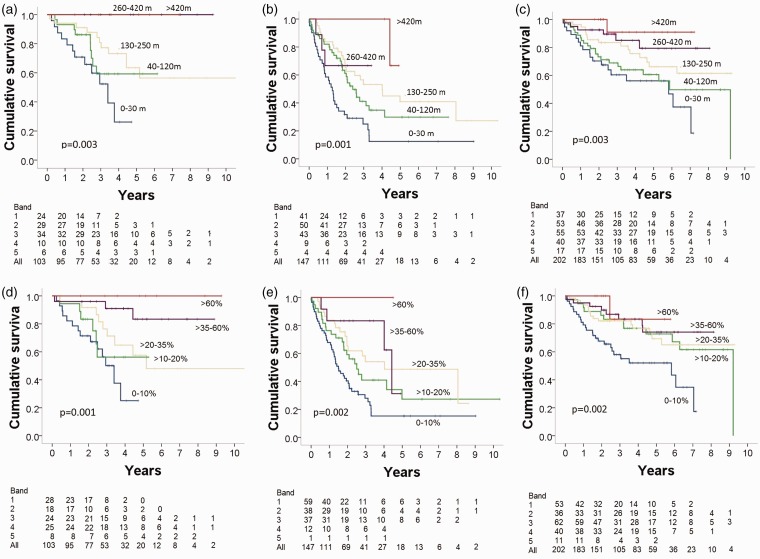
Pulmonary hypertension (PH) is classified into five groups based on disease etiology but there is only limited information on the prognostic value of exercise testing in non-group 1 PH. In group 1 PH, the incremental shuttle walking test (ISWT) distance has been shown to correlate with pulmonary hemodynamics and predict survival without a ceiling effect. This study assessed the ISWT in non-group 1 PH. Data were retrieved from the ASPIRE Registry (Assessing the Spectrum of Pulmonary hypertension Identified at a REferral centre) for consecutive patients diagnosed with PH. Patients were required to have been systematically assessed as group 2-5 PH and to have a baseline ISWT within three months of cardiac catheterization. Patients were stratified according to incremental shuttle walk test distance (ISWD) and ISWT distance percent predicted (ISWD%pred). A total of 479 patients with non-group 1 PH were identified. ISWD and ISWD%pred correlated significantly with symptoms and hemodynamic severity. ISWD and ISWD%pred predicted survival with no ceiling effect. The test was prognostic in groups 2, 3, and 4. ISWD and ISWD%pred and change in ISWD and ISWD%pred at one year were all significant predictors of outcome. In patients with non-group 1 PH the ISWT is a simple non-invasive test that is easy to perform, is predictive of survival at baseline and follow-up, reflects change, and can be used in the assessment of PH of any etiology.
肺动脉高压(PH)根据疾病病因分为五组,但关于运动试验在非1组PH中的预后价值的信息有限。在1组PH中,递增往返步行试验(ISWT)距离已被证明与肺血流动力学相关,且可预测生存情况,不存在上限效应。本研究评估了非1组PH中的ISWT。数据取自ASPIRE注册研究(评估在转诊中心确诊的肺动脉高压谱),纳入连续诊断为PH的患者。要求患者已被系统评估为2 - 5组PH,且在心脏导管检查后三个月内进行基线ISWT。根据递增往返步行试验距离(ISWD)和预测的ISWT距离百分比(ISWD%pred)对患者进行分层。共识别出479例非1组PH患者。ISWD和ISWD%pred与症状及血流动力学严重程度显著相关。ISWD和ISWD%pred可预测生存情况,不存在上限效应。该试验在2、3和4组中具有预后价值。ISWD、ISWD%pred以及一年时ISWD和ISWD%pred的变化均是结局的显著预测因素。在非1组PH患者中,ISWT是一项简单的非侵入性试验,易于实施,可预测基线和随访时的生存情况,反映变化,可用于评估任何病因的PH。