Medical Oncology Department, The Ramón y Cajal Health Research Institute (IRYCIS), CIBERONC, Alcalá University, University Hospital Ramon y Cajal, 28034 Madrid, Spain.
Biomarkers and Therapeutic Targets Group and Core Facility, Ramón y Cajal Research Institute, (IRYCIS), 28034 Madrid, Spain.
Int J Mol Sci. 2019 Apr 17;20(8):1901. doi: 10.3390/ijms20081901.
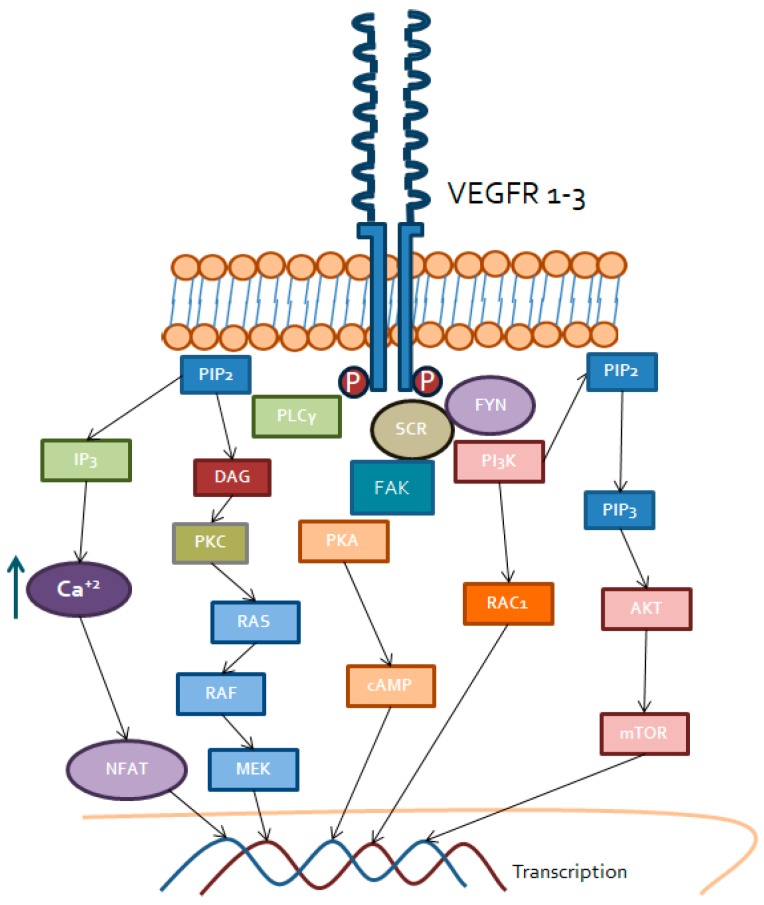
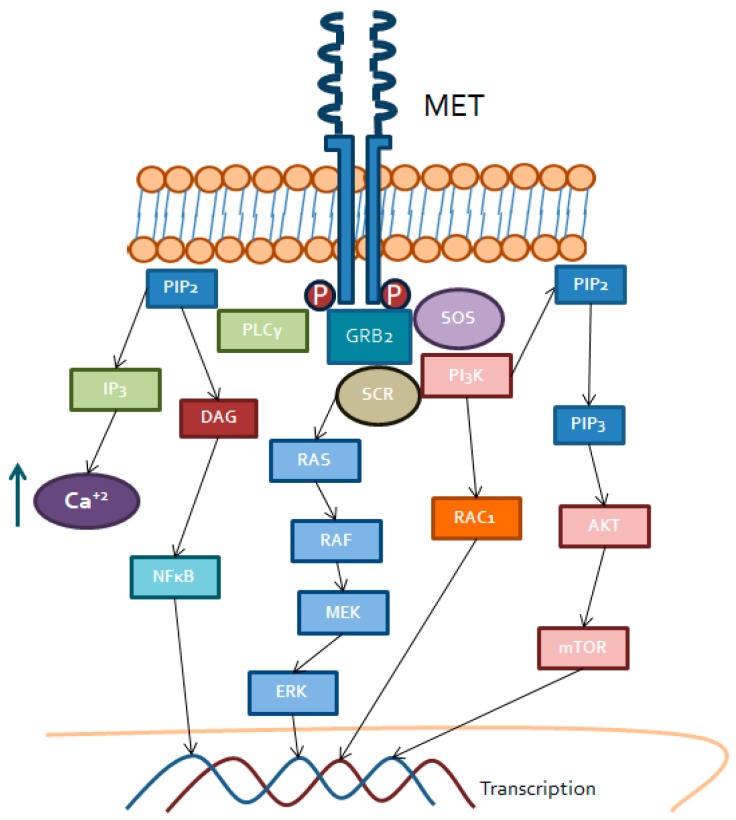
Clear cell renal cell carcinoma (ccRCC) is the seventh most frequently diagnosed tumor in adults in Europe and represents approximately 2.5% of cancer deaths. The molecular biology underlying renal cell carcinoma (RCC) development and progression has been a key milestone in the management of this type of tumor. The discovery of Von Hippel Lindau () gene alterations that arouse in 50% of ccRCC patients, leads the identification of an intracellular accumulation of HIF and, consequently an increase of VEGFR expression. This change in cell biology represents a new paradigm in the treatment of metastatic renal cancer by targeting angiogenesis. Currently, there are multiple therapeutic drugs available for advanced disease, including therapies against VEGFR with successful results in patients´ survival. Other tyrosine kinases' pathways, including PDGFR, Axl or MET have emerged as key signaling pathways involved in RCC biology. Indeed, promising new drugs targeting those tyrosine kinases have exhibited outstanding efficacy. In this review we aim to present an overview of the central role of these tyrosine kinases' activities in relevant biological processes for kidney cancer and their usefulness in RCC targeted therapy development. In the immunotherapy era, angiogenesis is still an "old guy" that the medical community is trying to fight using "new bullets".
透明细胞肾细胞癌(ccRCC)是欧洲成年人第七种最常见的肿瘤,约占癌症死亡人数的 2.5%。肾细胞癌(RCC)发生和发展的分子生物学一直是这种肿瘤治疗的一个关键里程碑。在 50%的 ccRCC 患者中发现的 Von Hippel Lindau () 基因突变,导致 HIF 的细胞内积累,并因此导致 VEGFR 表达增加。这种细胞生物学的变化代表了通过靶向血管生成治疗转移性肾细胞癌的新范例。目前,有多种治疗晚期疾病的药物,包括针对 VEGFR 的治疗方法,在患者生存方面取得了成功。其他酪氨酸激酶途径,包括 PDGFR、Axl 或 MET,已成为涉及 RCC 生物学的关键信号通路。事实上,针对这些酪氨酸激酶的有前途的新药已经表现出了出色的疗效。在这篇综述中,我们旨在概述这些酪氨酸激酶活性在肾细胞癌相关生物学过程中的核心作用及其在 RCC 靶向治疗开发中的用途。在免疫治疗时代,血管生成仍然是医学界试图用“新子弹”来对抗的“老家伙”。