
放射治疗既能促进也能抑制髓源性抑制细胞功能:预防放射治疗肿瘤保护作用的新策略。
Radiotherapy Both Promotes and Inhibits Myeloid-Derived Suppressor Cell Function: Novel Strategies for Preventing the Tumor-Protective Effects of Radiotherapy.
作者信息
Ostrand-Rosenberg Suzanne, Horn Lucas A, Ciavattone Nicholas G
机构信息
Department of Pathology and Huntsman Cancer Institute, University of Utah, Salt Lake City, UT, United States.
Department of Biological Sciences, University of Maryland Baltimore County, Baltimore, MD, United States.
出版信息
Front Oncol. 2019 Apr 2;9:215. doi: 10.3389/fonc.2019.00215. eCollection 2019.
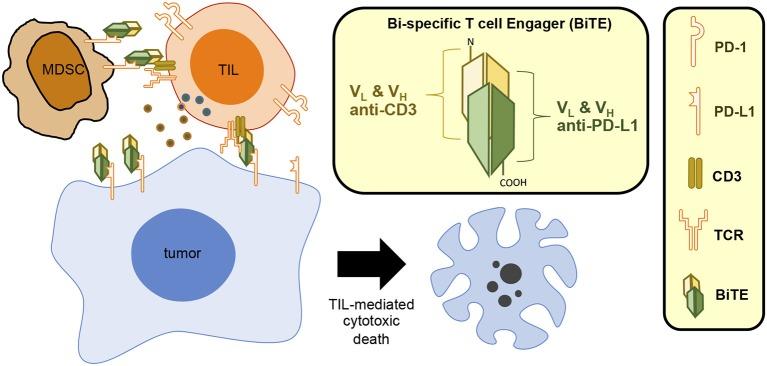
Cancer immunotherapies aimed at neutralizing the programmed death-1 (PD-1) immune suppressive pathway have yielded significant therapeutic efficacy in a subset of cancer patients. However, only a subset of patients responds to antibody therapy with either anti-PD-1 or anti-PD-L1 antibodies. These patients appear to have so-called "hot" tumors containing tumor-reactive T cells. Therefore, checkpoint blockade therapy may be effective in a larger percentage of cancer patients if combined with therapeutics that also activate tumor-reactive T cells. Radiotherapy (RT) is a prime candidate for combination therapy because it facilitates activation of both local antitumor immunity and antitumor immunity at non-radiated, distant sites (abscopal response). However, RT also promotes tumor cell expression of PD-L1 and facilitates the development of myeloid-derived suppressor cells (MDSC), a population of immune suppressive cells that also suppress through PD-L1. This article will review how RT induces MDSC, and then describe two novel therapeutics that are designed to simultaneously activate tumor-reactive T cells and neutralize PD-1-mediated immune suppression. One therapeutic, a CD3xPD-L1 bispecific T cell engager (BiTE), activates and targets cytotoxic T and NKT cells to kill PD-L1 tumor cells, despite the presence of MDSC. The BiTE significantly extends the survival time of humanized NSG mice reconstituted with human PBMC and carrying established metastatic human melanoma tumors. The second therapeutic is a soluble form of the costimulatory molecule CD80 (sCD80). In addition to costimulating through CD28, sCD80 inhibits PD-1 suppression by binding to PD-L1 and sterically blocking PD-L1/PD-1 signaling. sCD80 increases tumor-infiltrating T cells and significantly extends survival time of mice carrying established, syngeneic tumors. sCD80 does not suppress T cell function via CTLA-4. These studies suggest that the CD3xPD-L1 BiTE and sCD80 may be efficacious therapeutics either as monotherapies or in combination with other therapies such as radiation therapy for the treatment of cancer.
旨在中和程序性死亡-1(PD-1)免疫抑制途径的癌症免疫疗法在一部分癌症患者中产生了显著的治疗效果。然而,只有一部分患者对抗PD-1或抗PD-L1抗体的抗体疗法有反应。这些患者似乎有所谓的“热”肿瘤,其中含有肿瘤反应性T细胞。因此,如果与同样能激活肿瘤反应性T细胞的疗法联合使用,检查点阻断疗法可能在更大比例的癌症患者中有效。放射疗法(RT)是联合治疗的主要候选方法,因为它有助于激活局部抗肿瘤免疫以及非辐射远处部位的抗肿瘤免疫(远隔效应)。然而,RT也会促进肿瘤细胞表达PD-L1,并促进髓源性抑制细胞(MDSC)的产生,MDSC是一群也通过PD-L1发挥抑制作用的免疫抑制细胞。本文将综述RT如何诱导MDSC,然后描述两种旨在同时激活肿瘤反应性T细胞并中和PD-1介导的免疫抑制的新型疗法。一种疗法是CD3xPD-L1双特异性T细胞衔接器(BiTE),它能激活并靶向细胞毒性T细胞和自然杀伤T细胞以杀死表达PD-L1的肿瘤细胞,即使存在MDSC。这种BiTE显著延长了用人外周血单核细胞重建并携带已建立的转移性人黑色素瘤肿瘤的人源化NSG小鼠的存活时间。第二种疗法是共刺激分子CD80的可溶性形式(sCD80)。除了通过CD28进行共刺激外,sCD80还通过与PD-L1结合并在空间上阻断PD-L1/PD-1信号传导来抑制PD-1的抑制作用。sCD80增加肿瘤浸润性T细胞,并显著延长携带已建立的同基因肿瘤的小鼠的存活时间。sCD80不会通过细胞毒性T淋巴细胞相关蛋白4(CTLA-4)抑制T细胞功能。这些研究表明,CD3xPD-L1 BiTE和sCD80作为单一疗法或与其他疗法(如放射疗法)联合用于癌症治疗可能是有效的治疗方法。


 Zotero 插件