Emanuelli Andrea, Manikoth Ayyathan Dhanoop, Koganti Praveen, Shah Pooja Anil, Apel-Sarid Liat, Paolini Biagio, Detroja Rajesh, Frenkel-Morgenstern Milana, Blank Michael
Laboratory of Molecular and Cellular Cancer Biology, Azrieli Faculty of Medicine, Bar-Ilan University, 1311502 Safed, Israel.
Department of Pathology, The Galilee Medical Center, 22100 Nahariya, Israel.
Cancers (Basel). 2019 Apr 18;11(4):556. doi: 10.3390/cancers11040556.
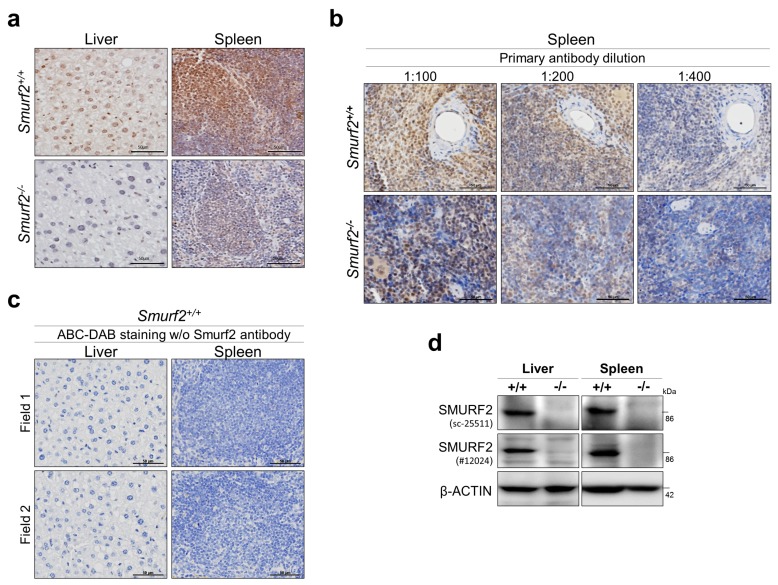
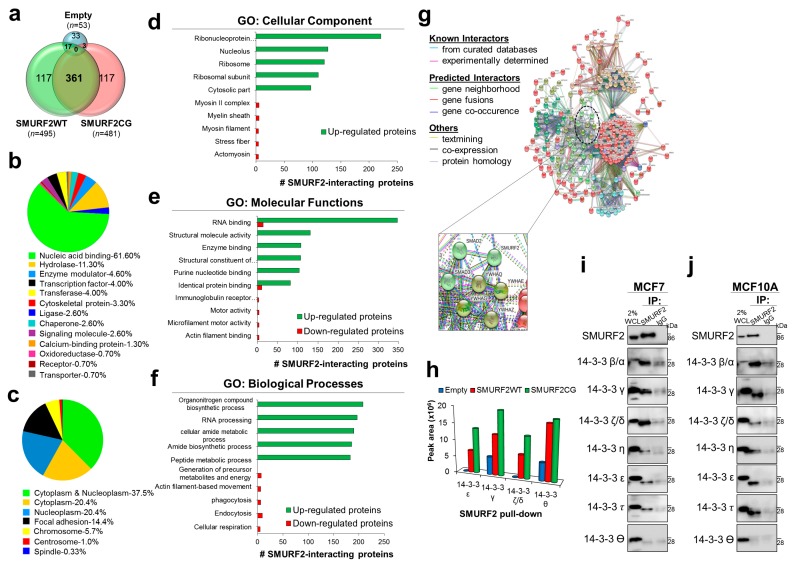
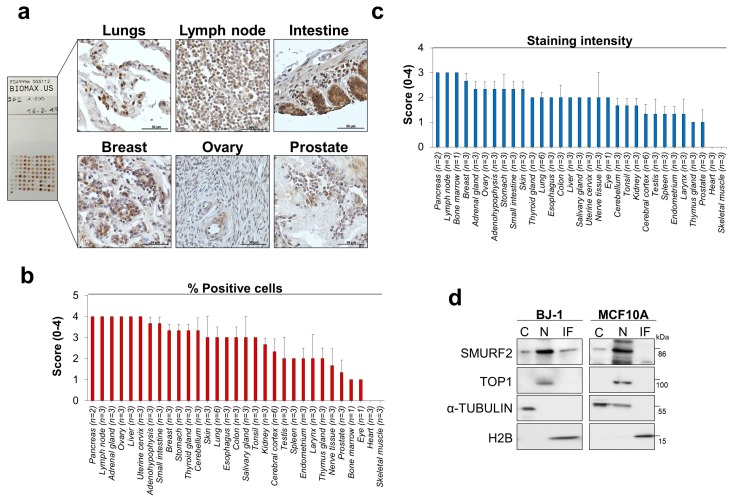
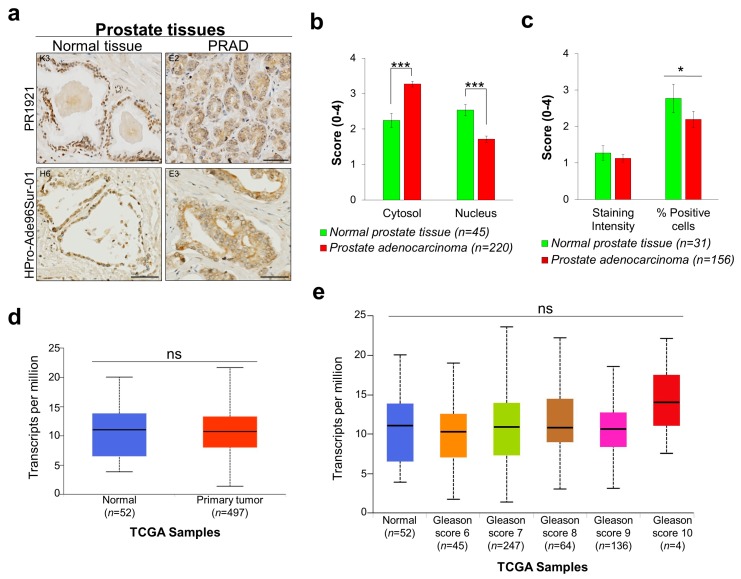
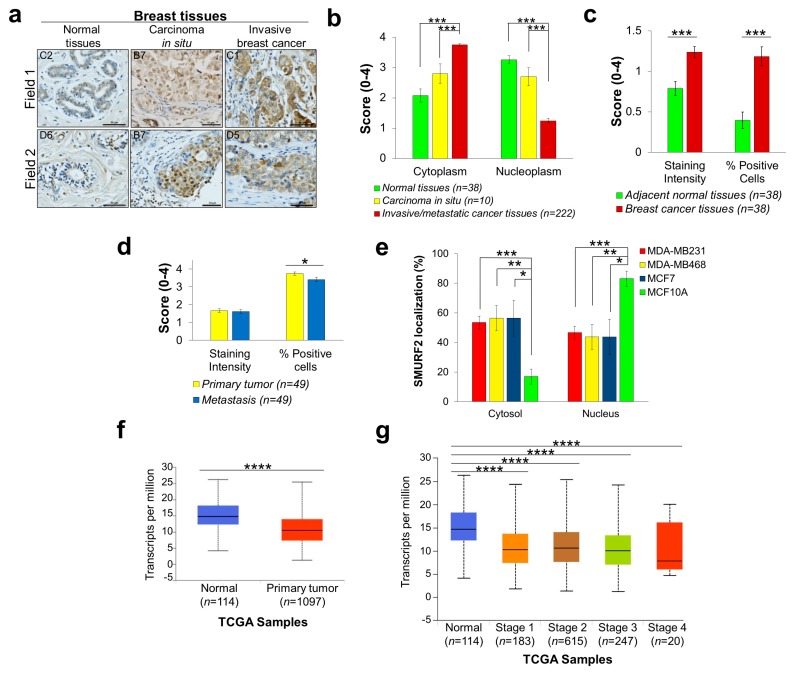
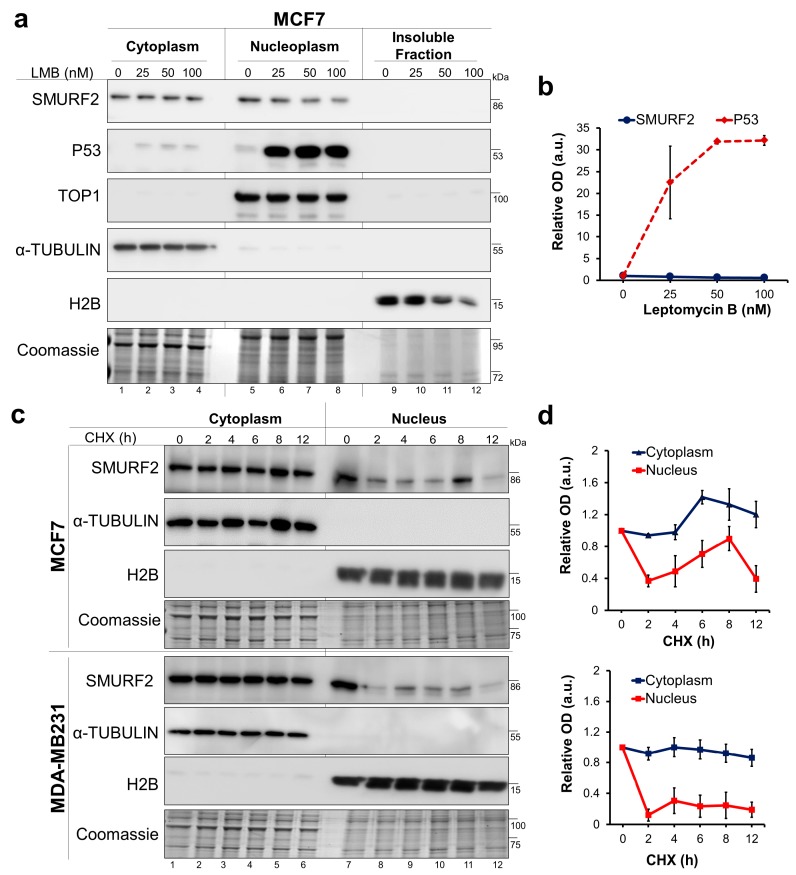
SMURF2, an E3 ubiquitin ligase and suggested tumor suppressor, operates in normal cells to prevent genomic instability and carcinogenesis. However, the mechanisms underlying SMURF2 inactivation in human malignancies remain elusive, as is rarely found mutated or deleted in cancers. We hypothesized that SMURF2 might have a distinct molecular biodistribution in cancer versus normal cells and tissues. The expression and localization of SMURF2 were analyzed in 666 human normal and cancer tissues, with primary focus on prostate and breast tumors. These investigations were accompanied by gene expression analyses, subcellular fractionation and biochemical studies, including SMURF2's interactome analysis. We found that while in normal cells and tissues SMURF2 has a predominantly nuclear localization, in prostate and aggressive breast carcinomas SMURF2 shows a significantly increased cytoplasmic sequestration, associated with the disease progression. Mechanistic studies showed that the nuclear export machinery was not involved in cytoplasmic accumulation of SMURF2, while uncovered that its stability is markedly increased in the cytoplasmic compartment. Subsequent interactome analyses pointed to 14-3-3s as SMURF2 interactors, which could potentially affect its localization. These findings link the distorted expression of SMURF2 to human carcinogenesis and suggest the alterations in SMURF2 localization as a potential mechanism obliterating its tumor suppressor activities.
SMURF2是一种E3泛素连接酶,被认为是肿瘤抑制因子,在正常细胞中发挥作用以防止基因组不稳定和癌变。然而,人类恶性肿瘤中SMURF2失活的潜在机制仍然不清楚,因为在癌症中很少发现其发生突变或缺失。我们推测SMURF2在癌症细胞与正常细胞和组织中可能具有不同的分子生物分布。我们分析了666个人类正常组织和癌组织中SMURF2的表达和定位,主要聚焦于前列腺癌和乳腺癌。这些研究还包括基因表达分析、亚细胞分级分离和生化研究,包括SMURF2的相互作用组分析。我们发现,在正常细胞和组织中,SMURF2主要定位于细胞核,而在前列腺癌和侵袭性乳腺癌中,SMURF2在细胞质中的隔离显著增加,且与疾病进展相关。机制研究表明,核输出机制不参与SMURF2的细胞质积累,而发现其在细胞质区室中的稳定性显著增加。随后的相互作用组分析指出14-3-3蛋白是SMURF2的相互作用分子,这可能会影响其定位。这些发现将SMURF2的异常表达与人类致癌作用联系起来,并表明SMURF2定位的改变是消除其肿瘤抑制活性的潜在机制。