Itzia Azucena Rangel-Castañeda, José Roberto Cruz-Lozano, Martin Zermeño-Ruiz, Rafael Cortes-Zarate, Leonardo Hernández-Hernández, Gabriela Tapia-Pastrana, Araceli Castillo-Romero
Departamento de Fisiología, Centro Universitario de Ciencias de la Salud, Universidad de Guadalajara, Calle Sierra Mojada 950, Independencia Oriente, Guadalajara 44340, Jalisco, Mexico.
Departamento de Química, Centro Universitario de Ciencias Exactas e Ingenierías, Universidad de Guadalajara, Blvd. Marcelino García Barragán 1421, Guadalajara 44430, Jalisco, Mexico.
Antibiotics (Basel). 2019 Apr 18;8(2):43. doi: 10.3390/antibiotics8020043.
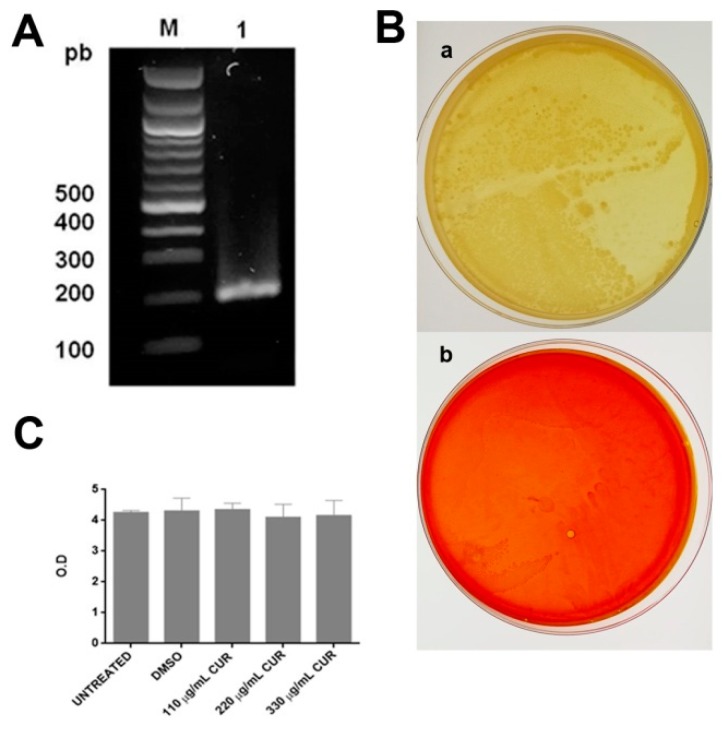
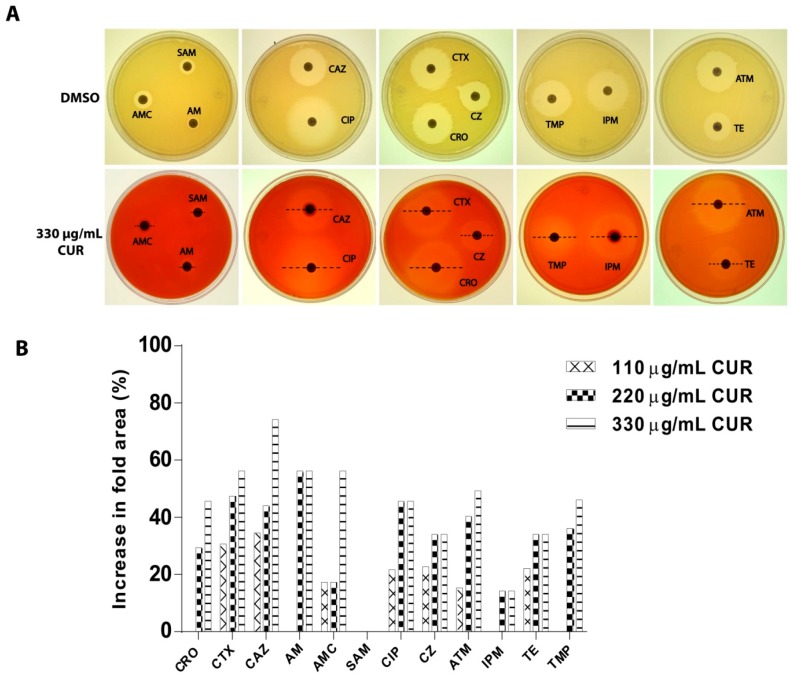
This study investigated the susceptibility of Enterotoxigenic to curcumin, as well as its synergistic effect with 12 antimicrobial drugs. Our study shows that curcumin did not affect bacterial growth. The antimicrobial susceptibility of curcumin and antibiotic synergy were identified using disc diffusion on Mueller-Hinton agar. The strain of Enterotoxigenic used was resistant to Ampicillin, Amoxicillin/Clavulanic acid, Ampicillin/Sulbactam, Ciprofloxacin, and Cefazolin. There was synergy between curcumin and the majority of antibiotics tested. Maximum synergy was observed with combinations of 330 µg/mL curcumin and Ceftazidime, followed by Cefotaxime, Amoxicillin/Clavulanic acid, Ampicillin, Aztreonam, Trimethoprim, Ciprofloxacin, Ceftriaxone, Cefazolin, Tetracycline, and Imipenem. Our findings indicated that curcumin might be useful as a combinatorial strategy to combat the antibiotic resistance of Enterotoxigenic .
本研究调查了产肠毒素菌对姜黄素的敏感性,以及其与12种抗菌药物的协同作用。我们的研究表明,姜黄素不影响细菌生长。在穆勒-欣顿琼脂平板上采用纸片扩散法鉴定姜黄素的抗菌敏感性和抗生素协同作用。所使用的产肠毒素菌菌株对氨苄西林、阿莫西林/克拉维酸、氨苄西林/舒巴坦、环丙沙星和头孢唑林耐药。姜黄素与大多数测试抗生素之间存在协同作用。观察到330μg/mL姜黄素与头孢他啶组合的协同作用最强,其次是头孢噻肟、阿莫西林/克拉维酸、氨苄西林、氨曲南、甲氧苄啶、环丙沙星、头孢曲松、头孢唑林、四环素和亚胺培南。我们的研究结果表明,姜黄素可能作为一种联合策略来对抗产肠毒素菌的抗生素耐药性。