Department of Cell and Molecular Biology, Feinberg School of Medicine, Northwestern University, Chicago, IL 60611, USA.
Department of Biophysics, UT Southwestern Medical Center, Dallas, TX 75390, USA.
Cells. 2019 Apr 18;8(4):361. doi: 10.3390/cells8040361.
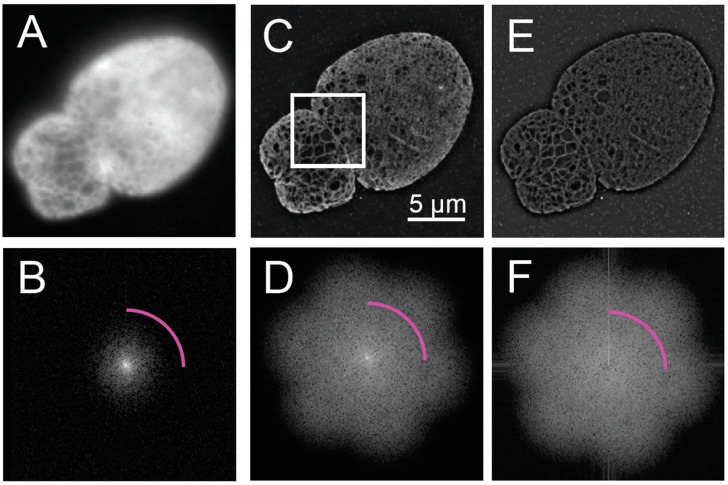
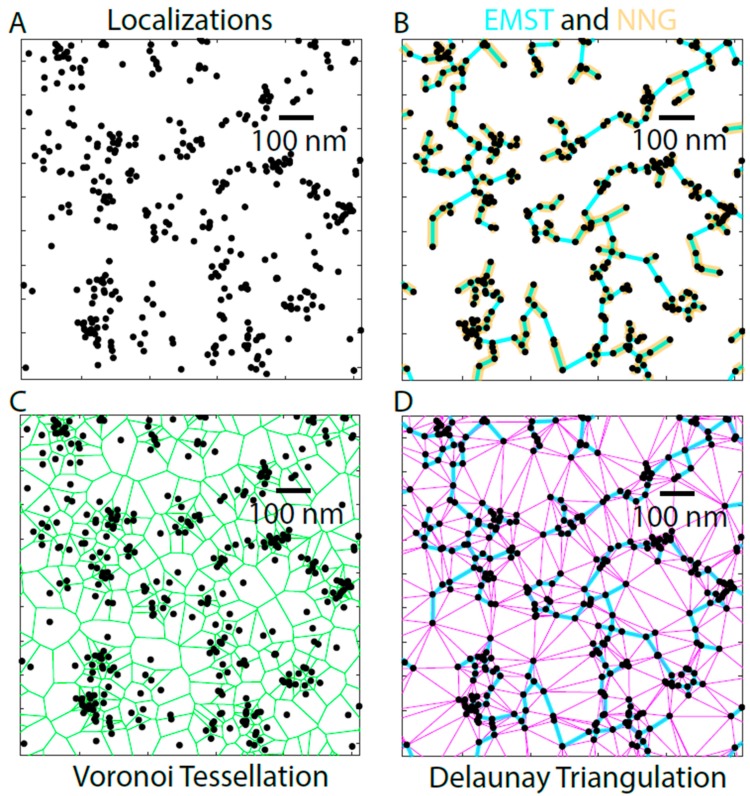
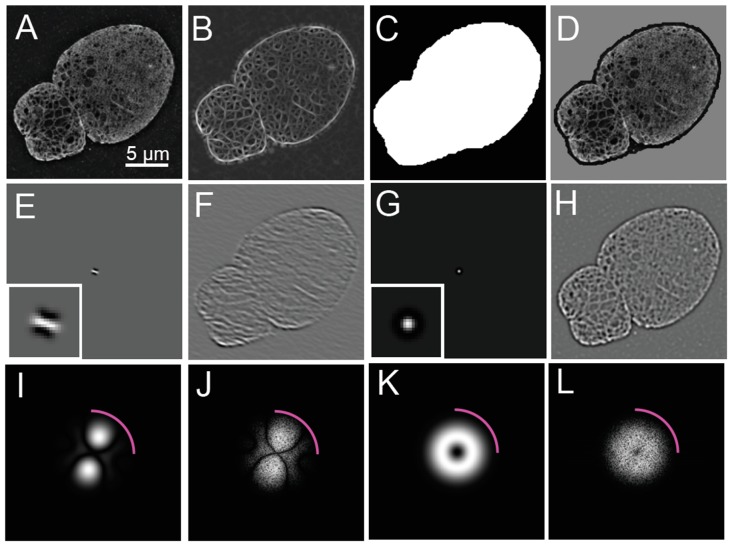
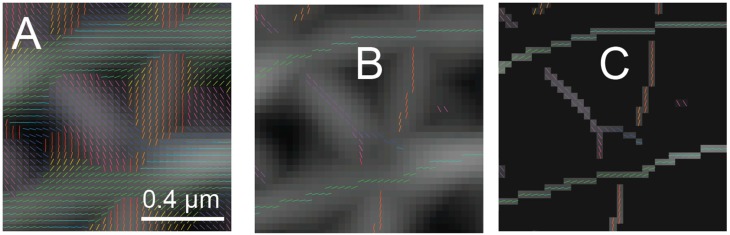
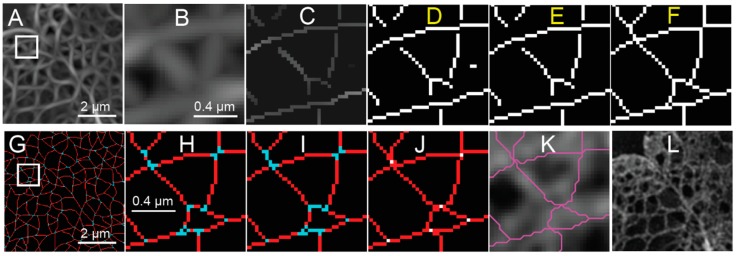
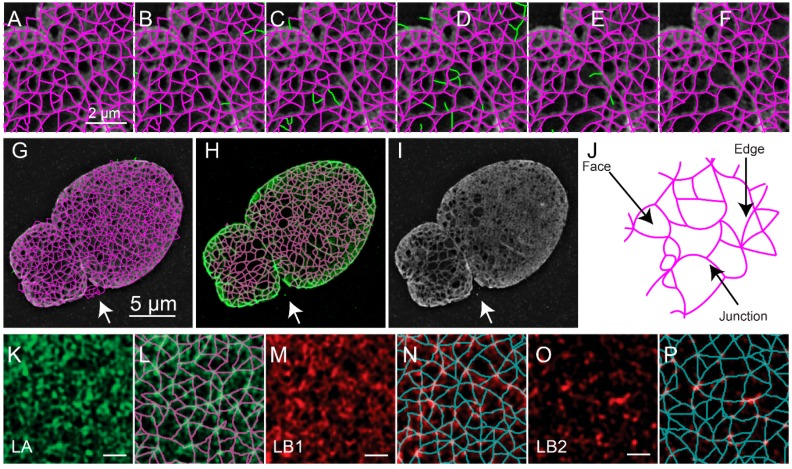
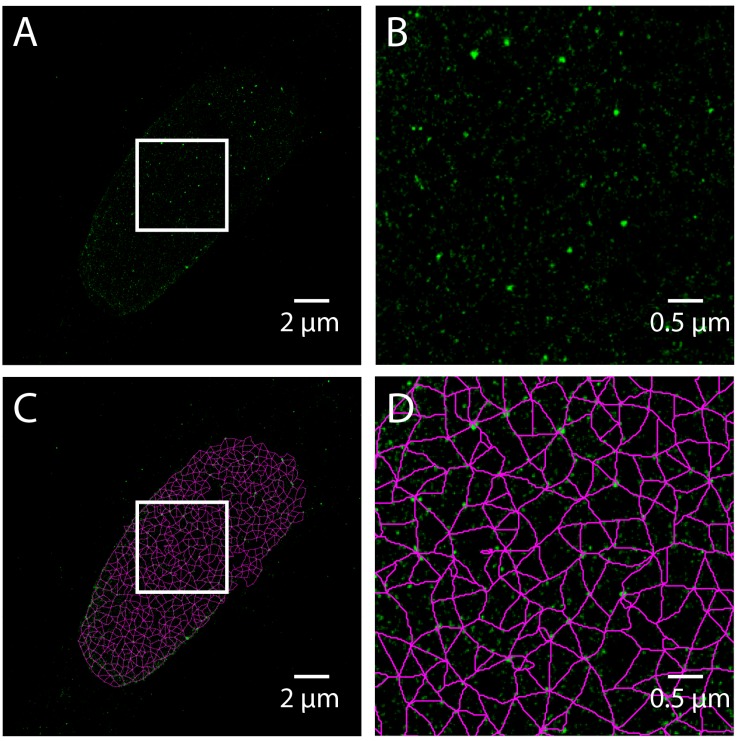
The nuclear lamina consists of a dense fibrous meshwork of nuclear lamins, Type V intermediate filaments, and is ~14 nm thick according to recent cryo-electron tomography studies. Recent advances in light microscopy have extended the resolution to a scale allowing for the fine structure of the lamina to be imaged in the context of the whole nucleus. We review quantitative approaches to analyze the imaging data of the nuclear lamina as acquired by structured illumination microscopy (SIM) and single molecule localization microscopy (SMLM), as well as the requisite cell preparation techniques. In particular, we discuss the application of steerable filters and graph-based methods to segment the structure of the four mammalian lamin isoforms (A, C, B1, and B2) and extract quantitative information.
核纤层由核纤层蛋白、V 型中间丝等组成,呈密集的纤维网格状,根据最近的冷冻电镜断层扫描研究,其厚度约为 14nm。近年来,光学显微镜技术的进步将分辨率扩展到了一个可以在整个细胞核背景下对核纤层精细结构进行成像的尺度。我们综述了通过结构光照明显微镜(SIM)和单分子定位显微镜(SMLM)获取核纤层成像数据的定量分析方法,以及必要的细胞制备技术。特别是,我们讨论了可转向滤波器和基于图的方法在分割四种哺乳动物核纤层蛋白(A、C、B1 和 B2)结构和提取定量信息方面的应用。