Department of Dermatology, University of Connecticut Health Center, Farmington, Connecticut, USA.
Probity Medical Research, Waterloo, Ontario, Canada.
BMJ Open. 2019 Apr 20;9(4):e027535. doi: 10.1136/bmjopen-2018-027535.
This analysis examined the association between psoriasis severity, assessed by body surface area (BSA) and the Investigator's Global Assessment (IGA; previously used only in clinical trials), and patient-reported outcomes (PROs) in a real-world setting.
Cross-sectional analysis within the Corrona Psoriasis Registry, an independent, prospective registry.
70 dermatology practices in the USA.
1529 adult patients with psoriasis being treated with biological or non-biological systemic psoriasis treatment by 31 May 2016.
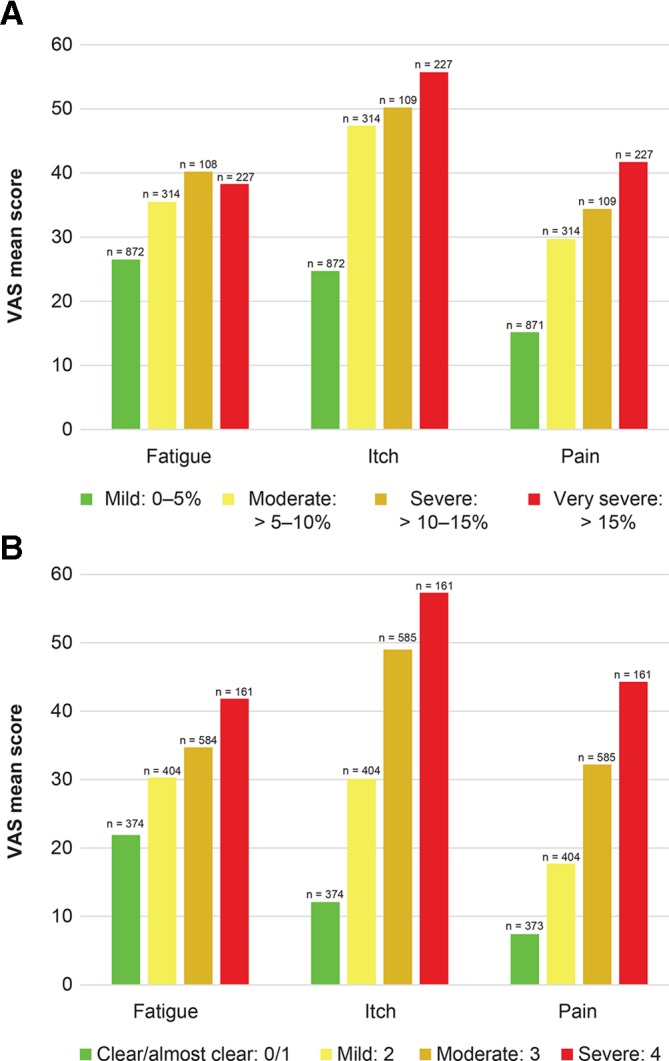
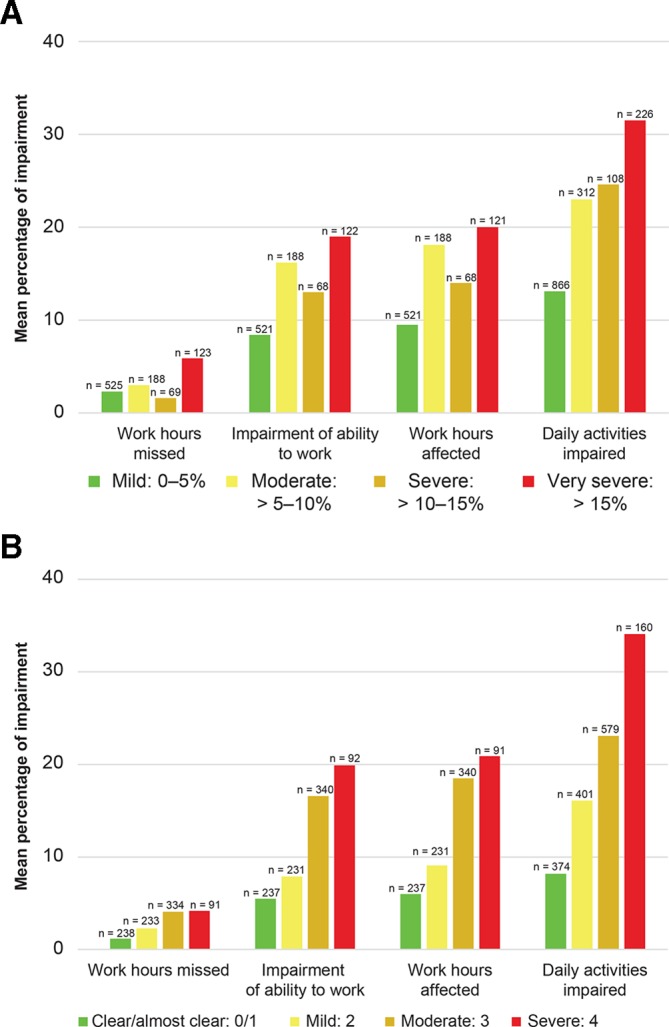
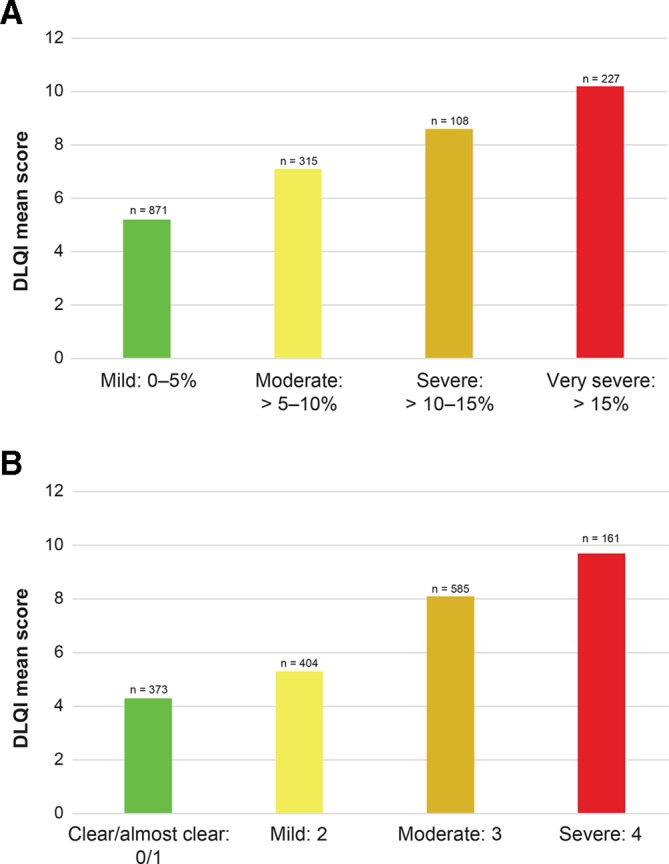
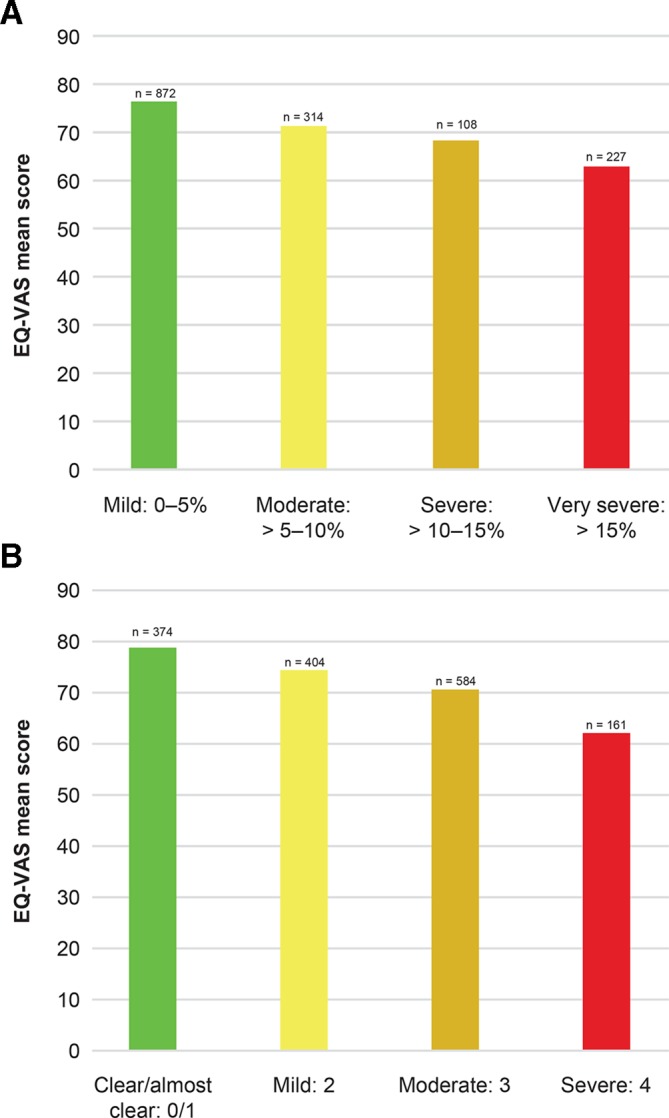
Psoriasis severity was assessed by percentage of affected BSA (mild (0%-5%), moderate (>5%-10%), severe (>10%-15%), very severe (>15%)) and IGA scores (clear/almost clear (0-1), mild (2), moderate (3), severe (4)). PROs (pain, itch, fatigue; Dermatology Life Quality Index [DLQI]; EuroQoL Visual Analogue Scale [EQ-VAS]; Work Productivity and Activity Impairment [WPAI]) were compared across BSA and IGA levels using analysis of variance and X tests. The association between psoriasis severity and PROs was examined using multivariable regression models.
The mean age was 50.6 years and 47% of patients were female. Consistently with more severe psoriasis, symptoms worsened, DLQI scores increased (p<0.05 for each level of BSA and IGA), EQ-VAS decreased (p<0.05 for each level of BSA and IGA) and WPAI scores increased. By BSA score, moderate to very severe psoriasis was associated with poorer outcomes for the 'impairment while working' and 'daily activities impaired' WPAI domains (all p<0.05 vs mild psoriasis). Very severe psoriasis was associated with increased 'work hours missed' and 'work hours affected' (both p<0.05 vs mild psoriasis) Findings were similar by IGA. Results were confirmed by multivariable regression analyses.
In a real-world setting, more severe psoriasis, assessed by BSA and IGA, was consistently associated with worse PROs.
本分析旨在评估体表面积(BSA)和研究者全球评估(IGA;先前仅在临床试验中使用)评估的银屑病严重程度与患者报告结局(PROs)之间的相关性,评估基于真实环境。
Corrona 银屑病登记处的横断面分析,该登记处是一个独立的前瞻性登记处。
美国 70 家皮肤科诊所。
2016 年 5 月 31 日前接受生物或非生物系统性银屑病治疗的 1529 名成年银屑病患者。
银屑病严重程度通过受影响的 BSA 百分比(轻度(0%-5%)、中度(>5%-10%)、重度(>10%-15%)、极重度(>15%))和 IGA 评分(清除/几乎清除(0-1)、轻度(2)、中度(3)、重度(4))进行评估。使用方差分析和 X 检验比较了 BSA 和 IGA 水平之间的 PROs(疼痛、瘙痒、疲劳;皮肤病生活质量指数 [DLQI];欧洲五维健康量表视觉模拟评分 [EQ-VAS];工作生产力和活动障碍 [WPAI])。使用多变量回归模型检查了银屑病严重程度与 PROs 的相关性。
平均年龄为 50.6 岁,47%的患者为女性。随着银屑病的加重,症状恶化,DLQI 评分增加(BSA 和 IGA 各水平均 p<0.05),EQ-VAS 降低(BSA 和 IGA 各水平均 p<0.05),WPAI 评分增加(p<0.05)。根据 BSA 评分,中重度至极重度银屑病与“工作时障碍”和“日常活动障碍”WPAI 领域的较差结局相关(与轻度银屑病相比,均 p<0.05)。极重度银屑病与“旷工”和“工作时间受影响”的增加相关(均 p<0.05)。IGA 也存在类似结果。多变量回归分析结果得到了证实。
在真实环境中,BSA 和 IGA 评估的更严重银屑病与更差的 PROs 始终相关。