Hoeksema J T, Baldner C S, Bush R I, Schou J, Scherrer P H
1W.W. Hansen Experimental Physics Laboratory, Stanford University, Stanford, CA 9430 USA.
2Max-Planck-Institut für Sonnensystemforschung, Justus-von-Liebig-Weg 3, 37077 Göttingen, Germany.
Sol Phys. 2018;293(3):45. doi: 10.1007/s11207-018-1259-8. Epub 2018 Feb 23.
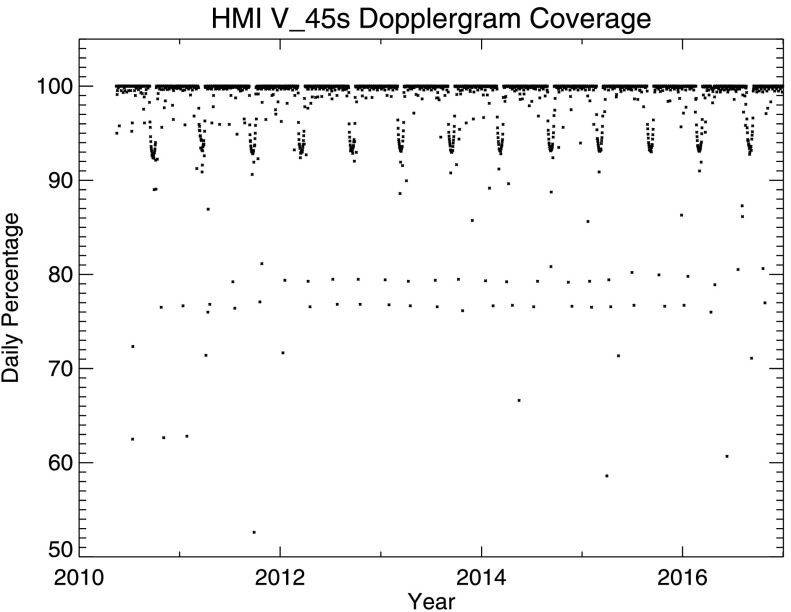
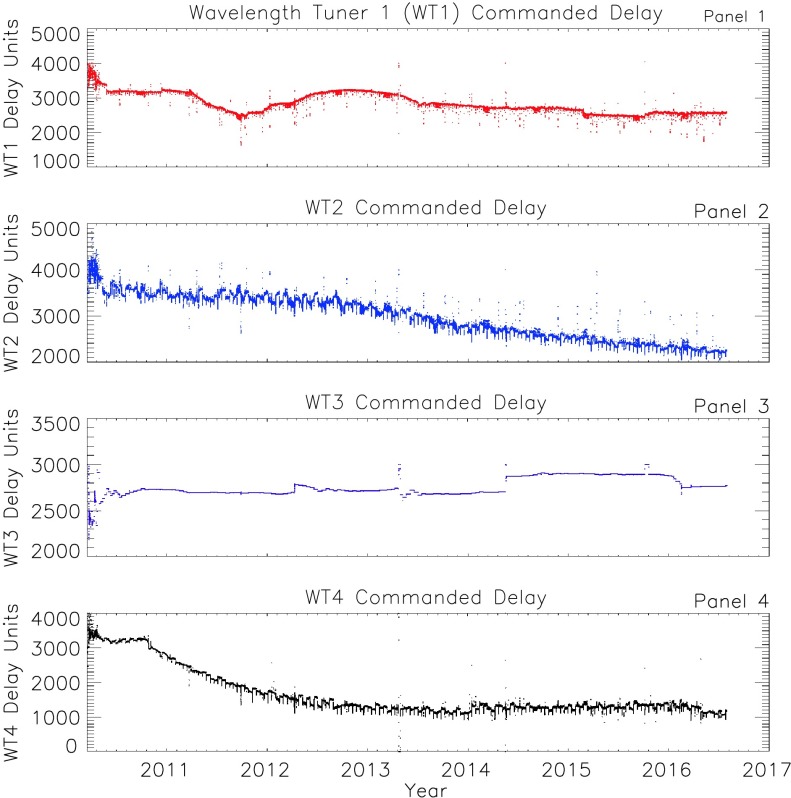
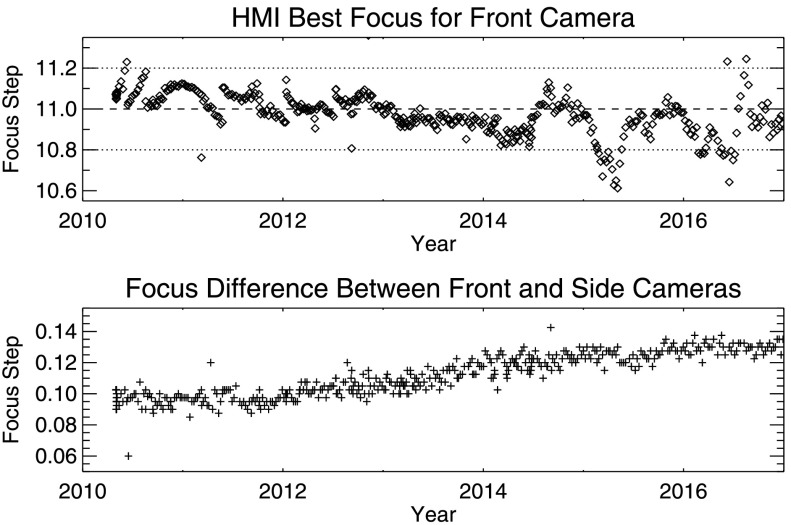
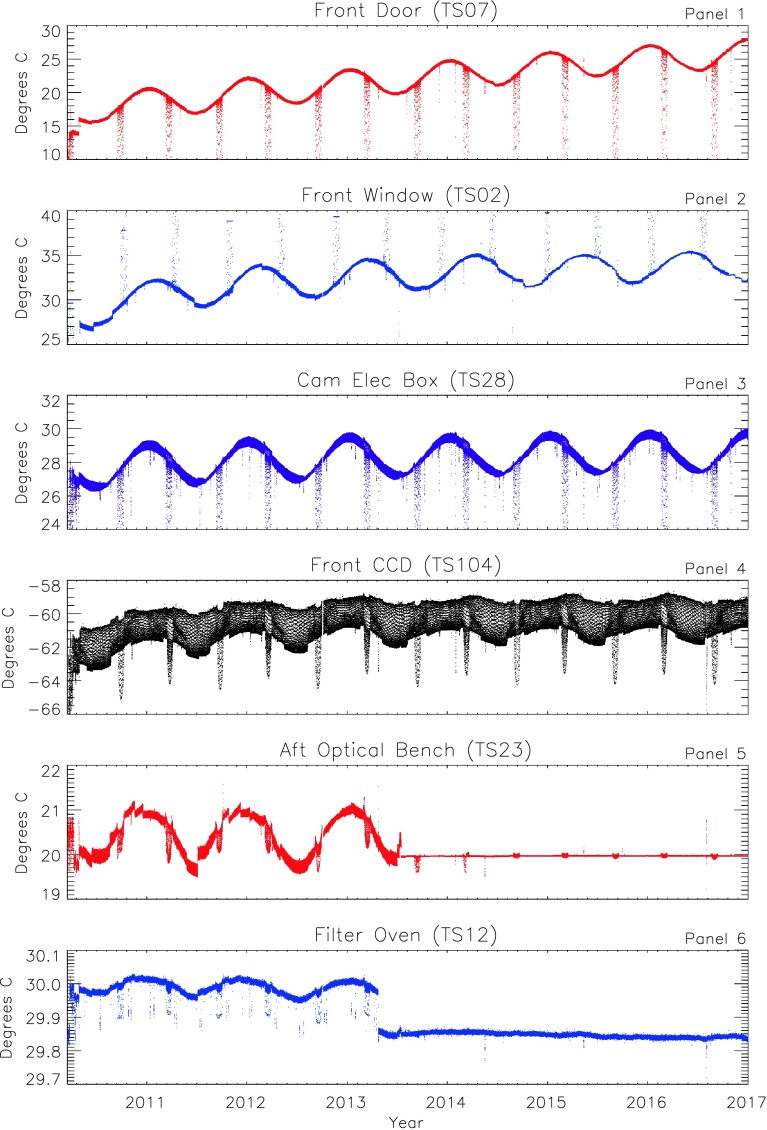
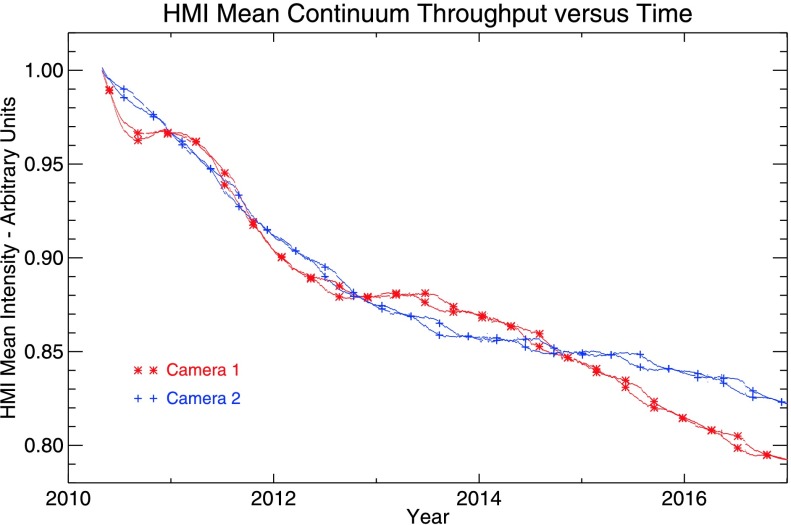
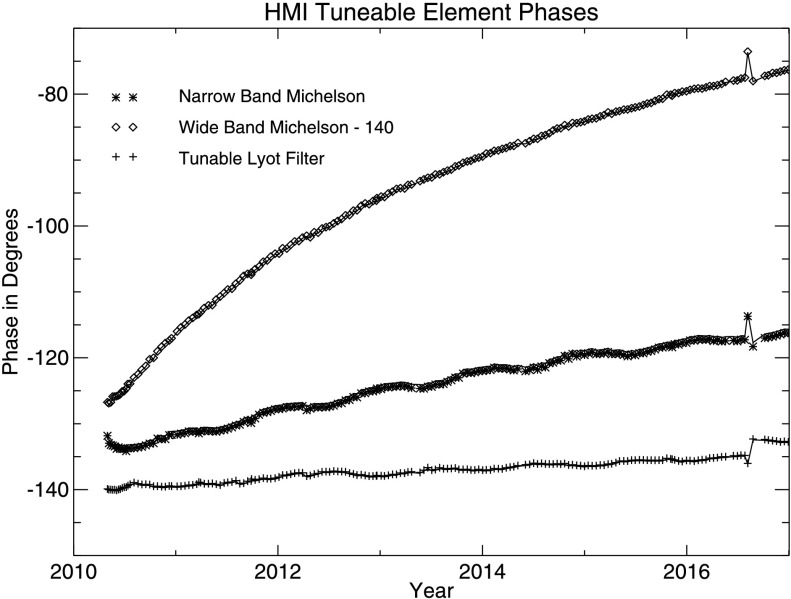
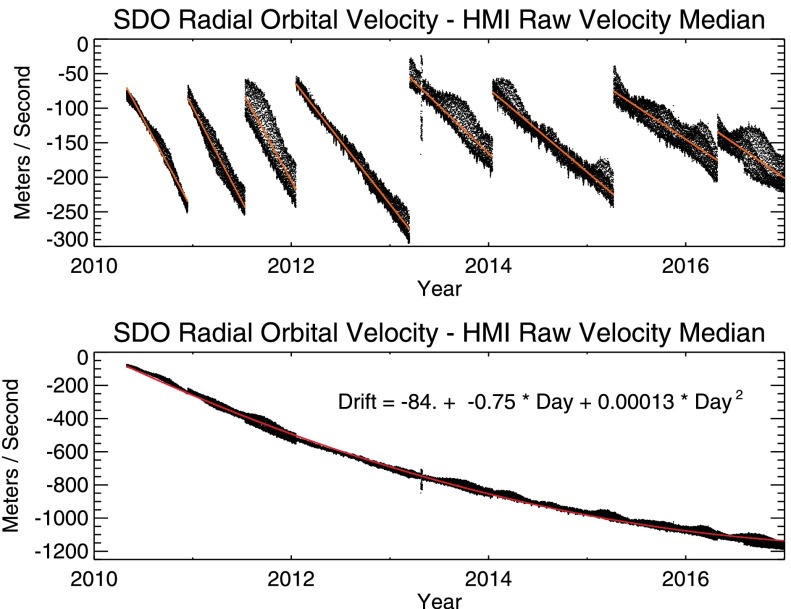
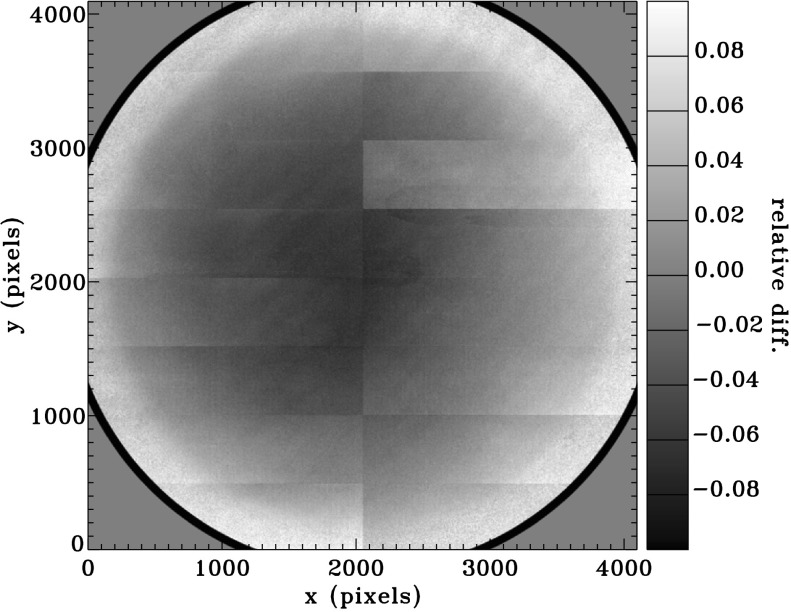
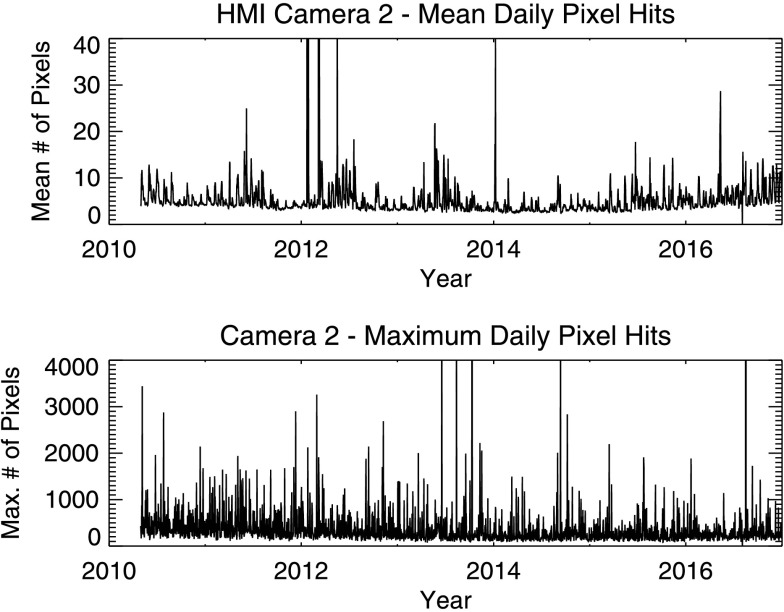
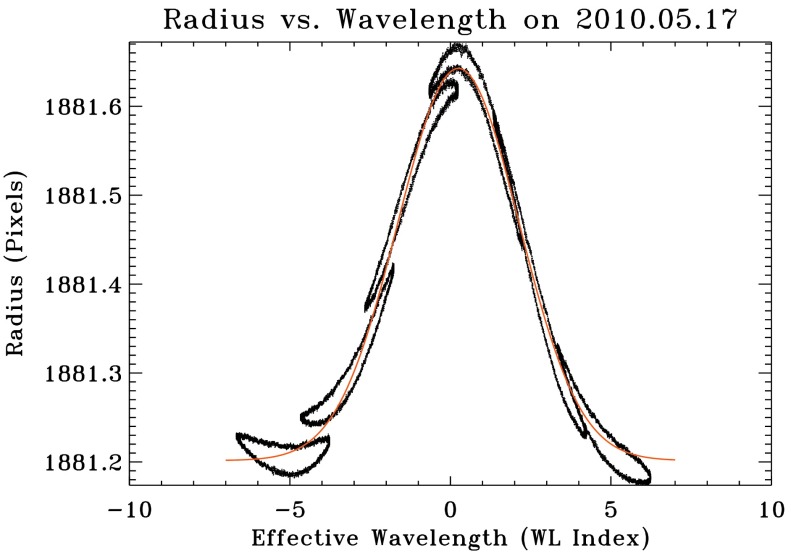
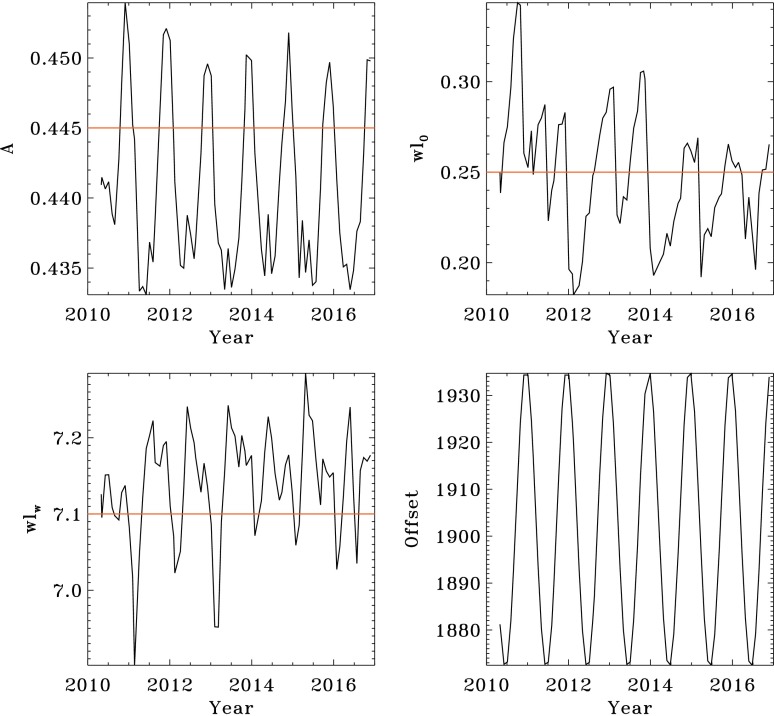
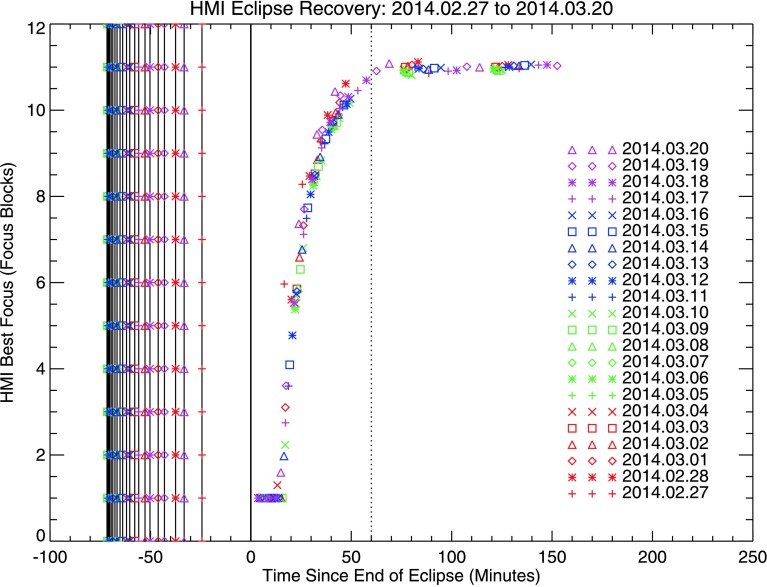
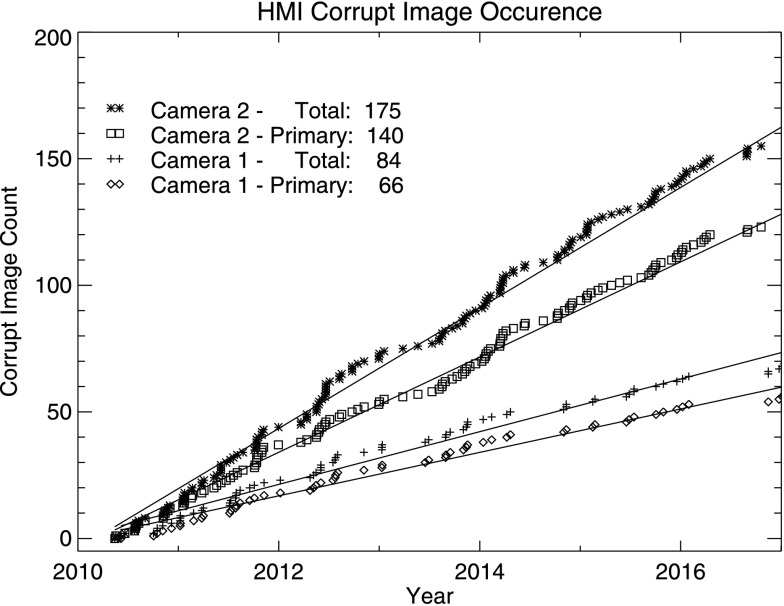
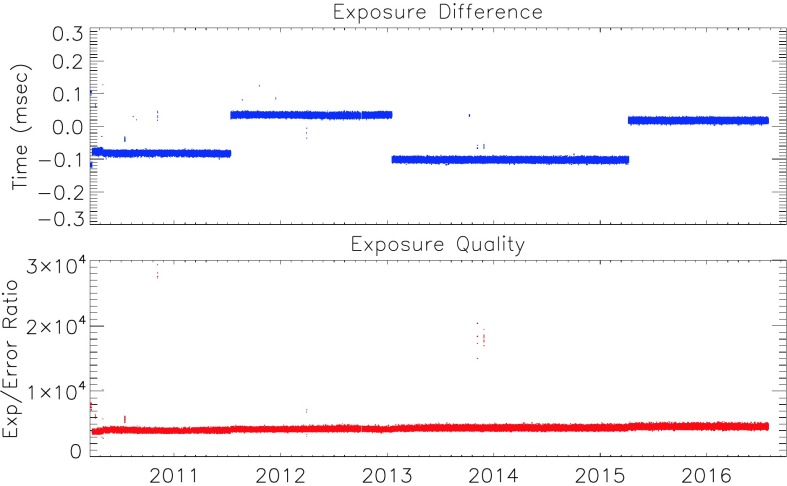
The (HMI) instrument is a major component of NASA's (SDO) spacecraft. Since commencement of full regular science operations on 1 May 2010, HMI has operated with remarkable continuity, during the more than five years of the SDO prime mission that ended 30 September 2015, HMI collected 98.4% of all possible 45-second velocity maps; minimizing gaps in these full-disk Dopplergrams is crucial for helioseismology. HMI velocity, intensity, and magnetic-field measurements are used in numerous investigations, so understanding the quality of the data is important. This article describes the calibration measurements used to track the performance of the HMI instrument, and it details trends in important instrument parameters during the prime mission. Regular calibration sequences provide information used to improve and update the calibration of HMI data. The set-point temperature of the instrument front window and optical bench is adjusted regularly to maintain instrument focus, and changes in the temperature-control scheme have been made to improve stability in the observable quantities. The exposure time has been changed to compensate for a 20% decrease in instrument throughput. Measurements of the performance of the shutter and tuning mechanisms show that they are aging as expected and continue to perform according to specification. Parameters of the tunable optical-filter elements are regularly adjusted to account for drifts in the central wavelength. Frequent measurements of changing CCD-camera characteristics, such as gain and flat field, are used to calibrate the observations. Infrequent expected events such as eclipses, transits, and spacecraft off-points interrupt regular instrument operations and provide the opportunity to perform additional calibration. Onboard instrument anomalies are rare and seem to occur quite uniformly in time. The instrument continues to perform very well.
日震与磁成像仪(HMI)仪器是美国国家航空航天局太阳动力学观测台(SDO)航天器的主要组件。自2010年5月1日开始全面常规科学运行以来,HMI一直保持着出色的连续性运行。在2015年9月30日结束的SDO主要任务的五年多时间里,HMI收集了所有可能的45秒速度图的98.4%;将这些全日面多普勒图中的间隙最小化对于日震学至关重要。HMI的速度、强度和磁场测量被用于众多研究中,因此了解数据质量很重要。本文描述了用于跟踪HMI仪器性能的校准测量,并详细介绍了主要任务期间重要仪器参数的趋势。定期校准序列提供了用于改进和更新HMI数据校准的信息。仪器前窗和光学平台的设定温度会定期调整以保持仪器聚焦,并且已经对温度控制方案进行了更改以提高可观测量的稳定性。曝光时间已更改以补偿仪器通量下降20%的情况。快门和调谐机制性能的测量表明它们按预期老化并且继续按规格运行。可调谐光学滤光元件的参数会定期调整以考虑中心波长的漂移。对电荷耦合器件相机特性(如增益和平场)变化的频繁测量用于校准观测。日食、凌日和航天器偏离等不常发生的预期事件会中断仪器的常规运行,并提供进行额外校准的机会。机载仪器异常很少见,而且似乎在时间上相当均匀地发生。该仪器继续运行得非常良好。