Baroncini Massimo, Canton Martina, Casimiro Lorenzo, Corra Stefano, Groppi Jessica, La Rosa Marcello, Silvi Serena, Credi Alberto
Istituto per la Sintesi Organica e la Fotoreattività Consiglio Nazionale delle Ricerche CLAN-Center for Light Activated Nanostructures Via Gobetti 101 40129 Bologna Italy.
Dipartimento di Scienze e Tecnologie Agro-alimentari Università di Bologna Viale Fanin 50 40127 Bologna Italy.
Eur J Inorg Chem. 2018 Nov 15;2018(42):4589-4603. doi: 10.1002/ejic.201800923. Epub 2018 Oct 22.
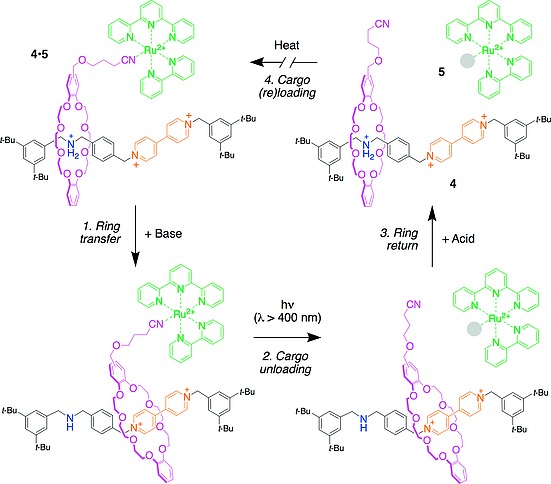
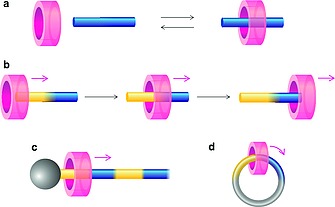
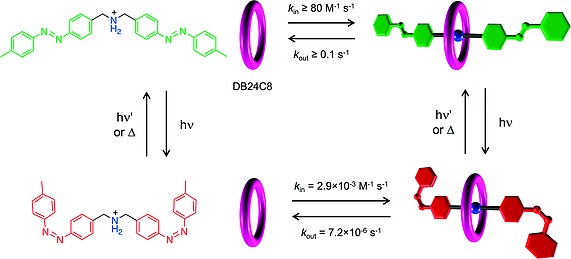
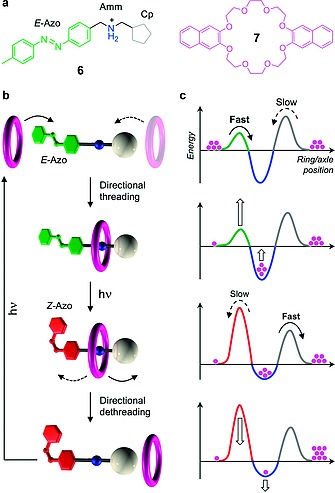
Molecular and supramolecular-based systems and materials that can perform predetermined functions in response to light stimulation have been extensively studied in the past three decades. Their investigation continues to be a highly stimulating topic of chemical research, not only because of the inherent scientific value related to a bottom-up approach to functional nanostructures, but also for the prospective applications in diverse fields of technology and medicine. Light is an important tool in this context, as it can be conveniently used both for supplying energy to the system and for probing its states and transformations. In this microreview we recall some basic aspects of light-induced processes in (supra)molecular assemblies, and discuss their exploitation to implement novel functionalities with nanostructured devices, machines and materials. To this aim we illustrate a few examples from our own recent work, which are meant to illustrate the trends of current research in the field.
在过去三十年中,能够响应光刺激执行预定功能的基于分子和超分子的系统及材料得到了广泛研究。它们的研究一直是化学研究中一个极具刺激性的课题,这不仅是因为与自下而上构建功能纳米结构相关的内在科学价值,还因为在技术和医学等不同领域的潜在应用。在这种情况下,光是一种重要工具,因为它既可以方便地用于为系统提供能量,又可以用于探测其状态和转变。在这篇微型综述中,我们回顾了(超)分子组装体中光诱导过程的一些基本方面,并讨论了如何利用这些过程在纳米结构的器件、机器和材料中实现新功能。为此,我们举例说明了我们自己近期工作中的一些例子,旨在阐明该领域当前的研究趋势。