Hawkins Brian T, Sellgren Katelyn L, Cellini Enzo, J D Klem Ethan, Rogers Tess, Lynch Brendon J, Piascik Jeffrey R, Stoner Brian R
RTI International Research Triangle Park NC USA.
Department of Electrical and Computer Engineering Duke University Durham NC USA.
Water Environ J. 2019 Feb;33(1):61-66. doi: 10.1111/wej.12369. Epub 2018 Sep 17.
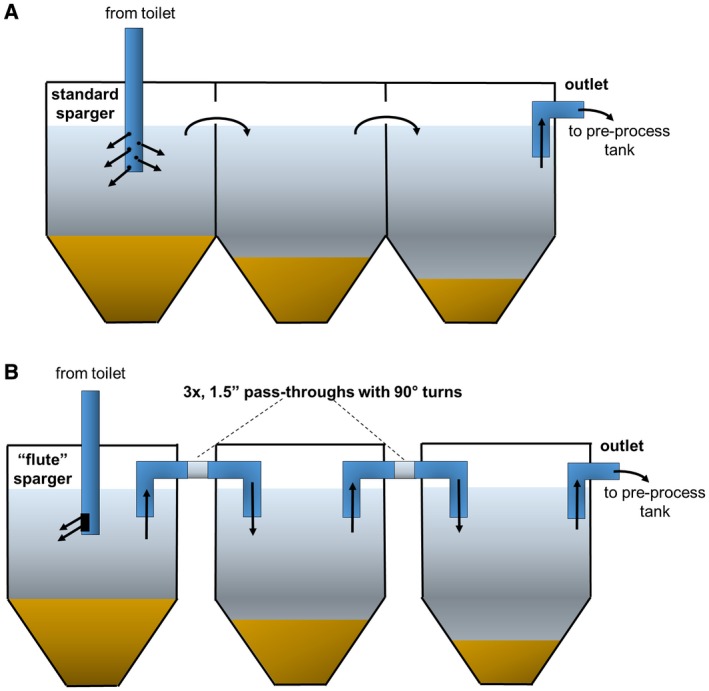
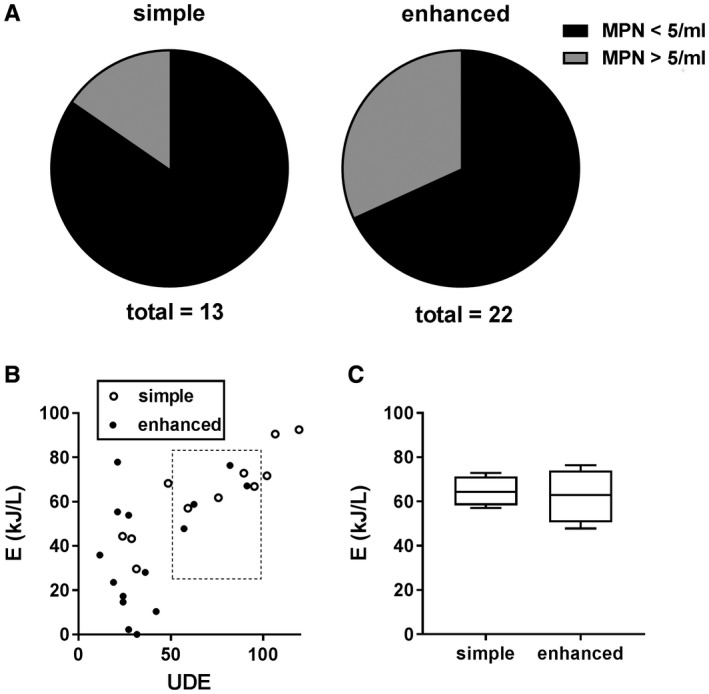
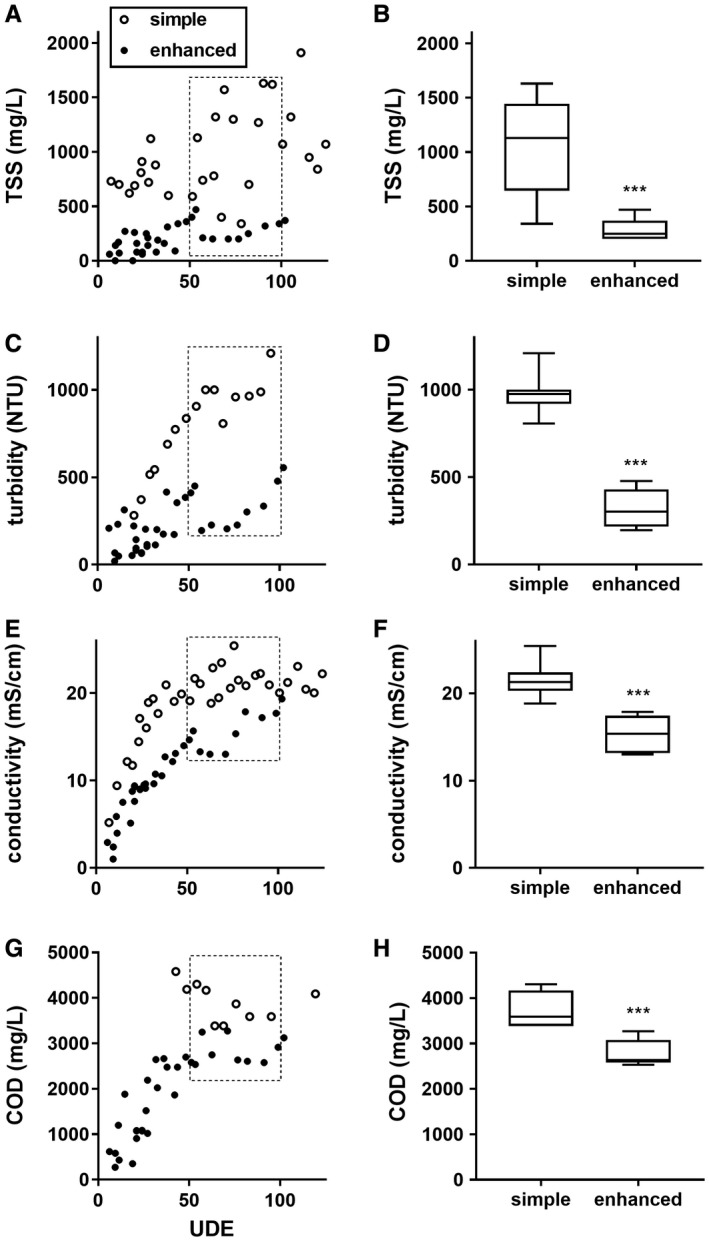
Our research is focused on the development of decentralized waste water treatment technologies enabling onsite water reuse. Accumulation of solids with recycling of treated blackwater increases the energy required for disinfection with an electrochemical process. We hypothesized that improving the preprocess settling of blackwater by increasing the tortuosity of the liquid flow path would reduce this energy demand by reducing particle-associated chemical oxygen demand (COD). This approach successfully reduced the total suspended solids and turbidity in the process liquid accumulated per user-day equivalent. A modest reduction in the apparent steady-state accumulation of COD was also observed, likely because of the retention of COD associated with larger particles in the settling tanks. Interestingly, these improvements did not improve the energy efficiency of the electrochemical disinfection process, as predicted. These observations suggest that improving the energy efficiency of electrochemical disinfection will require remediation of dissolved COD.
我们的研究重点是开发分散式废水处理技术,以实现现场水的再利用。随着处理后的黑水循环利用,固体物质的积累增加了电化学消毒所需的能量。我们假设,通过增加液体流动路径的曲折度来改善黑水的预处理沉降,将通过减少与颗粒相关的化学需氧量(COD)来降低这种能量需求。这种方法成功地降低了按每人每日当量计算的过程液体中总悬浮固体和浊度。还观察到COD的表观稳态积累略有减少,这可能是因为沉降池中与较大颗粒相关的COD被截留。有趣的是,正如预测的那样,这些改进并没有提高电化学消毒过程的能源效率。这些观察结果表明,提高电化学消毒的能源效率将需要去除溶解的COD。