Ho Phuong, Westerwalbesloh Christoph, Kaganovitch Eugen, Grünberger Alexander, Neubauer Peter, Kohlheyer Dietrich, Lieres Eric von
Institute of Bio- and Geosciences, IBG-1: Biotechnology, Forschungszentrum Jülich, 52425 Jülich, Germany.
Multiscale Bioengineering, Bielefeld University, 33615 Bielefeld, Germany.
Microorganisms. 2019 Apr 19;7(4):105. doi: 10.3390/microorganisms7040105.
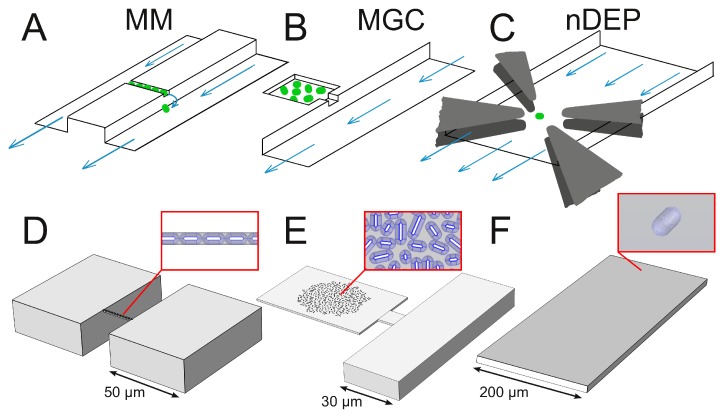
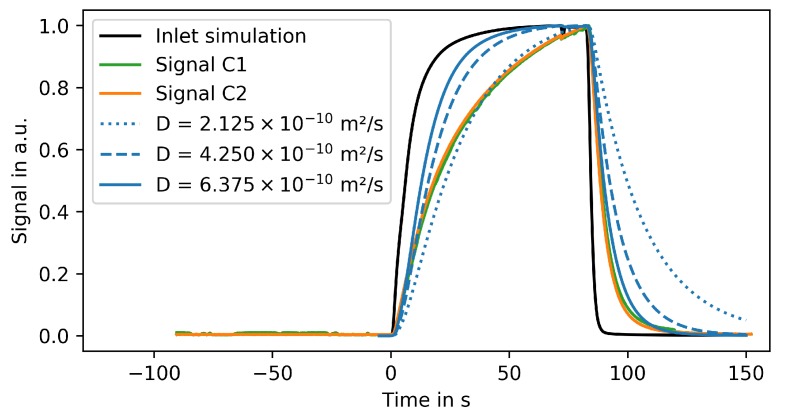
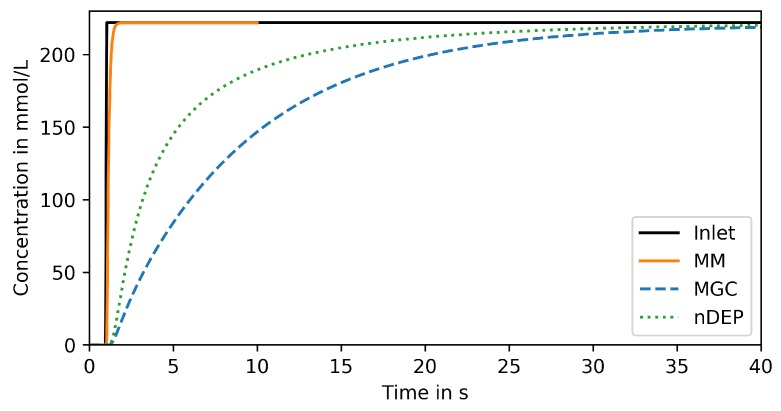
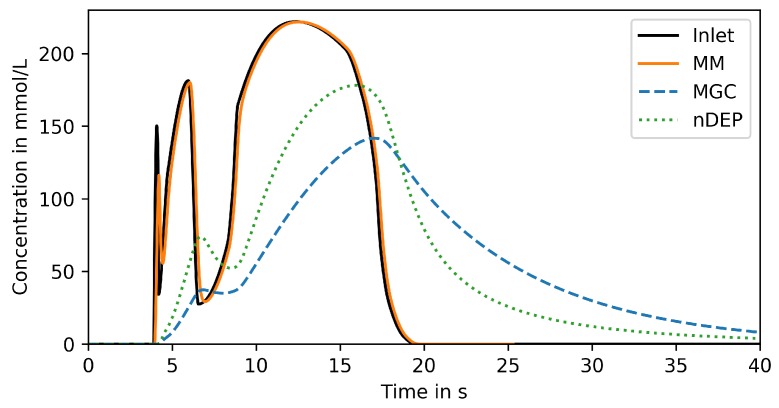
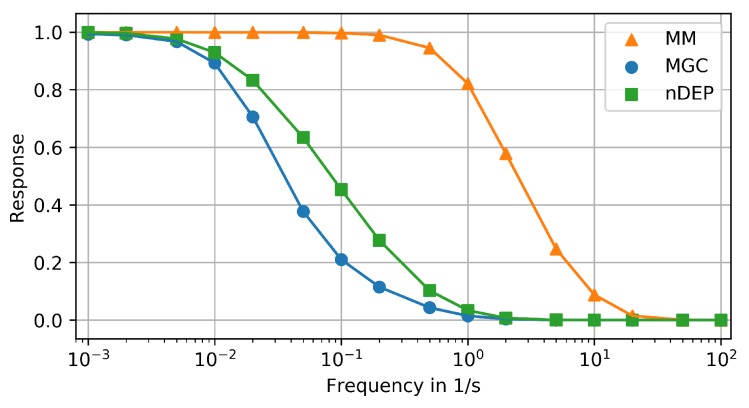
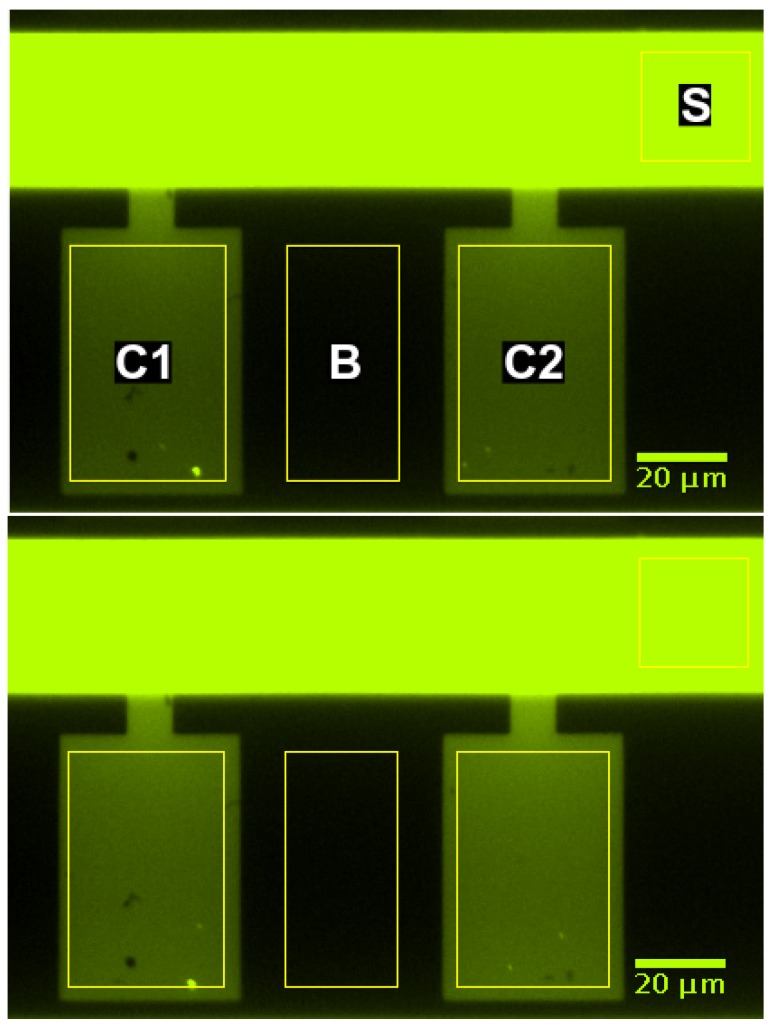
Microbial cells in industrial large-scale bioreactors are exposed to fluctuating conditions, e.g., nutrient concentration, dissolved oxygen, temperature, and pH. These inhomogeneities can influence the cell physiology and metabolism, e.g., decelerate cell growth and product formation. Microfluidic systems offer new opportunities to study such effects in great detail by examining responses to varying environmental conditions at single-cell level. However, the possibility to reproduce large-scale bioreactor conditions in microscale cultivation systems has not yet been systematically investigated. Hence, we apply computational fluid dynamics (CFD) simulations to analyze and compare three commonly used microfluidic single-cell trapping and cultivation devices that are based on (i) mother machines (MM), (ii) monolayer growth chambers (MGC), and (iii) negative dielectrophoresis (nDEP). Several representative time-variant nutrient concentration profiles are applied at the chip entry. Responses to these input signals within the studied microfluidic devices are comparatively evaluated at the positions of the cultivated cells. The results are comprehensively presented in a Bode diagram that illustrates the degree of signal damping depending on the frequency of change in the inlet concentration. As a key finding, the MM can accurately reproduce signal changes that occur within 1 s or slower, which are typical for the environmental conditions observed by single cells in large-scale bioreactors, while faster changes are levelled out. In contrast, the nDEP and MGC are found to level out signal changes occurring within 10 s or faster, which can be critical for the proposed application.
工业大规模生物反应器中的微生物细胞会面临波动的条件,例如营养物浓度、溶解氧、温度和pH值。这些不均匀性会影响细胞生理和代谢,例如减缓细胞生长和产物形成。微流控系统通过在单细胞水平上研究对不同环境条件的响应,为详细研究此类影响提供了新机会。然而,在微尺度培养系统中重现大规模生物反应器条件的可能性尚未得到系统研究。因此,我们应用计算流体动力学(CFD)模拟来分析和比较三种常用的微流控单细胞捕获和培养装置,它们分别基于:(i)母机(MM)、(ii)单层生长室(MGC)和(iii)负介电泳(nDEP)。在芯片入口处应用了几种代表性的随时间变化的营养物浓度分布。在培养细胞的位置对这些微流控装置内对这些输入信号的响应进行了比较评估。结果以波特图的形式全面呈现,该图说明了取决于入口浓度变化频率的信号衰减程度。作为一个关键发现,母机能够准确重现1秒或更慢时间内发生的信号变化,这对于大规模生物反应器中单个细胞所观察到的环境条件来说是典型的,而更快的变化则会被平滑掉。相比之下,发现负介电泳和单层生长室会平滑掉10秒或更快时间内发生的信号变化,这对于所提议的应用可能至关重要。