Department of Medicine, Division of Rheumatology and Clinical Immunology, University of Pittsburgh School of Medicine, Pittsburgh, Pennsylvania.
Columbia University Medical Center, New York, New York.
Clin Cancer Res. 2019 Jul 15;25(14):4443-4454. doi: 10.1158/1078-0432.CCR-19-0148. Epub 2019 Apr 22.
The heterogeneity of tumor cells presents a major challenge to cancer diagnosis and therapy. Cutaneous T-cell lymphomas (CTCL) are a group of T lymphocyte malignancies that primarily affect skin. Lack of highly specific markers for malignant lymphocytes prevents early diagnosis, while only limited treatment options are available for patients with advanced stage CTCL. Droplet-based single-cell transcriptome analysis of CTCL skin biopsies opens avenues for dissecting patient-specific T lymphocyte heterogeneity, providing a basis for identifying specific markers for diagnosis and cure of CTCL.
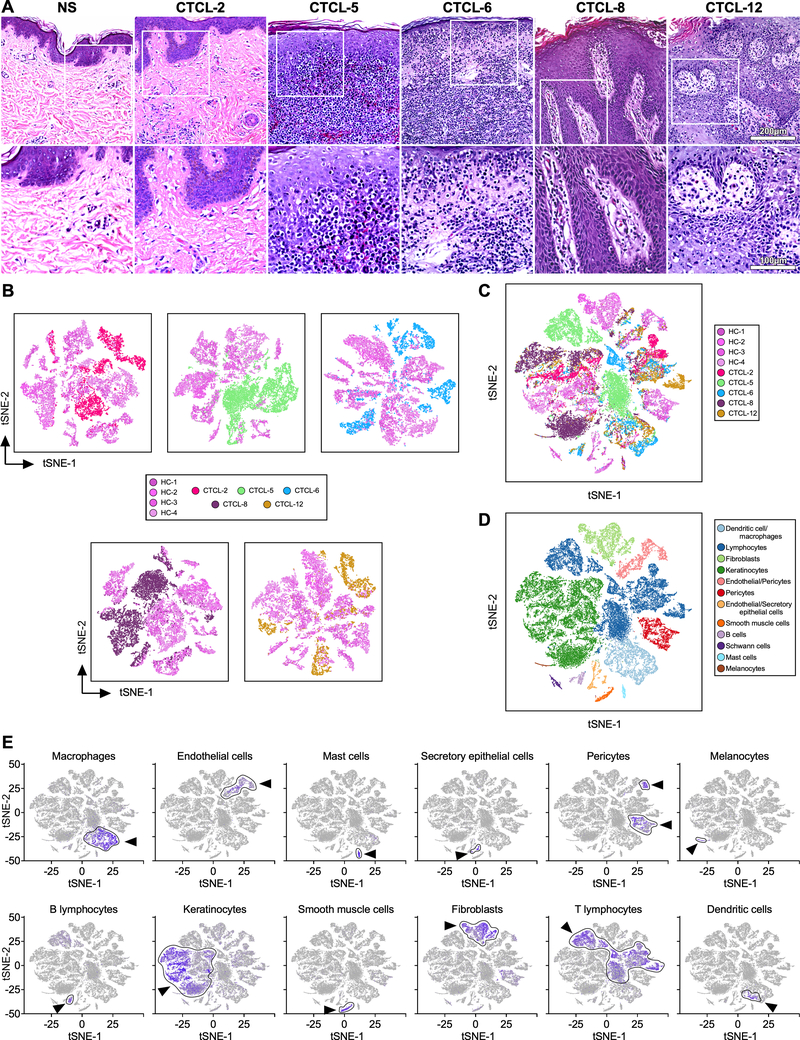
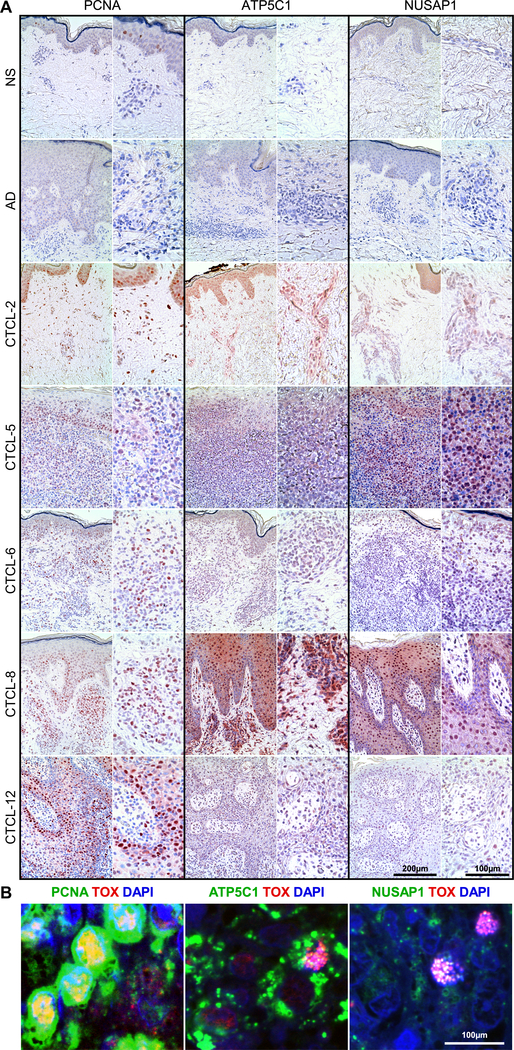
Single-cell RNA-sequencing was performed by Droplet-based sequencing (10X Genomics), focusing on 14,056 CD3 lymphocytes (448 cells from normal and 13,608 cells from CTCL skin samples) from skin biopsies of 5 patients with advanced-stage CTCL and 4 healthy donors. Protein expression of identified genes was validated in advanced stage CTCL skin tumors by immunohistochemistry and confocal immunofluorescence microscopy.
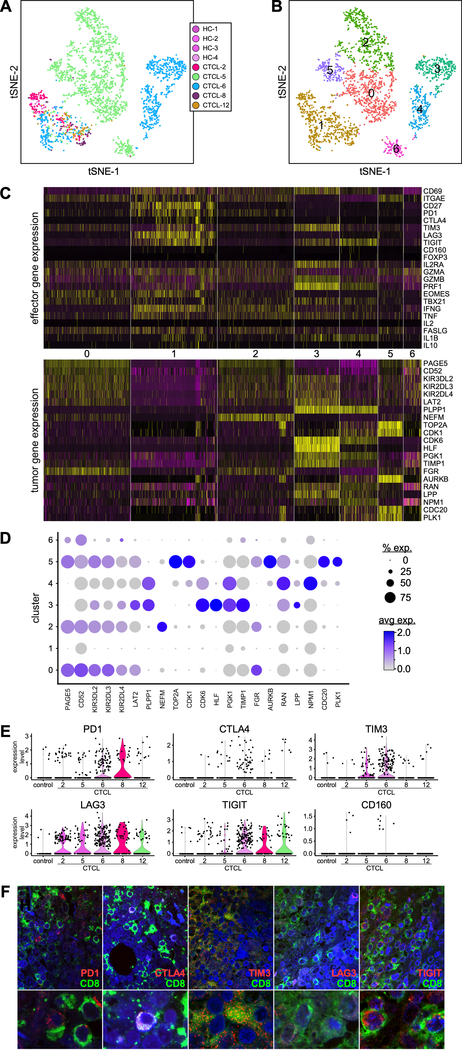
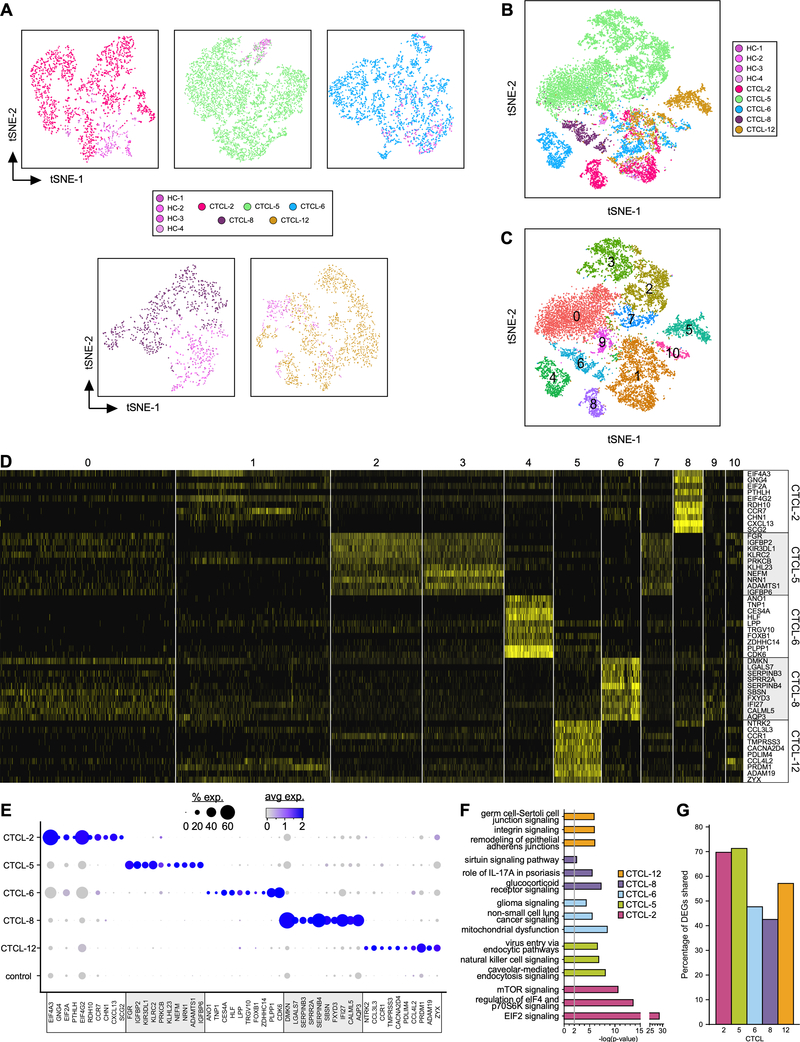
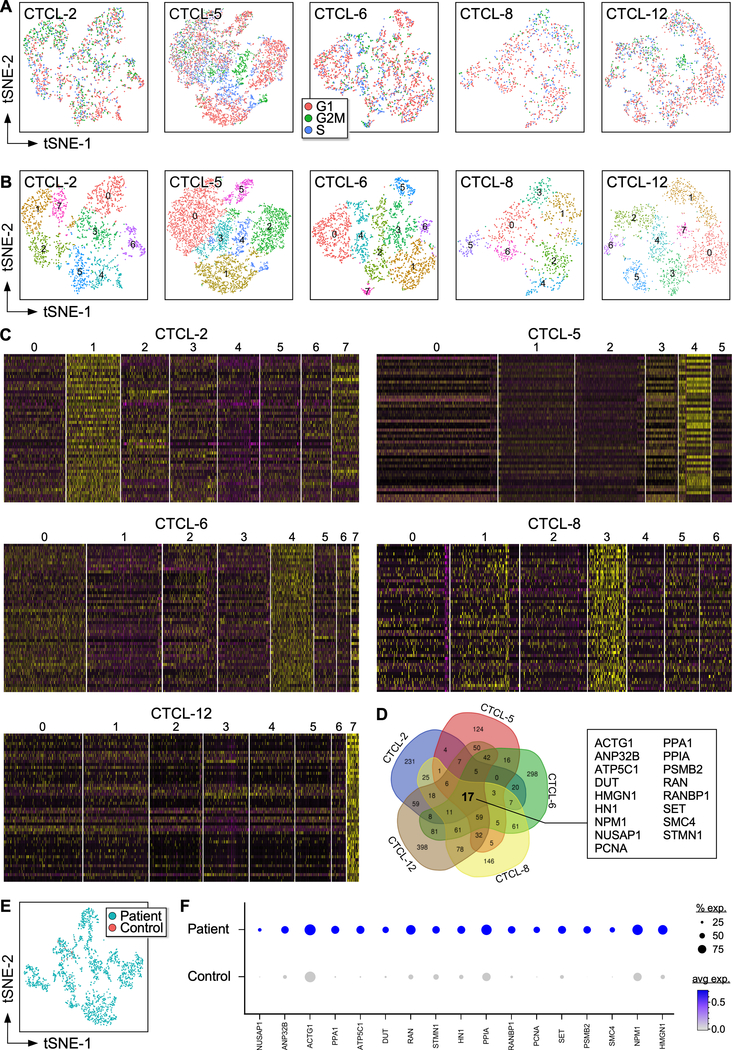
Our analysis revealed a large inter- and intratumor gene expression heterogeneity in the T lymphocyte subset, as well as a common gene expression signature in highly proliferating lymphocytes that was validated in multiple advanced-stage skin tumors. In addition, we established the immunologic state of reactive lymphocytes and found heterogeneity in effector and exhaustion programs across patient samples.
Single-cell analysis of CTCL skin tumor samples reveals patient-specific landscapes of malignant and reactive lymphocytes within the local microenvironment of each tumor, giving an unprecedented view of lymphocyte heterogeneity and identifying tumor-specific molecular signatures, with important implications for diagnosis and personalized disease treatment.
肿瘤细胞的异质性对癌症的诊断和治疗构成了重大挑战。皮肤 T 细胞淋巴瘤(CTCL)是一组主要影响皮肤的 T 淋巴细胞恶性肿瘤。恶性淋巴细胞缺乏高度特异性标志物,妨碍了早期诊断,而晚期 CTCL 患者的治疗选择有限。基于液滴的 CTCL 皮肤活检单细胞转录组分析为剖析患者特异性 T 淋巴细胞异质性开辟了途径,为鉴定 CTCL 的诊断和治疗特异性标志物提供了依据。
通过基于液滴的测序(10X Genomics)进行单细胞 RNA 测序,重点分析来自 5 名晚期 CTCL 患者和 4 名健康供体皮肤活检的 14,056 个 CD3 淋巴细胞(正常皮肤 448 个细胞,CTCL 皮肤样本 13,608 个细胞)。通过免疫组织化学和共聚焦免疫荧光显微镜验证鉴定基因的蛋白质表达。
我们的分析揭示了 T 淋巴细胞亚群中存在较大的肿瘤内和肿瘤间基因表达异质性,以及在高增殖淋巴细胞中存在共同的基因表达特征,在多个晚期皮肤肿瘤中得到了验证。此外,我们确定了反应性淋巴细胞的免疫状态,并发现了跨患者样本的效应器和衰竭程序的异质性。
对 CTCL 皮肤肿瘤样本的单细胞分析揭示了每个肿瘤局部微环境中恶性和反应性淋巴细胞的患者特异性图谱,为淋巴细胞异质性提供了前所未有的视角,并鉴定了肿瘤特异性分子特征,对诊断和个性化疾病治疗具有重要意义。