National Institute of Diabetes and Digestive and Kidney Diseases, National Institutes of Health, Phoenix, Arizona, USA.
Obesity (Silver Spring). 2019 May;27(5):691-699. doi: 10.1002/oby.22456.
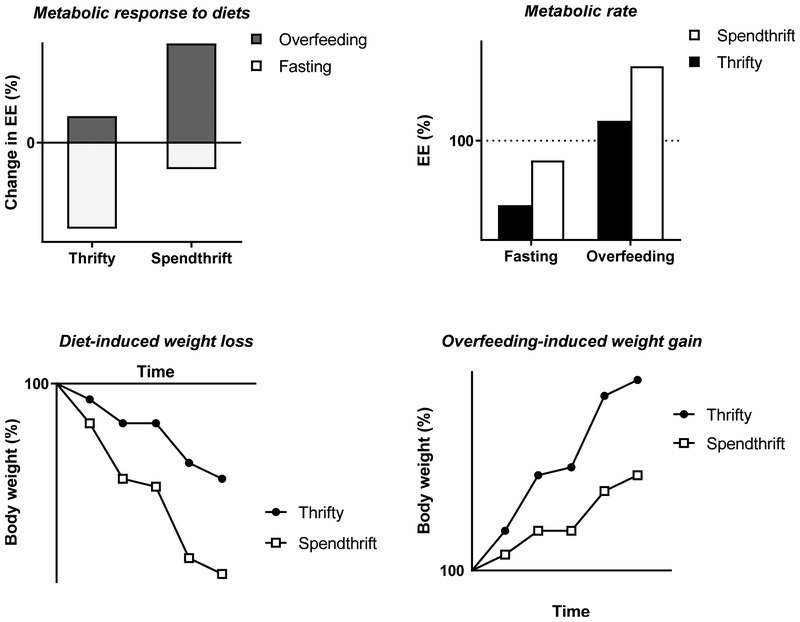
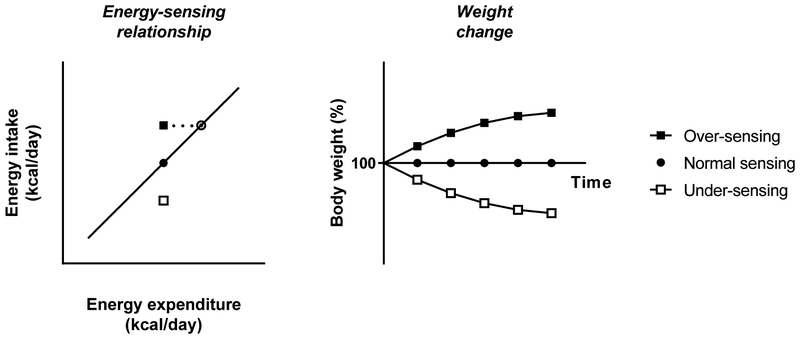
One of the fundamental challenges in obesity research is to identify subjects prone to weight gain so that obesity and its comorbidities can be promptly prevented or treated. The principles of thermodynamics as applied to human body energetics demonstrate that susceptibility to weight gain varies among individuals as a result of interindividual differences in energy expenditure and energy intake, two factors that counterbalance one another and determine daily energy balance and, ultimately, body weight change. This review focuses on the variability among individuals in human metabolism that determines weight change. Conflicting results have been reported about the role of interindividual differences in energy metabolism during energy balance in relation to future weight change. However, recent studies have shown that metabolic responses to acute, short-term dietary interventions that create energy imbalance, such as low-protein overfeeding or fasting for 24 hours, may reveal the underlying metabolic phenotype that determines the degree of resistance to diet-induced weight loss or the propensity to spontaneous weight gain over time. Metabolically "thrifty" individuals, characterized by a predilection for saving energy in settings of undernutrition and dietary protein restriction, display a minimal increase in plasma fibroblast growth factor 21 concentrations in response to a low-protein overfeeding diet and tend to gain more weight over time compared with metabolically "spendthrift" individuals. Similarly, interindividual variability in the causal relationship between energy expenditure and energy intake ("energy sensing") and in the metabolic response to cold exposure (e.g., brown adipose tissue activation) seems, to some extent, to be indicative of individual propensity to weight gain. Thus, an increased understanding and the clinical characterization of phenotypic differences in energy metabolism among individuals (metabolic profile) may lead to new strategies to prevent weight gain or improve weight-loss interventions by targeted therapies on the basis of metabolic phenotype and susceptibility to obesity in individual persons.
肥胖研究的一个基本挑战是确定易增重的个体,以便及时预防或治疗肥胖及其合并症。应用于人体能量学的热力学原理表明,由于个体间能量消耗和能量摄入的差异,个体对体重增加的易感性存在差异,这两个因素相互抵消,决定了每日能量平衡,最终决定体重变化。本篇综述重点关注决定体重变化的人体代谢个体差异。关于能量平衡期间个体间能量代谢差异在未来体重变化中的作用,已有相互矛盾的结果报告。然而,最近的研究表明,代谢对急性短期饮食干预的反应,例如低蛋白过度喂养或禁食 24 小时,可能揭示决定对饮食诱导的体重减轻的抵抗力或随时间自发体重增加的倾向的潜在代谢表型。代谢上“节俭”的个体,其特征是在营养不足和饮食蛋白限制的情况下倾向于节省能量,对低蛋白过度喂养饮食的反应表现为血浆成纤维细胞生长因子 21 浓度的适度增加,并且与代谢上“挥霍”的个体相比,随着时间的推移体重增加更多。同样,能量消耗与能量摄入之间因果关系(“能量感知”)以及对冷暴露的代谢反应(例如,棕色脂肪组织激活)的个体间变异性在某种程度上表明个体对体重增加的倾向。因此,对个体间能量代谢表型差异(代谢谱)的深入了解和临床特征分析,可能会为预防体重增加或改善基于代谢表型和个体肥胖易感性的靶向治疗的体重减轻干预提供新策略。