McGowan Institute for Regenerative Medicine and Department of Pathology, University of Pittsburgh School of Medicine, Pittsburgh, PA 15219, USA.
Ri.MED Foundation, 90133 Palermo, Italy.
Int J Mol Sci. 2019 Apr 12;20(8):1817. doi: 10.3390/ijms20081817.
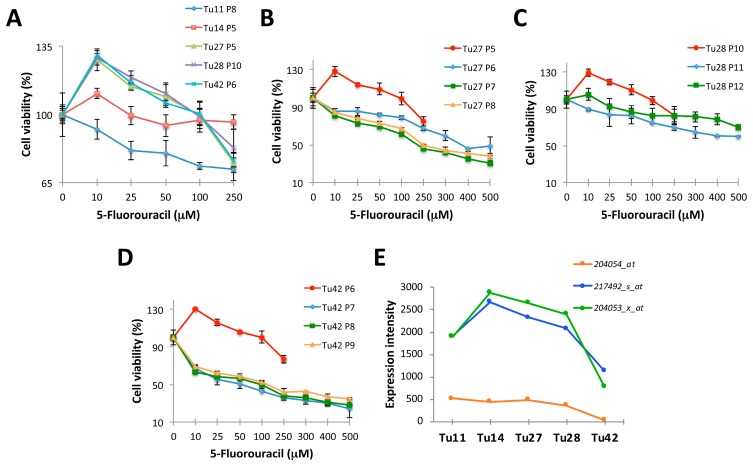
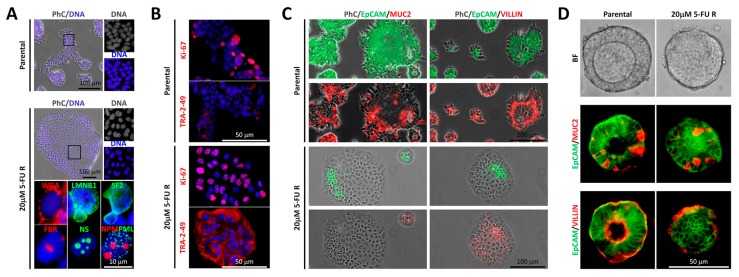
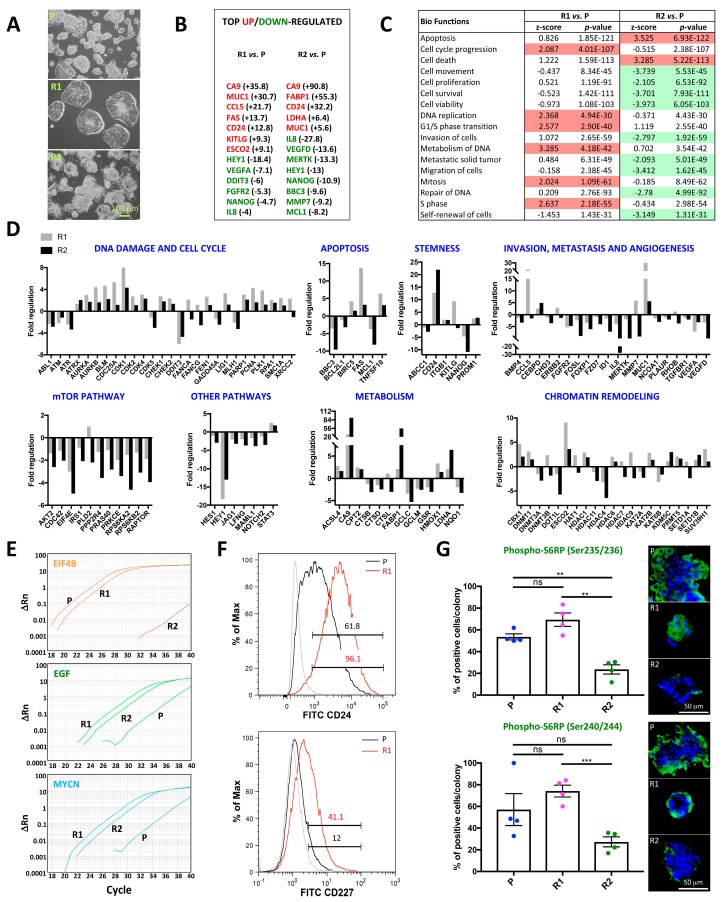
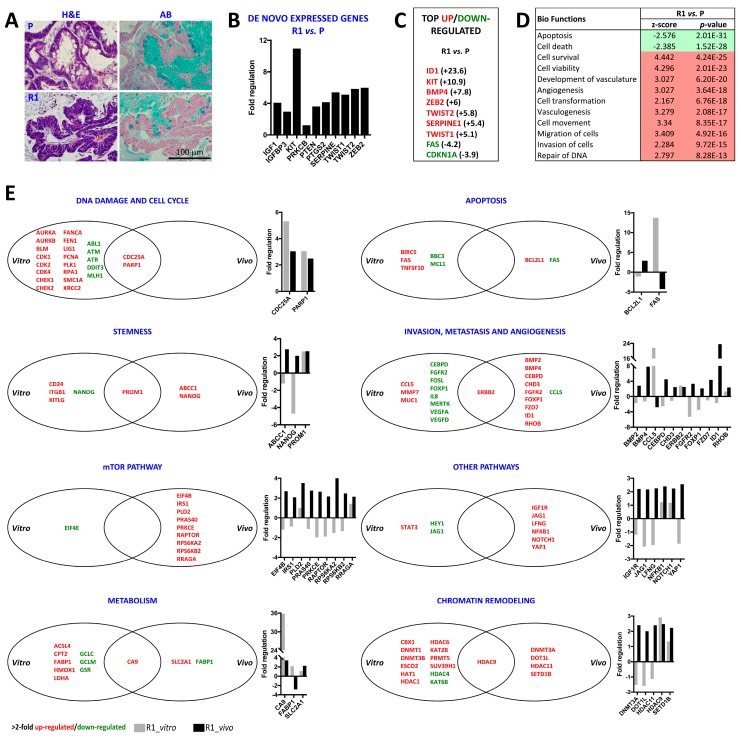
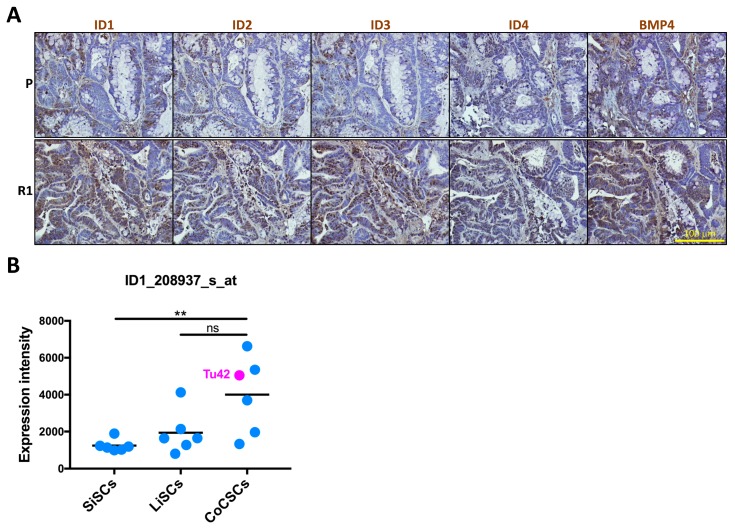
5-Fluorouracil (5-FU) remains the gold standard of first-line treatment for colorectal cancer (CRC). Although it may initially debulk the tumor mass, relapses frequently occur, indicating the existence of cancer cells that are therapy-resistant and are capable of refueling tumor growth. To identify mechanisms of drug resistance, CRC stem-like cells were subjected to long-term 5-FU selection using either intermittent treatment regimen with the IC50 drug dose or continuous treatment regimen with escalating drug doses. Parental cancer cells were cultivated in parallel. Real-time PCR arrays and bioinformatic tools were used to investigate gene expression changes. We found the first method selected for cancer cells with more aggressive features. We therefore transplanted these cancer cells or parental cells in mice, and again, found that not only did the 5-FU-selected cancer cells generate more aggressive tumors with respect to their parental counterpart, but they also showed a different gene expression pattern as compared to what we had observed in vitro, with the top upregulated gene. We propose ID1 as a stemness marker pervasively expressed in secondary lesions emerging after completion of chemotherapy.
5-氟尿嘧啶(5-FU)仍然是结直肠癌(CRC)一线治疗的金标准。尽管它最初可能使肿瘤体积缩小,但经常会复发,这表明存在对治疗有抵抗力且能够为肿瘤生长提供燃料的癌细胞。为了确定耐药机制,使用 IC50 药物剂量的间歇性治疗方案或递增药物剂量的连续治疗方案对 CRC 干细胞样细胞进行了长期 5-FU 选择。平行培养亲本癌细胞。使用实时 PCR 阵列和生物信息学工具来研究基因表达变化。我们发现第一种方法选择了具有更具侵袭性特征的癌细胞。因此,我们将这些癌细胞或亲本细胞移植到小鼠中,并且再次发现,不仅 5-FU 选择的癌细胞相对于其亲本细胞生成了更具侵袭性的肿瘤,而且与我们在体外观察到的相比,它们还表现出不同的基因表达模式,其中上调的基因最多。我们提出 ID1 作为一种干细胞标志物,广泛表达于化疗完成后出现的继发性病变中。