Department of Experimental Pharmacology, Medical University of Bialystok, Szpitalna 37, 15-361 Bialystok, Poland.
Doctoral School, Medical University of Bialystok, Kilinskiego 1, 15-089 Bialystok, Poland.
Int J Mol Sci. 2023 Jan 10;24(2):1364. doi: 10.3390/ijms24021364.
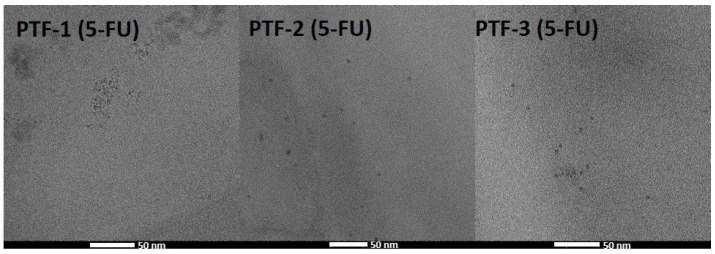
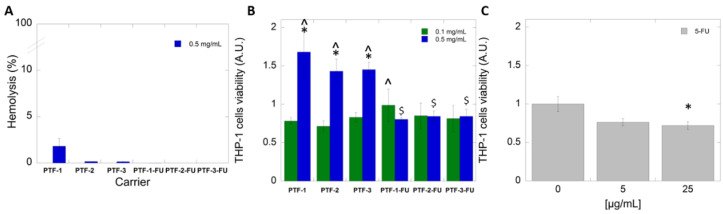
Colorectal cancer is the fourth most common cancer worldwide and the third most frequently diagnosed form of cancer associated with high mortality rates. Recently, targeted drug delivery systems have been under increasing attention owing to advantages such as high therapeutic effectiveness with a significant depletion in adverse events. In this report, we describe the biocompatible and thermoresponsive FA-conjugated PHEA--PNIPAAm copolymers as nanocarriers for the delivery of 5-FU. The block copolymers were obtained using RAFT (Reversible Addition-Fragmentation chain Transfer) polymerization and were characterized by methods such as SEC (Size Exclusion Chromatography), NMR (Nuclear Magnetic Resonance), UV-Vis (Ultraviolet-Visible), FT-IR (Fourier Transform Infrared) spectroscopy, and TGA (Thermogravimetric Analysis). Nanoparticles were formed from polymers with and without the drug-5-fluorouracil, which was confirmed using DLS (Dynamic Light Scattering), zeta potential measurements, and TEM (Transmission Electron Microscopy) imaging. The cloud points of the polymers were found to be close to the temperature of the human body. Eventually, polymeric carriers were tested as drug delivery systems for the safety, compatibility, and targeting of colorectal cancer cells (CRC). The biological evaluation indicated high compatibility with the representative host cells. Furthermore, it showed that proposed nanosystems might have therapeutic potential as mitigators for 5-FU-induced monocytopenia, cardiotoxicity, and other chemotherapy-associated disorders. Moreover, results show increased cytotoxicity against cancer cells compared to the drug, including a line with a drug resistance phenotype. Additionally, the ability of synthesized carriers to induce apoptosis and necrosis in treated CRC cells has been confirmed. Undoubtedly, the presented aspects of colorectal cancer therapy promise future solutions to overcome the conventional limitations of current treatment regimens for this type of cancer and to improve the quality of life of the patients.
结直肠癌是全球第四大常见癌症,也是死亡率较高的第三大常见癌症。最近,由于靶向药物递送系统具有高治疗效果和显著减少不良反应等优势,引起了越来越多的关注。在本报告中,我们描述了生物相容和温敏性 FA 偶联的 PHEA-PNIPAAm 共聚物作为 5-FU 递送的纳米载体。嵌段共聚物通过 RAFT(可逆加成-断裂链转移)聚合获得,并通过 SEC(尺寸排阻色谱)、NMR(核磁共振)、UV-Vis(紫外可见)、FT-IR(傅里叶变换红外)光谱和 TGA(热重分析)等方法进行了表征。形成了载有和不载有药物 5-氟尿嘧啶的聚合物纳米粒子,这通过 DLS(动态光散射)、zeta 电位测量和 TEM(透射电子显微镜)成像得到了证实。聚合物的浊点被发现接近人体温度。最终,聚合物载体被测试为结直肠癌细胞(CRC)的安全、相容性和靶向性的药物递送系统。生物评价表明与代表性宿主细胞具有高度兼容性。此外,它表明所提出的纳米系统可能具有治疗潜力,可作为减轻 5-FU 诱导的单核细胞减少症、心脏毒性和其他与化疗相关的疾病的药物。此外,与药物相比,结果显示对癌细胞的细胞毒性增加,包括具有耐药表型的细胞系。此外,还证实了合成载体在治疗 CRC 细胞中诱导细胞凋亡和坏死的能力。毫无疑问,结直肠癌治疗的这些方面有望为克服当前治疗方案对这种癌症的常规局限性并提高患者的生活质量提供未来的解决方案。