• 文献检索
  • 文档翻译
  • 深度研究
  • 学术资讯
  • Suppr Zotero 插件Zotero 插件
  • 邀请有礼
  • 套餐&价格
  • 历史记录
应用&插件
Suppr Zotero 插件Zotero 插件浏览器插件Mac 客户端Windows 客户端微信小程序
定价
高级版会员购买积分包购买API积分包
服务
文献检索文档翻译深度研究API 文档MCP 服务
关于我们
关于 Suppr公司介绍联系我们用户协议隐私条款
关注我们

Suppr 超能文献

核心技术专利:CN118964589B侵权必究
粤ICP备2023148730 号-1Suppr @ 2026

文献检索

告别复杂PubMed语法,用中文像聊天一样搜索,搜遍4000万医学文献。AI智能推荐,让科研检索更轻松。

立即免费搜索

文件翻译

保留排版,准确专业,支持PDF/Word/PPT等文件格式,支持 12+语言互译。

免费翻译文档

深度研究

AI帮你快速写综述,25分钟生成高质量综述,智能提取关键信息,辅助科研写作。

立即免费体验

基于深度学习利用智能鞋垫搭配各种传感器的步态类型分类

Classification of Gait Type Based on Deep Learning Using Various Sensors with Smart Insole.

作者信息

Lee Sung-Sin, Choi Sang Tae, Choi Sang-Il

机构信息

Department of Data Science, Dankook University, Yongin 16890, Korea.

Department of Internal Medicine, Chung-Ang University, Seoul 06984, Korea.

出版信息

Sensors (Basel). 2019 Apr 12;19(8):1757. doi: 10.3390/s19081757.

DOI:10.3390/s19081757
PMID:31013773
原文链接:https://pmc.ncbi.nlm.nih.gov/articles/PMC6514988/
Abstract

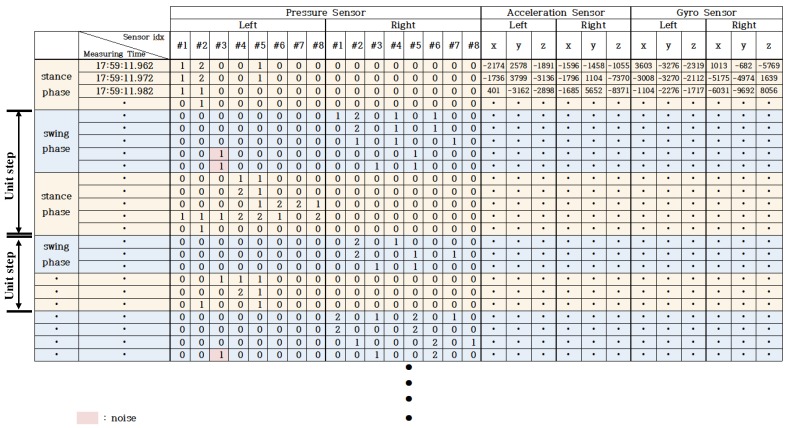
In this paper, we proposed a gait type classification method based on deep learning using a smart insole with various sensor arrays. We measured gait data using a pressure sensor array, an acceleration sensor array, and a gyro sensor array built into a smart insole. Features of gait pattern were then extracted using a deep convolution neural network (DCNN). In order to accomplish this, measurement data of continuous gait cycle were divided into unit steps. Pre-processing of data were then performed to remove noise followed by data normalization. A feature map was then extracted by constructing an independent DCNN for data obtained from each sensor array. Each of the feature maps was then combined to form a fully connected network for gait type classification. Experimental results for seven types of gait (walking, fast walking, running, stair climbing, stair descending, hill climbing, and hill descending) showed that the proposed method provided a high classification rate of more than 90%.

摘要

在本文中,我们提出了一种基于深度学习的步态类型分类方法,该方法使用了带有各种传感器阵列的智能鞋垫。我们使用内置在智能鞋垫中的压力传感器阵列、加速度传感器阵列和陀螺仪传感器阵列来测量步态数据。然后使用深度卷积神经网络(DCNN)提取步态模式的特征。为了实现这一点,将连续步态周期的测量数据划分为单位步长。接着对数据进行预处理以去除噪声,随后进行数据归一化。然后通过为从每个传感器阵列获得的数据构建独立的DCNN来提取特征图。然后将每个特征图组合起来形成一个用于步态类型分类的全连接网络。对七种步态(行走、快走、跑步、爬楼梯、下楼梯、爬山和下山)的实验结果表明,所提出的方法提供了超过90%的高分类率。

https://cdn.ncbi.nlm.nih.gov/pmc/blobs/c910/6514988/10a510a49429/sensors-19-01757-g010.jpg
https://cdn.ncbi.nlm.nih.gov/pmc/blobs/c910/6514988/e2b1a0f3c869/sensors-19-01757-g001.jpg
https://cdn.ncbi.nlm.nih.gov/pmc/blobs/c910/6514988/10c40447d106/sensors-19-01757-g002.jpg
https://cdn.ncbi.nlm.nih.gov/pmc/blobs/c910/6514988/5f1aa3bf9471/sensors-19-01757-g003.jpg
https://cdn.ncbi.nlm.nih.gov/pmc/blobs/c910/6514988/871c071df5ad/sensors-19-01757-g004.jpg
https://cdn.ncbi.nlm.nih.gov/pmc/blobs/c910/6514988/c9f4806ba922/sensors-19-01757-g005.jpg
https://cdn.ncbi.nlm.nih.gov/pmc/blobs/c910/6514988/d5bf851dfe5b/sensors-19-01757-g006.jpg
https://cdn.ncbi.nlm.nih.gov/pmc/blobs/c910/6514988/bdf58658aead/sensors-19-01757-g007.jpg
https://cdn.ncbi.nlm.nih.gov/pmc/blobs/c910/6514988/1b8bb663e89b/sensors-19-01757-g008.jpg
https://cdn.ncbi.nlm.nih.gov/pmc/blobs/c910/6514988/950302ee3d8a/sensors-19-01757-g009.jpg
https://cdn.ncbi.nlm.nih.gov/pmc/blobs/c910/6514988/10a510a49429/sensors-19-01757-g010.jpg
https://cdn.ncbi.nlm.nih.gov/pmc/blobs/c910/6514988/e2b1a0f3c869/sensors-19-01757-g001.jpg
https://cdn.ncbi.nlm.nih.gov/pmc/blobs/c910/6514988/10c40447d106/sensors-19-01757-g002.jpg
https://cdn.ncbi.nlm.nih.gov/pmc/blobs/c910/6514988/5f1aa3bf9471/sensors-19-01757-g003.jpg
https://cdn.ncbi.nlm.nih.gov/pmc/blobs/c910/6514988/871c071df5ad/sensors-19-01757-g004.jpg
https://cdn.ncbi.nlm.nih.gov/pmc/blobs/c910/6514988/c9f4806ba922/sensors-19-01757-g005.jpg
https://cdn.ncbi.nlm.nih.gov/pmc/blobs/c910/6514988/d5bf851dfe5b/sensors-19-01757-g006.jpg
https://cdn.ncbi.nlm.nih.gov/pmc/blobs/c910/6514988/bdf58658aead/sensors-19-01757-g007.jpg
https://cdn.ncbi.nlm.nih.gov/pmc/blobs/c910/6514988/1b8bb663e89b/sensors-19-01757-g008.jpg
https://cdn.ncbi.nlm.nih.gov/pmc/blobs/c910/6514988/950302ee3d8a/sensors-19-01757-g009.jpg
https://cdn.ncbi.nlm.nih.gov/pmc/blobs/c910/6514988/10a510a49429/sensors-19-01757-g010.jpg

相似文献

1
Classification of Gait Type Based on Deep Learning Using Various Sensors with Smart Insole.基于深度学习利用智能鞋垫搭配各种传感器的步态类型分类
Sensors (Basel). 2019 Apr 12;19(8):1757. doi: 10.3390/s19081757.
2
A Systematic Approach to the Design and Characterization of A Smart Insole for Detecting Vertical Ground Reaction Force (vGRF) in Gait Analysis.一种用于步态分析中检测垂直地面反作用力(vGRF)的智能鞋垫的设计和特征描述的系统方法。
Sensors (Basel). 2020 Feb 11;20(4):957. doi: 10.3390/s20040957.
3
User Identification from Gait Analysis Using Multi-Modal Sensors in Smart Insole.基于智能鞋垫中多模态传感器的步态分析的用户身份识别
Sensors (Basel). 2019 Aug 31;19(17):3785. doi: 10.3390/s19173785.
4
IMU-Based Gait Recognition Using Convolutional Neural Networks and Multi-Sensor Fusion.基于惯性测量单元的卷积神经网络与多传感器融合步态识别
Sensors (Basel). 2017 Nov 27;17(12):2735. doi: 10.3390/s17122735.
5
Deep learning approach to estimate foot pressure distribution in walking with application for a cost-effective insole system.深度学习方法估计行走时足底压力分布及其在经济型鞋垫系统中的应用。
J Neuroeng Rehabil. 2022 Jan 16;19(1):4. doi: 10.1186/s12984-022-00987-8.
6
Deep-learning enabled smart insole system aiming for multifunctional foot-healthcare applications.面向多功能足部保健应用的深度学习智能鞋垫系统。
Exploration (Beijing). 2023 Nov 23;4(1):20230109. doi: 10.1002/EXP.20230109. eCollection 2024 Feb.
7
Identification of Patients with Sarcopenia Using Gait Parameters Based on Inertial Sensors.基于惯性传感器的步态参数识别肌少症患者
Sensors (Basel). 2021 Mar 4;21(5):1786. doi: 10.3390/s21051786.
8
Feature selection for elderly faller classification based on wearable sensors.基于可穿戴传感器的老年人跌倒者分类特征选择
J Neuroeng Rehabil. 2017 May 30;14(1):47. doi: 10.1186/s12984-017-0255-9.
9
A 3D-Printed Capacitive Smart Insole for Plantar Pressure Monitoring.一种用于足底压力监测的三维打印电容智能鞋垫。
Sensors (Basel). 2022 Dec 12;22(24):9725. doi: 10.3390/s22249725.
10
Deep Convolutional Neural Network-Based Hemiplegic Gait Detection Using an Inertial Sensor Located Freely in a Pocket.基于深度卷积神经网络的偏瘫步态检测,使用位于口袋内自由位置的惯性传感器。
Sensors (Basel). 2022 Mar 1;22(5):1920. doi: 10.3390/s22051920.

引用本文的文献

1
Instant gait classification for hip osteoarthritis patients: a non-wearable sensor approach utilizing Pearson correlation, SMAPE, and GMM.髋骨关节炎患者的即时步态分类:一种利用皮尔逊相关性、平均绝对百分比误差和高斯混合模型的非穿戴式传感器方法。
Biomed Eng Lett. 2025 Jan 9;15(2):301-310. doi: 10.1007/s13534-024-00448-2. eCollection 2025 Mar.
2
Recent Innovations in Footwear and the Role of Smart Footwear in Healthcare-A Survey.最近在鞋类方面的创新及智能鞋在医疗保健中的作用 - 一项调查。
Sensors (Basel). 2024 Jul 2;24(13):4301. doi: 10.3390/s24134301.
3
Technological advances in lower-limb tele-rehabilitation: A review of literature.

本文引用的文献

1
Automated classification of pathological gait after stroke using ubiquitous sensing technology.使用普适传感技术对中风后病理性步态进行自动分类。
Annu Int Conf IEEE Eng Med Biol Soc. 2016 Aug;2016:6150-6153. doi: 10.1109/EMBC.2016.7592132.
2
Mixture-Model Clustering of Pathological Gait Patterns.病理性步态模式的混合模型聚类
IEEE J Biomed Health Inform. 2017 Sep;21(5):1297-1305. doi: 10.1109/JBHI.2016.2633000. Epub 2016 Nov 24.
3
Gait disorders in adults and the elderly : A clinical guide.成人及老年人步态障碍:临床指南
下肢远程康复的技术进展:文献综述
J Rehabil Assist Technol Eng. 2024 Jun 4;11:20556683241259256. doi: 10.1177/20556683241259256. eCollection 2024 Jan-Dec.
4
Assessing lower extremity loading during activities of daily living using continuous-scale physical functional performance 10 and wireless sensor insoles: a comparative study between younger and older adults.使用连续尺度的身体功能表现 10 和无线传感器鞋垫评估日常活动中的下肢负荷:年轻和老年人之间的比较研究。
Eur J Trauma Emerg Surg. 2023 Dec;49(6):2521-2529. doi: 10.1007/s00068-023-02331-8. Epub 2023 Jul 22.
5
Smart Shoe Insole Based on Polydimethylsiloxane Composite Capacitive Sensors.基于聚二甲基硅氧烷复合电容传感器的智能鞋垫。
Sensors (Basel). 2023 Jan 23;23(3):1298. doi: 10.3390/s23031298.
6
Gait Trajectory Prediction on an Embedded Microcontroller Using Deep Learning.基于深度学习的嵌入式微控制器上的步态轨迹预测。
Sensors (Basel). 2022 Nov 3;22(21):8441. doi: 10.3390/s22218441.
7
Using Deep Learning to Predict Minimum Foot-Ground Clearance Event from Toe-Off Kinematics.利用深度学习从蹬离运动学预测最小足地间隙事件。
Sensors (Basel). 2022 Sep 14;22(18):6960. doi: 10.3390/s22186960.
8
GaitRec-Net: A Deep Neural Network for Gait Disorder Detection Using Ground Reaction Force.步态识别网络(GaitRec-Net):一种利用地面反作用力检测步态障碍的深度神经网络。
PPAR Res. 2022 Aug 22;2022:9355015. doi: 10.1155/2022/9355015. eCollection 2022.
9
Smart Insole Based on Flexi Force and Flex Sensor for Monitoring Different Body Postures.基于 Flexi Force 和 Flex 传感器的智能鞋垫,用于监测不同的身体姿势。
Sensors (Basel). 2022 Jul 22;22(15):5469. doi: 10.3390/s22155469.
10
Carrying Position-Independent Ensemble Machine Learning Step-Counting Algorithm for Smartphones.携带位置无关集成机器学习计步算法的智能手机。
Sensors (Basel). 2022 May 13;22(10):3736. doi: 10.3390/s22103736.
Wien Klin Wochenschr. 2017 Feb;129(3-4):81-95. doi: 10.1007/s00508-016-1096-4. Epub 2016 Oct 21.
4
Sensor Fusion and Smart Sensor in Sports and Biomedical Applications.运动与生物医学应用中的传感器融合与智能传感器
Sensors (Basel). 2016 Sep 23;16(10):1569. doi: 10.3390/s16101569.
5
Stride Counting in Human Walking and Walking Distance Estimation Using Insole Sensors.使用鞋垫传感器进行人类步行步数计数及步行距离估计
Sensors (Basel). 2016 Jun 4;16(6):823. doi: 10.3390/s16060823.
6
Instrumented shoes for activity classification in the elderly.用于老年人活动分类的智能鞋。
Gait Posture. 2016 Feb;44:12-7. doi: 10.1016/j.gaitpost.2015.10.016. Epub 2015 Oct 26.
7
Classification of Parkinson's Disease Gait Using Spatial-Temporal Gait Features.基于时空步态特征的帕金森病步态分类。
IEEE J Biomed Health Inform. 2015 Nov;19(6):1794-802. doi: 10.1109/JBHI.2015.2450232.
8
A novel HMM distributed classifier for the detection of gait phases by means of a wearable inertial sensor network.一种通过可穿戴惯性传感器网络检测步态阶段的新型隐马尔可夫模型分布式分类器。
Sensors (Basel). 2014 Sep 2;14(9):16212-34. doi: 10.3390/s140916212.
9
Evaluation of gait and slip parameters for adults with intellectual disability.评估智力障碍成年人的步态和滑倒参数。
J Biomech. 2012 Sep 21;45(14):2337-41. doi: 10.1016/j.jbiomech.2012.07.003. Epub 2012 Aug 3.
10
Depressive symptoms and gait dysfunction in the elderly.老年人的抑郁症状和步态功能障碍。
Am J Geriatr Psychiatry. 2012 May;20(5):425-32. doi: 10.1097/JGP.0b013e31821181c6.