Bakar Computational Health Sciences Institute, University of California, San Francisco (UCSF), 550 16th Street, San Francisco, CA, 94158, USA.
Division of Transplant Surgery, Department of Surgery, University of California, San Francisco (UCSF), 505 Parnassus Ave, San Francisco, CA, 94143, USA.
Nat Commun. 2019 Apr 23;10(1):1906. doi: 10.1038/s41467-019-09930-3.
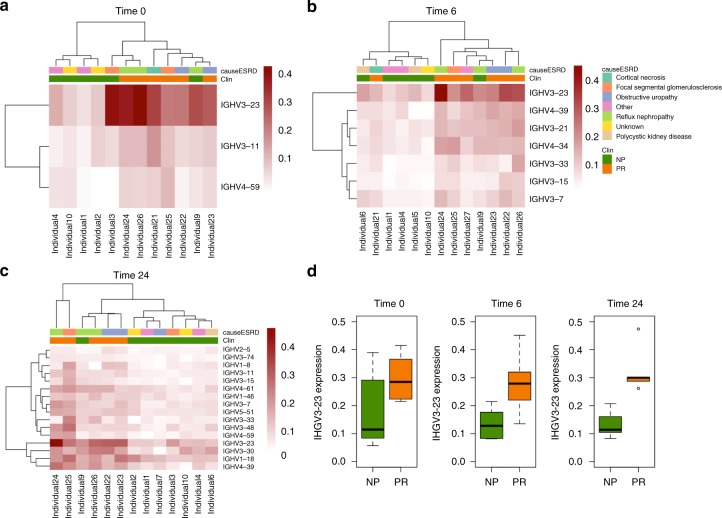
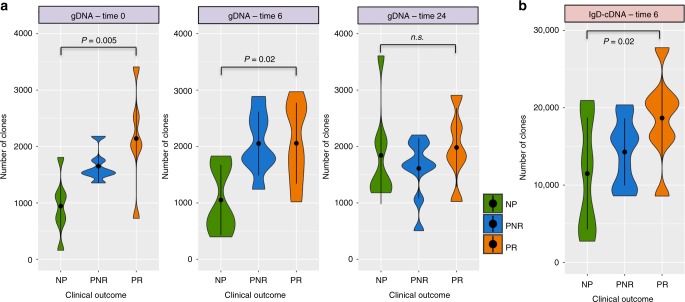
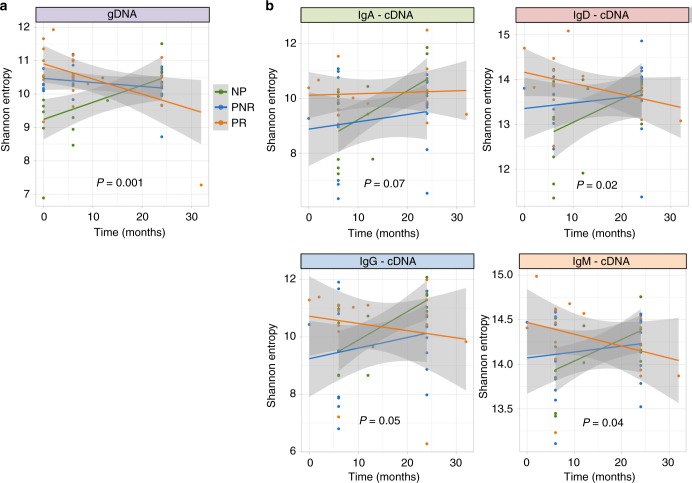
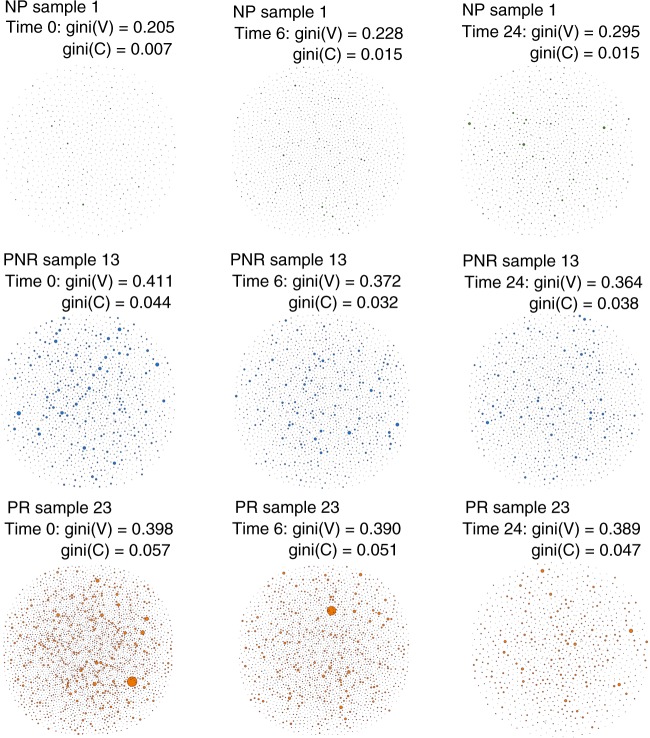
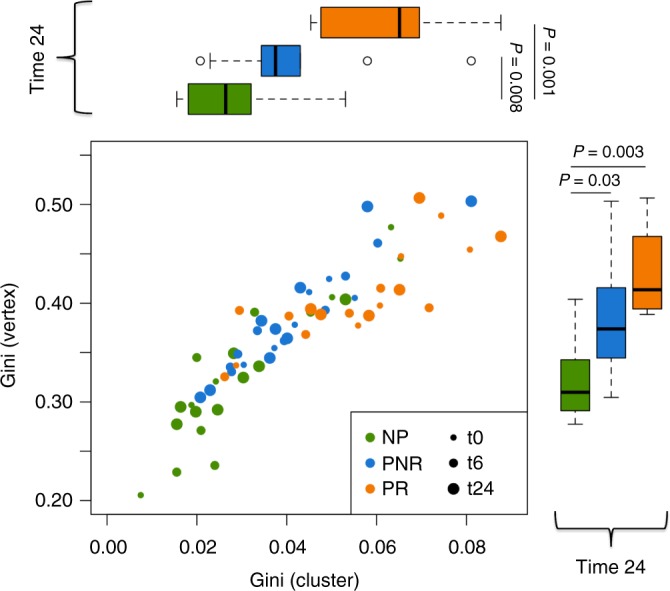
Studying immune repertoire in the context of organ transplant provides important information on how adaptive immunity may contribute and modulate graft rejection. Here we characterize the peripheral blood immune repertoire of individuals before and after kidney transplant using B cell receptor sequencing in a longitudinal clinical study. Individuals who develop rejection after transplantation have a more diverse immune repertoire before transplant, suggesting a predisposition for post-transplant rejection risk. Additionally, over 2 years of follow-up, patients who develop rejection demonstrate a specific set of expanded clones that persist after the rejection. While there is an overall reduction of peripheral B cell diversity, likely due to increased general immunosuppression exposure in this cohort, the detection of specific IGHV gene usage across all rejecting patients supports that a common pool of immunogenic antigens may drive post-transplant rejection. Our findings may have clinical implications for the prediction and clinical management of kidney transplant rejection.
在器官移植的背景下研究免疫受体库,为适应性免疫如何发挥作用以及调节移植物排斥提供了重要信息。在此,我们通过纵向临床研究,利用 B 细胞受体测序,对肾移植前后个体的外周血免疫受体库进行了特征描述。移植后发生排斥反应的个体在移植前具有更多样化的免疫受体库,这表明其具有移植后排斥反应的风险倾向。此外,在超过 2 年的随访中,发生排斥反应的患者表现出一组特定的扩增克隆,这些克隆在排斥反应后仍然存在。尽管由于该队列中普遍增加了一般免疫抑制药物的暴露,导致外周 B 细胞多样性总体减少,但在所有发生排斥反应的患者中都检测到特定的 IGHV 基因使用情况,这表明可能有共同的免疫原性抗原池驱动移植后排斥反应。我们的研究结果可能对预测和临床管理肾移植排斥反应具有临床意义。