Department of Cardiac Surgery, The First Affiliated Hospital of Nanchang University, Nanchang, Jiangxi 330006, China.
Jiangxi Provincial Key Laboratory of Women's Reproductive Health, Jiangxi Provincial Maternal and Child Health Hospital, Nanchang 330006, China.
Oxid Med Cell Longev. 2019 Mar 20;2019:7973098. doi: 10.1155/2019/7973098. eCollection 2019.
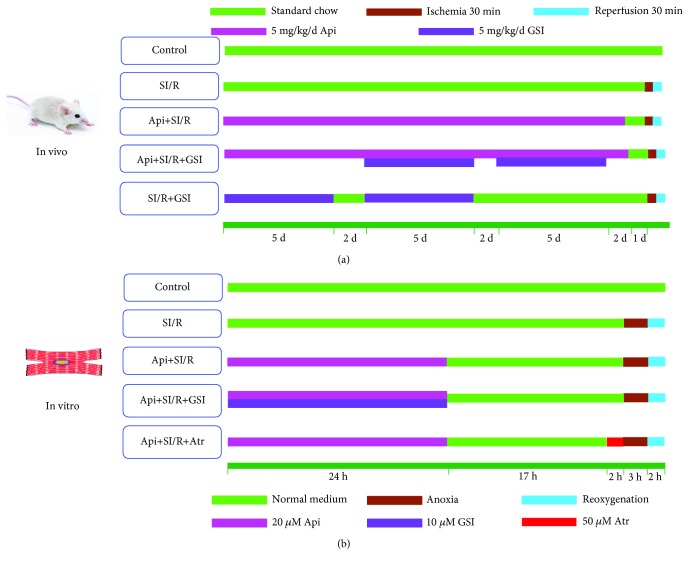
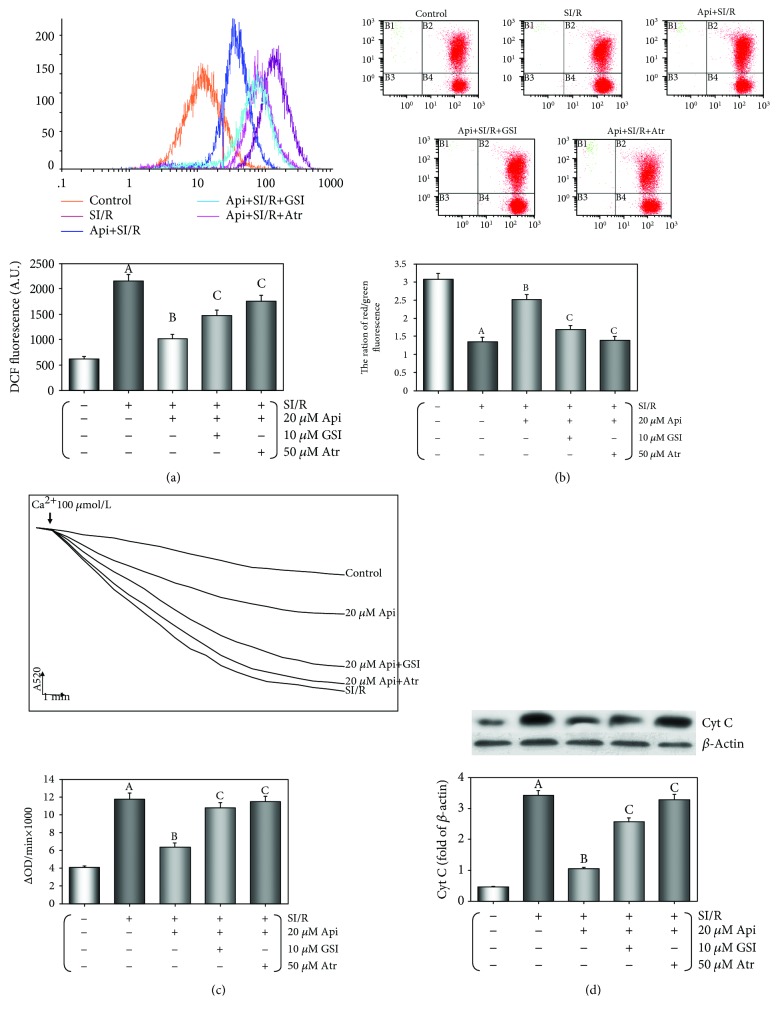
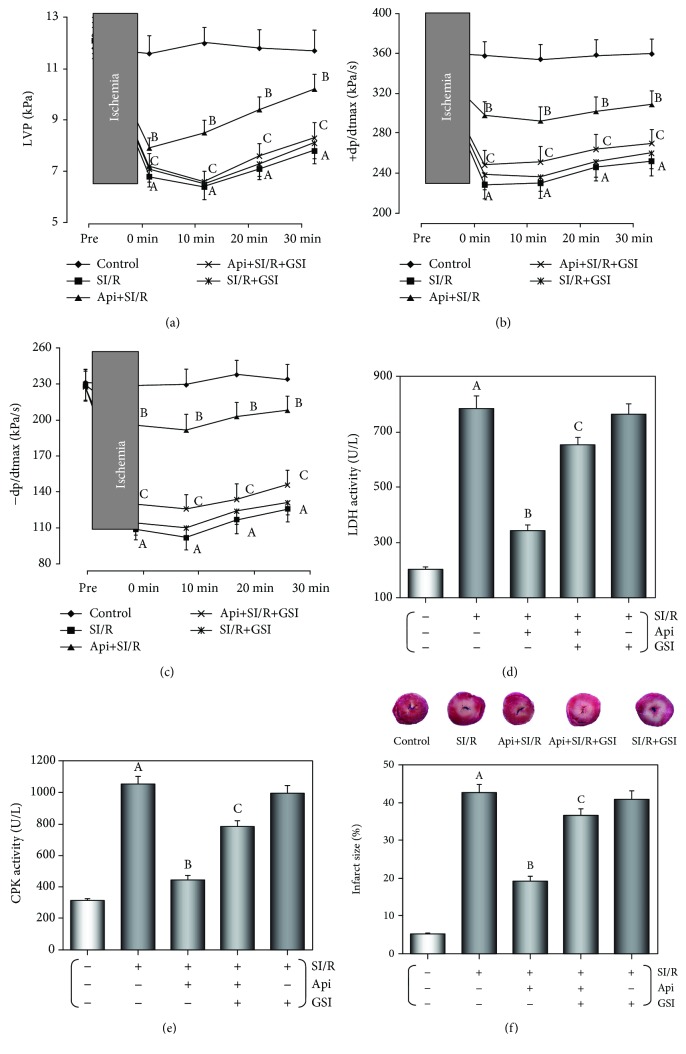
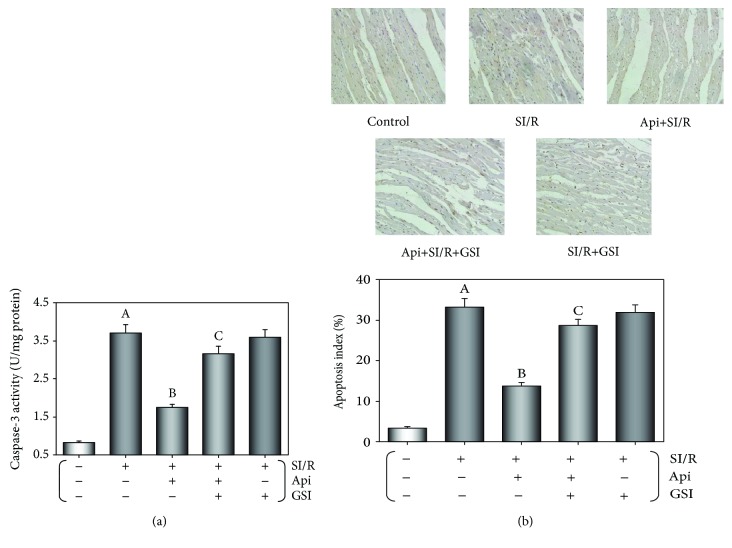
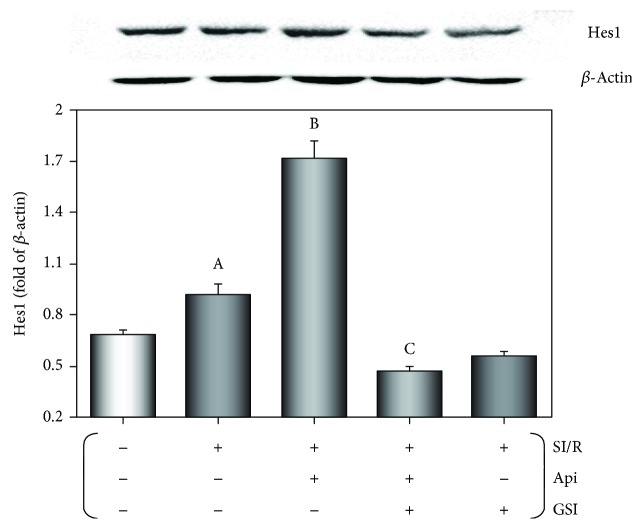
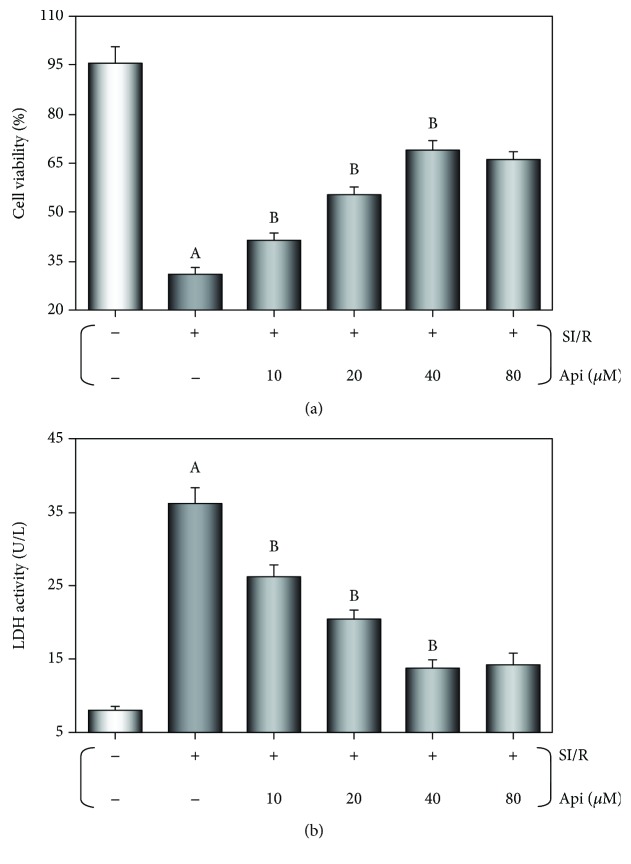
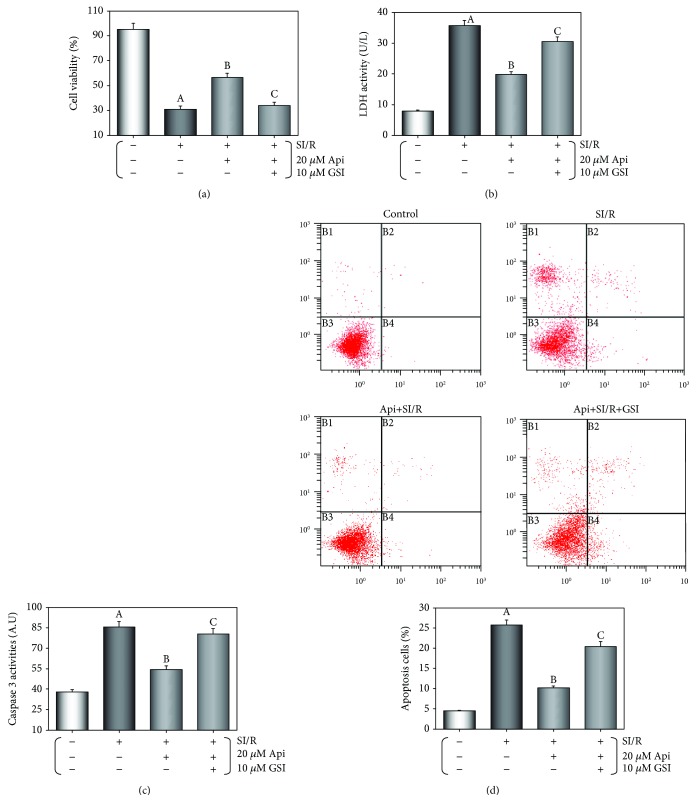
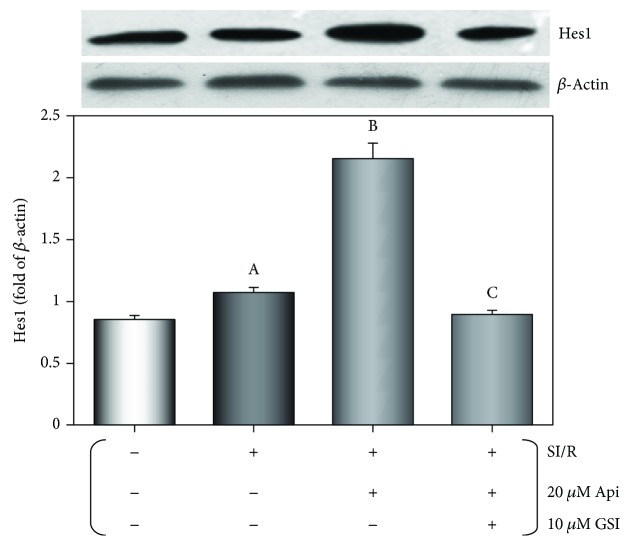
Apigenin (Api), a natural flavone found in high amounts in several herbs, has shown potent cardioprotective effects in clinical studies, although the underlying mechanisms are not clear. We hypothesized that Api protects the myocardium from simulated ischemia/reperfusion (SI/R) injury via nutritional preconditioning (NPC). Rats fed with Api-containing food showed improvement in cardiac functions; lactate dehydrogenase (LDH) and creatine phosphokinase (CPK) activities; infarct size; apoptosis rates; malondialdehyde (MDA) levels; caspase-3, superoxide dismutase (SOD), glutathione peroxidase (GSH-Px), and catalase (CAT) activities; and ferric reducing antioxidant power (FRAP) compared to those fed standard chow following SI/R injury. In addition, Api pretreatment significantly improved the viability, decreased the LDH activity and intracellular reactive oxygen species (ROS) generation, alleviated the loss of mitochondrial membrane potential (MMP), prevented the opening of the mitochondrial permeability transition pore (mPTP), and decreased the caspase-3 activity, cytochrome c (Cyt C) release, and apoptosis induced by SI/R in primary cardiomyocytes. Mechanistically, Api upregulated Hes1 expression and was functionally neutralized by the Notch1 -secretase inhibitor GSI, as well as the mPTP opener atractyloside (Atr). Taken together, Api protected the myocardium against SI/R injury via the mitochondrial pathway mediated by the Notch1/Hes1 signaling pathway.
芹菜素(Api)是一种天然黄酮类化合物,在多种草药中含量很高,在临床研究中显示出强大的心脏保护作用,但其潜在机制尚不清楚。我们假设 Api 通过营养预处理(NPC)保护心肌免受模拟缺血/再灌注(SI/R)损伤。食用含 Api 食物的大鼠在心脏功能、乳酸脱氢酶(LDH)和肌酸磷酸激酶(CPK)活性、梗死面积、细胞凋亡率、丙二醛(MDA)水平、caspase-3、超氧化物歧化酶(SOD)、谷胱甘肽过氧化物酶(GSH-Px)和过氧化氢酶(CAT)活性以及铁还原抗氧化能力(FRAP)方面均得到改善,与 SI/R 损伤后食用标准饲料的大鼠相比。此外,Api 预处理显著提高了原代心肌细胞的活力,降低了 LDH 活性和细胞内活性氧(ROS)的产生,减轻了线粒体膜电位(MMP)的丧失,防止了线粒体通透性转换孔(mPTP)的开放,降低了 caspase-3 活性、细胞色素 c(Cyt C)释放和 SI/R 诱导的细胞凋亡。在机制上,Api 上调了 Hes1 的表达, Notch1 分泌酶抑制剂 GSI 和 mPTP 开放剂苍术苷(Atr)可使其功能中和。总之,Api 通过 Notch1/Hes1 信号通路介导的线粒体途径保护心肌免受 SI/R 损伤。