• 文献检索
  • 文档翻译
  • 深度研究
  • 学术资讯
  • Suppr Zotero 插件Zotero 插件
  • 邀请有礼
  • 套餐&价格
  • 历史记录
应用&插件
Suppr Zotero 插件Zotero 插件浏览器插件Mac 客户端Windows 客户端微信小程序
定价
高级版会员购买积分包购买API积分包
服务
文献检索文档翻译深度研究API 文档MCP 服务
关于我们
关于 Suppr公司介绍联系我们用户协议隐私条款
关注我们

Suppr 超能文献

核心技术专利:CN118964589B侵权必究
粤ICP备2023148730 号-1Suppr @ 2026

文献检索

告别复杂PubMed语法,用中文像聊天一样搜索,搜遍4000万医学文献。AI智能推荐,让科研检索更轻松。

立即免费搜索

文件翻译

保留排版,准确专业,支持PDF/Word/PPT等文件格式,支持 12+语言互译。

免费翻译文档

深度研究

AI帮你快速写综述,25分钟生成高质量综述,智能提取关键信息,辅助科研写作。

立即免费体验

3D打印:在进化与生态学中的应用

3D Printing: Applications in evolution and ecology.

作者信息

Walker Matthew, Humphries Stuart

机构信息

School of Life Sciences University of Lincoln Lincoln UK.

出版信息

Ecol Evol. 2019 Mar 13;9(7):4289-4301. doi: 10.1002/ece3.5050. eCollection 2019 Apr.

DOI:10.1002/ece3.5050
PMID:31016005
原文链接:https://pmc.ncbi.nlm.nih.gov/articles/PMC6468079/
Abstract

In the commercial and medical sectors, 3D printing is delivering on its promise to enable a revolution. However, in the fields of Ecology and Evolution we are only on the brink of embracing the advantages that 3D printing can offer. Here we discuss examples where the process has enabled researchers to develop new techniques, work with novel species, and to enhance the impact of outreach activities. Our aim is to showcase the potential that 3D printing offers in terms of improved experimental techniques, greater flexibility, reduced costs and promoting open science, while also discussing its limitations. By taking a general overview of studies using the technique from fields across the broad range of Ecology and Evolution, we show the flexibility of 3D printing technology and aim to inspire the next generation of discoveries.

摘要

在商业和医疗领域,3D打印正在兑现其引发一场革命的承诺。然而,在生态学和进化领域,我们才刚刚开始接受3D打印所能带来的优势。在此,我们讨论一些案例,在这些案例中,3D打印技术使研究人员能够开发新技术、研究新物种,并增强科普活动的影响力。我们的目的是展示3D打印在改进实验技术、提高灵活性、降低成本以及促进开放科学方面的潜力,同时也讨论其局限性。通过全面概述广泛的生态学和进化领域中使用该技术的研究,我们展示了3D打印技术的灵活性,并旨在激发下一代的发现。
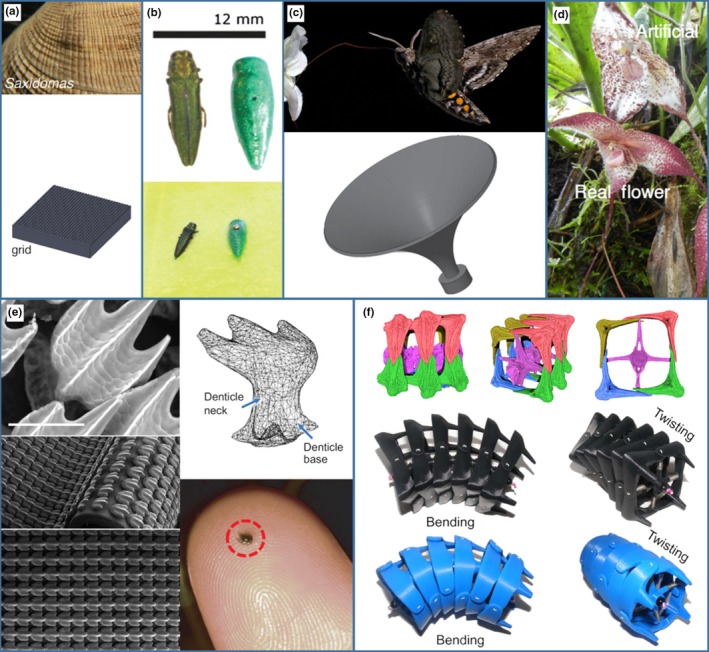
https://cdn.ncbi.nlm.nih.gov/pmc/blobs/a4a5/6468079/ae8b0a3a77be/ECE3-9-4289-g002.jpg
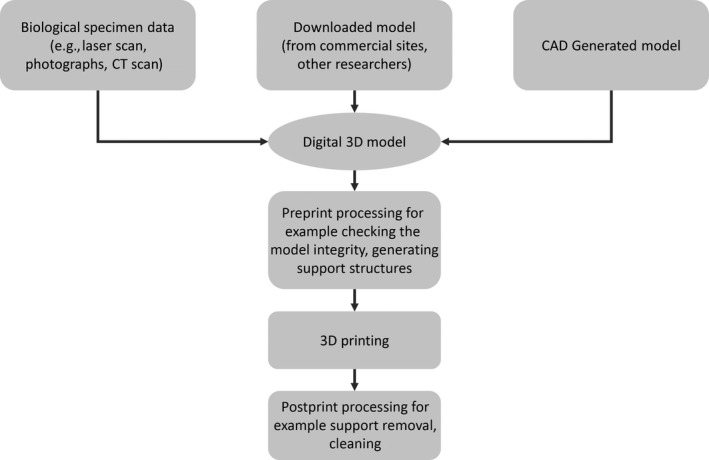
https://cdn.ncbi.nlm.nih.gov/pmc/blobs/a4a5/6468079/6e2c957dcc89/ECE3-9-4289-g001.jpg
https://cdn.ncbi.nlm.nih.gov/pmc/blobs/a4a5/6468079/ae8b0a3a77be/ECE3-9-4289-g002.jpg
https://cdn.ncbi.nlm.nih.gov/pmc/blobs/a4a5/6468079/6e2c957dcc89/ECE3-9-4289-g001.jpg
https://cdn.ncbi.nlm.nih.gov/pmc/blobs/a4a5/6468079/ae8b0a3a77be/ECE3-9-4289-g002.jpg

相似文献

1
3D Printing: Applications in evolution and ecology.3D打印:在进化与生态学中的应用
Ecol Evol. 2019 Mar 13;9(7):4289-4301. doi: 10.1002/ece3.5050. eCollection 2019 Apr.
2
Stereolithography 3D printing technology in pharmaceuticals: a review.立体光刻3D打印技术在制药领域的应用综述
Drug Dev Ind Pharm. 2021 Sep;47(9):1362-1372. doi: 10.1080/03639045.2021.1994990. Epub 2021 Oct 29.
3
Three-dimensional bio-printing.三维生物打印
Sci China Life Sci. 2015 May;58(5):411-9. doi: 10.1007/s11427-015-4850-3. Epub 2015 Apr 29.
4
A practical guide to cardiovascular 3D printing in clinical practice: Overview and examples.临床实践中心血管3D打印实用指南:概述与实例
J Interv Cardiol. 2018 Jun;31(3):375-383. doi: 10.1111/joic.12446. Epub 2017 Sep 25.
5
3D Printing: An Emerging Technology for Biocatalyst Immobilization.3D 打印:一种新兴的生物催化剂固定化技术。
Macromol Biosci. 2022 Sep;22(9):e2200110. doi: 10.1002/mabi.202200110. Epub 2022 May 26.
6
3D-printed patient-specific applications in orthopedics.3D打印在骨科领域的患者特异性应用。
Orthop Res Rev. 2016 Oct 14;8:57-66. doi: 10.2147/ORR.S99614. eCollection 2016.
7
Benefits and limitations of three-dimensional printing technology for ecological research.三维打印技术在生态研究中的优势和局限。
BMC Ecol. 2018 Sep 10;18(1):32. doi: 10.1186/s12898-018-0190-z.
8
3D printing of functional microrobots.3D 打印功能微机器人。
Chem Soc Rev. 2021 Mar 1;50(4):2794-2838. doi: 10.1039/d0cs01062f.
9
3D-printing: an emerging and a revolutionary technology in pharmaceuticals.3D 打印:制药领域的新兴和革命性技术。
Panminerva Med. 2018 Dec;60(4):170-173. doi: 10.23736/S0031-0808.18.03467-5. Epub 2018 Jun 1.
10
3D printing metal implants in orthopedic surgery: Methods, applications and future prospects.骨科手术中的3D打印金属植入物:方法、应用及未来展望。
J Orthop Translat. 2023 Sep 1;42:94-112. doi: 10.1016/j.jot.2023.08.004. eCollection 2023 Sep.

引用本文的文献

1
The lab-field continuum in conservation physiology research: leveraging multiple approaches to inform policy and practice.保护生理学研究中的实验室-野外连续体:利用多种方法为政策和实践提供信息。
Conserv Physiol. 2025 Sep 2;13(1):coaf063. doi: 10.1093/conphys/coaf063. eCollection 2025.
2
Exploring the evolutionary adaptations of the unique seahorse tail's muscle architecture through modelling and robotic prototyping.通过建模和机器人原型设计探索独特海马尾巴肌肉结构的进化适应性。
J R Soc Interface. 2025 May;22(226):20240876. doi: 10.1098/rsif.2024.0876. Epub 2025 May 7.
3
Let's Print an Ecology in 3D (and 4D).

本文引用的文献

1
3D Printing of Molecular Models.分子模型的3D打印
J Biocommun. 2016 Feb 26;40(1):e5. doi: 10.5210/jbc.v40i1.6626. eCollection 2016.
2
Expert-guided optimization for 3D printing of soft and liquid materials.专家指导的软质和液态材料 3D 打印优化。
PLoS One. 2018 Apr 5;13(4):e0194890. doi: 10.1371/journal.pone.0194890. eCollection 2018.
3
Vulnerability of the Great Barrier Reef to climate change and local pressures.大堡礁对气候变化和当地压力的脆弱性。
让我们用3D(和4D)打印一个生态环境。
Materials (Basel). 2024 May 7;17(10):2194. doi: 10.3390/ma17102194.
4
3D bioprinting in bioremediation: a comprehensive review of principles, applications, and future directions.3D 生物打印在生物修复中的应用:原理、应用及未来方向的全面综述。
PeerJ. 2024 Feb 8;12:e16897. doi: 10.7717/peerj.16897. eCollection 2024.
5
A New Era of Morphological Investigations: Reviewing Methods for Comparative Anatomical Studies.形态学研究的新时代:回顾比较解剖学研究方法
Integr Org Biol. 2023 Mar 17;5(1):obad008. doi: 10.1093/iob/obad008. eCollection 2023.
6
Sorption Properties of PET Copolyesters and New Approach for Foaming with Filament Extrusion Additive Manufacturing.聚对苯二甲酸乙二酯共聚酯的吸附性能及采用长丝挤出增材制造进行发泡的新方法
Polymers (Basel). 2023 Feb 24;15(5):1138. doi: 10.3390/polym15051138.
7
Functional engineering strategies of 3D printed implants for hard tissue replacement.用于硬组织替代的3D打印植入物的功能工程策略。
Regen Biomater. 2022 Nov 24;10:rbac094. doi: 10.1093/rb/rbac094. eCollection 2023.
8
Long-term whole blood DNA preservation by cost-efficient cryosilicification.通过经济高效的冷冻硅化作用实现长期全血 DNA 保存。
Nat Commun. 2022 Oct 21;13(1):6265. doi: 10.1038/s41467-022-33759-y.
9
3D-Printed Teeth in Endodontics: Why, How, Problems and Future-A Narrative Review.3D 打印牙齿在牙髓学中的应用:原因、方法、问题与未来——叙述性综述。
Int J Environ Res Public Health. 2022 Jun 29;19(13):7966. doi: 10.3390/ijerph19137966.
10
Multi-Functional 3D-Printed Vat Photopolymerization Biomedical-Grade Resin Reinforced with Binary Nano Inclusions: The Effect of Cellulose Nanofibers and Antimicrobial Nanoparticle Agents.二元纳米添加剂增强的多功能3D打印光固化生物医学级树脂:纤维素纳米纤维和抗菌纳米颗粒试剂的影响
Polymers (Basel). 2022 May 6;14(9):1903. doi: 10.3390/polym14091903.
Glob Chang Biol. 2018 May;24(5):1978-1991. doi: 10.1111/gcb.14043. Epub 2018 Feb 8.
4
The four-flipper swimming method of plesiosaurs enabled efficient and effective locomotion.蛇颈龙的四鳍游泳方式使其能够进行高效的运动。
Proc Biol Sci. 2017 Aug 30;284(1861). doi: 10.1098/rspb.2017.0951.
5
Chamber music: an unusual Helmholtz resonator for song amplification in a Neotropical bush-cricket (Orthoptera, Tettigoniidae).室内乐:一种用于新热带灌丛蟋蟀(直翅目,螽斯科)歌声放大的独特亥姆霍兹共鸣器。
J Exp Biol. 2017 Aug 15;220(Pt 16):2900-2907. doi: 10.1242/jeb.160234. Epub 2017 Jun 8.
6
CONVERGENT AND DIVERGENT EFFECTS OF NATURAL SELECTION ON COLOR PATTERNS IN TWO FISH FAUNAS.自然选择对两种鱼类区系颜色模式的趋同和趋异效应
Evolution. 1982 Jan;36(1):178-188. doi: 10.1111/j.1558-5646.1982.tb05022.x.
7
Prehensile and non-prehensile tails among syngnathid fishes: what's the difference?海龙科鱼类中可抓握和不可抓握的尾巴:有何区别?
Zoology (Jena). 2017 Feb;120:62-72. doi: 10.1016/j.zool.2016.11.002. Epub 2016 Nov 18.
8
Adaptation to life in aeolian sand: how the sandfish lizard, Scincus scincus, prevents sand particles from entering its lungs.适应风沙环境中的生活:沙鱼蜥(Scincus scincus)如何防止沙粒进入肺部。
J Exp Biol. 2016 Nov 15;219(Pt 22):3597-3604. doi: 10.1242/jeb.138107.
9
Preparation, anti-biofouling and drag-reduction properties of a biomimetic shark skin surface.仿生鲨鱼皮表面的制备、抗生物污染和减阻性能。
Biol Open. 2016 Apr 15;5(4):389-96. doi: 10.1242/bio.016899.
10
Disentangling visual and olfactory signals in mushroom-mimicking Dracula orchids using realistic three-dimensional printed flowers.利用逼真的三维打印花朵解析拟蘑菇的达氏兜兰中的视觉和嗅觉信号。
New Phytol. 2016 May;210(3):1058-71. doi: 10.1111/nph.13855. Epub 2016 Feb 15.