Oncology Research & Development, Pfizer, Pearl River, NY 10965.
Oncology Research & Development, Pfizer, San Diego, CA 92121.
Proc Natl Acad Sci U S A. 2019 May 7;116(19):9533-9542. doi: 10.1073/pnas.1814932116. Epub 2019 Apr 24.
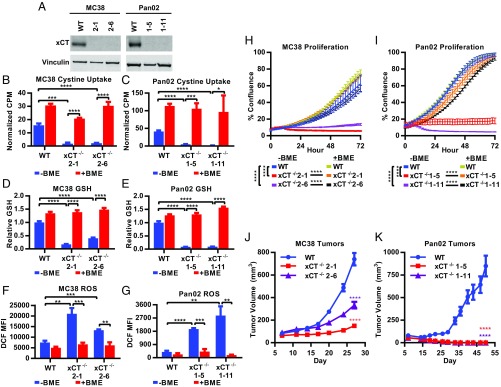
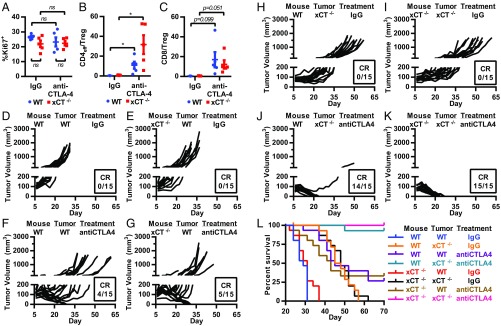
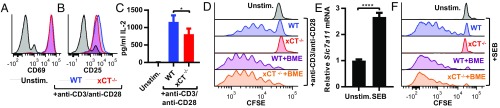
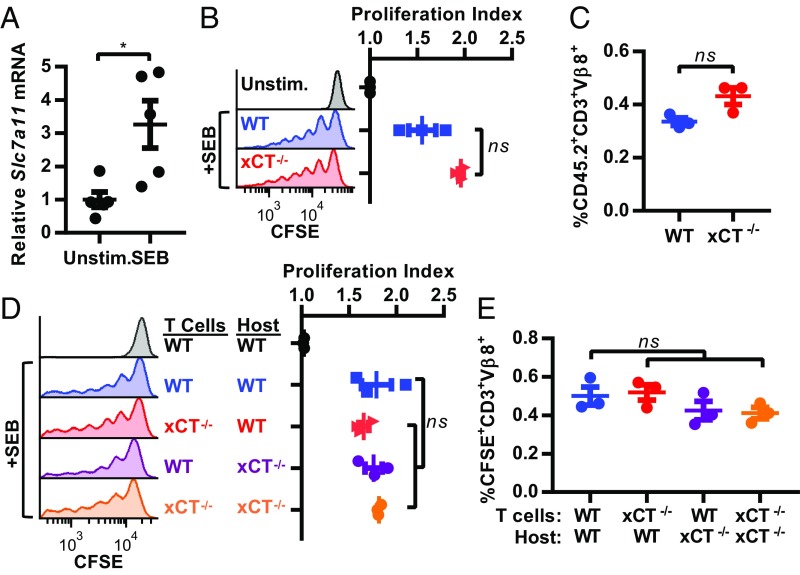
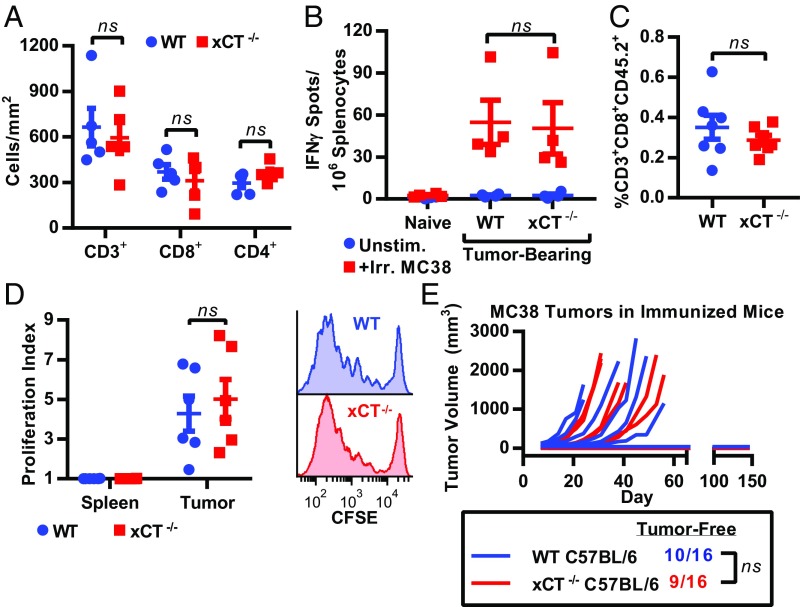
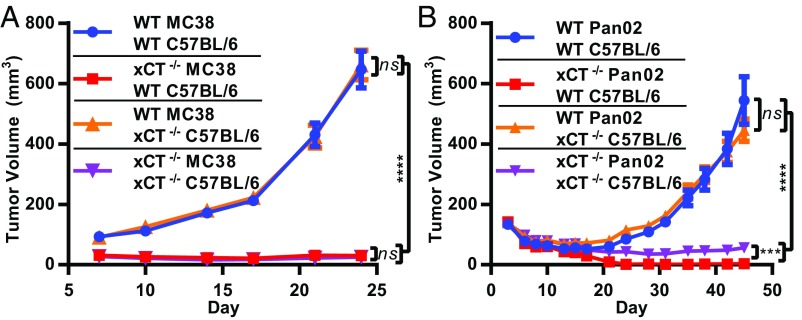
T cell-invigorating cancer immunotherapies have near-curative potential. However, their clinical benefit is currently limited, as only a fraction of patients respond, suggesting that these regimens may benefit from combination with tumor-targeting treatments. As oncogenic progression is accompanied by alterations in metabolic pathways, tumors often become heavily reliant on antioxidant machinery and may be susceptible to increases in oxidative stress. The cystine-glutamate antiporter xCT is frequently overexpressed in cancer and fuels the production of the antioxidant glutathione; thus, tumors prone to redox stress may be selectively vulnerable to xCT disruption. However, systemic inhibition of xCT may compromise antitumor immunity, as xCT is implicated in supporting antigen-induced T cell proliferation. Therefore, we utilized immune-competent murine tumor models to investigate whether cancer cell expression of xCT was required for tumor growth in vivo and if deletion of host xCT impacted antitumor immune responses. Deletion of xCT in tumor cells led to defective cystine uptake, accumulation of reactive oxygen species, and impaired tumor growth, supporting a cancer cell-autonomous role for xCT. In contrast, we observed that, although T cell proliferation in culture was exquisitely dependent on xCT expression, xCT was dispensable for T cell proliferation in vivo and for the generation of primary and memory immune responses to tumors. These findings prompted the combination of tumor cell xCT deletion with the immunotherapeutic agent anti-CTLA-4, which dramatically increased the frequency and durability of antitumor responses. Together, these results identify a metabolic vulnerability specific to tumors and demonstrate that xCT disruption can expand the efficacy of anticancer immunotherapies.
T 细胞激活的癌症免疫疗法具有近乎治愈的潜力。然而,它们的临床获益目前受到限制,因为只有一部分患者有反应,这表明这些方案可能受益于与肿瘤靶向治疗的联合。由于致癌进展伴随着代谢途径的改变,肿瘤通常会严重依赖抗氧化机制,并且可能容易受到氧化应激的增加的影响。胱氨酸-谷氨酸反向转运蛋白 xCT 在癌症中经常过度表达,并为抗氧化剂谷胱甘肽的产生提供燃料;因此,容易发生氧化还原应激的肿瘤可能会对 xCT 的破坏特别敏感。然而,系统性抑制 xCT 可能会损害抗肿瘤免疫,因为 xCT 被认为支持抗原诱导的 T 细胞增殖。因此,我们利用免疫功能健全的小鼠肿瘤模型来研究肿瘤细胞中 xCT 的表达是否是体内肿瘤生长所必需的,以及宿主 xCT 的缺失是否会影响抗肿瘤免疫反应。肿瘤细胞中 xCT 的缺失导致胱氨酸摄取缺陷、活性氧积累和肿瘤生长受损,支持 xCT 在肿瘤细胞中的自主作用。相比之下,我们观察到,尽管 T 细胞在培养中的增殖非常依赖于 xCT 的表达,但 xCT 在体内 T 细胞增殖以及对肿瘤的原发性和记忆性免疫反应的产生中是可有可无的。这些发现促使我们将肿瘤细胞 xCT 缺失与免疫治疗剂抗 CTLA-4 联合使用,这极大地增加了抗肿瘤反应的频率和持久性。这些结果确定了肿瘤特有的代谢脆弱性,并表明 xCT 的破坏可以扩大抗癌免疫疗法的疗效。