Laboratory of Epidemiology and Population Sciences, National Institute on Aging, NIA/NIH/IRP, Baltimore, MD, USA.
Population Studies Center and the Leonard Davis Institute of Health Economics, University of Pennsylvania, Philadelphia, PA, USA.
Mol Psychiatry. 2020 Jun;25(6):1286-1300. doi: 10.1038/s41380-019-0408-2. Epub 2019 Apr 24.
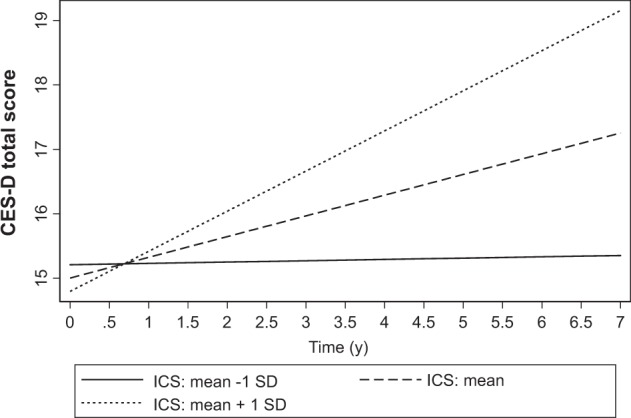
Systemic inflammation may influence trajectories of depressive symptoms over time, perhaps differentially by sex and race. Inflammatory markers and the Center for Epidemiologic Studies-Depression scale [total score: CES-D and four distinctive domains: somatic complaints, depressed affect, positive affect and interpersonal problems] were examined among African-American (AA) and White urban adults participating in the Healthy Aging in Neighborhoods of Diversity across the Life Span (HANDLS) study [2004-2013, Age:30-64 y, mean ± SD follow-up time: 4.64 ± 0.93 y, N = 150 (with cytokine data) to N = 1,767 (with other inflammatory markers)]. Findings suggest that serum concentrations of high-sensitivity C-reactive protein (hsCRP), z-inflammation composite score [ICS, combining elevated hsCRP and ESR with low serum albumin and iron], and serum interleukin (IL) 1β were positively associated with ΔCES-D (Δ: annual rate of increase) among Whites only. IL-12 was directly related to ΔCES-D among men and AA. The race-specific associations of hsCRP, ICS, IL-1β and the sex-specific association of IL-12 with ΔCES-D were replicated for the "depressed affect" domain. Similarly, among men, lower serum albumin and higher ICS were linked with higher baseline "somatic complaints". IL-10 among AA and IL-12 among men were inversely related to Δ"positive affect", while "interpersonal problems" were cross-sectionally associated with IL-6 among AA and IL-10 among Whites. Finally, baseline ICS was positively associated with incident "elevated depressive symptoms" (EDS: CES-D ≥ 16) among AA (HR = 1.28, 95% CI: 1.04-1.56, P = 0.017). Overall, systemic inflammation was directly linked to increased depressive symptoms over time and at baseline, differentially across sex and race groups. More longitudinal research is needed to replicate our findings.
系统性炎症可能会影响抑郁症状随时间的发展轨迹,其影响可能因性别和种族而异。本研究检测了非裔美国人和白人城市成年人的炎症标志物和流行病学研究中心抑郁量表[总分:CES-D 和四个独特的领域:躯体症状、抑郁情绪、积极情绪和人际关系问题],这些参与者参与了多样性在生活中的社区健康老龄化研究(HANDLS)[2004-2013 年,年龄:30-64 岁,平均随访时间:4.64±0.93 年,N=150(有细胞因子数据)至 N=1767(有其他炎症标志物)]。研究结果表明,血清高敏 C 反应蛋白(hsCRP)、Z 炎症综合评分[ICS,将 hsCRP 和 ESR 升高与血清白蛋白和铁降低相结合]和血清白细胞介素(IL)1β与白人的 ΔCES-D(Δ:年增长率)呈正相关。IL-12 与男性和非裔美国人的 ΔCES-D 直接相关。hsCRP、ICS、IL-1β 的种族特异性关联以及 IL-12 与 ΔCES-D 的性别特异性关联在“抑郁情绪”领域得到了复制。同样,在男性中,较低的血清白蛋白和较高的 ICS 与较高的基线“躯体症状”有关。IL-10 与非裔美国人,IL-12 与男性的“积极情绪”呈负相关,而“人际关系问题”与非裔美国人的 IL-6 和白种人的 IL-10 呈横断面相关。最后,基线 ICS 与非裔美国人的 EDS(CES-D≥16)呈正相关(HR=1.28,95%CI:1.04-1.56,P=0.017)。总体而言,系统性炎症与随时间推移和基线时抑郁症状的增加直接相关,且在性别和种族群体中存在差异。需要更多的纵向研究来复制我们的发现。