Friedrich Miescher Institute for Biomedical Research (FMI), Basel, Switzerland.
University of Basel, Basel, Switzerland.
Nature. 2019 May;569(7754):66-72. doi: 10.1038/s41586-019-1146-y. Epub 2019 Apr 24.
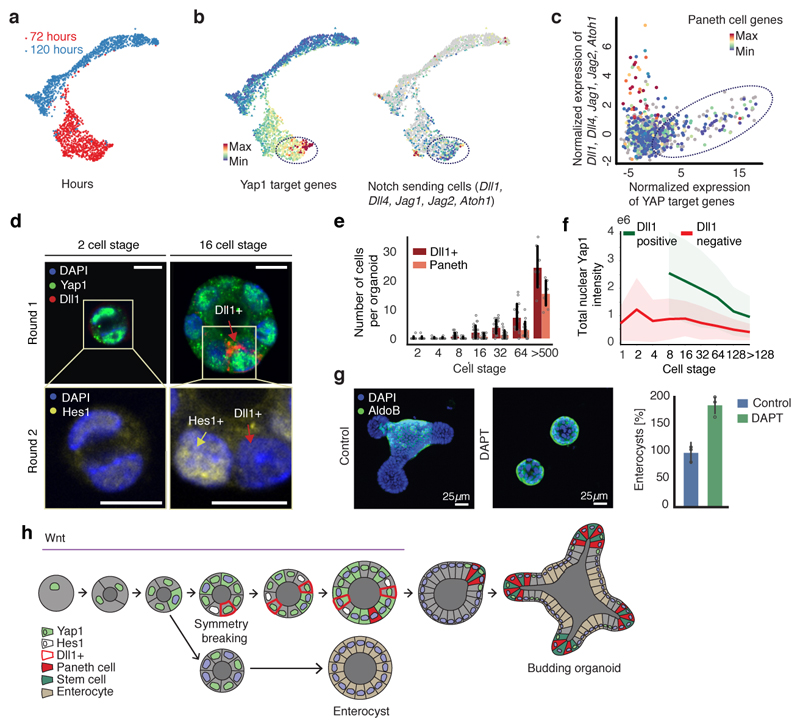
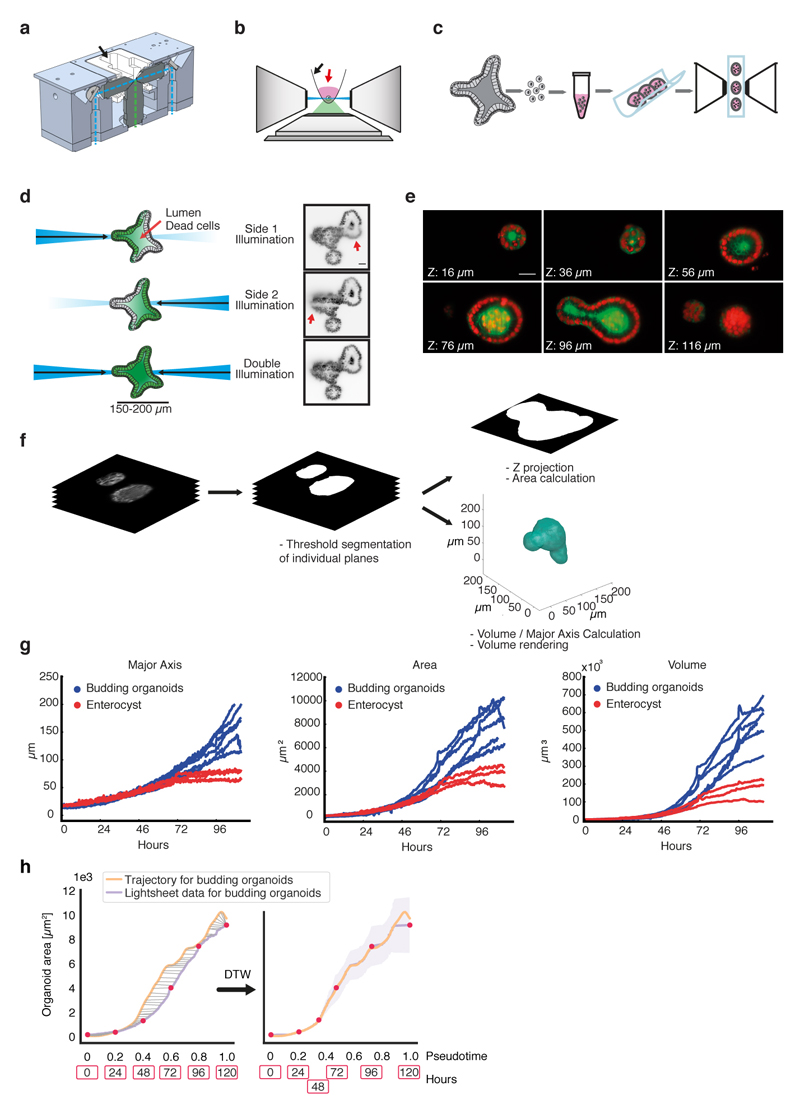
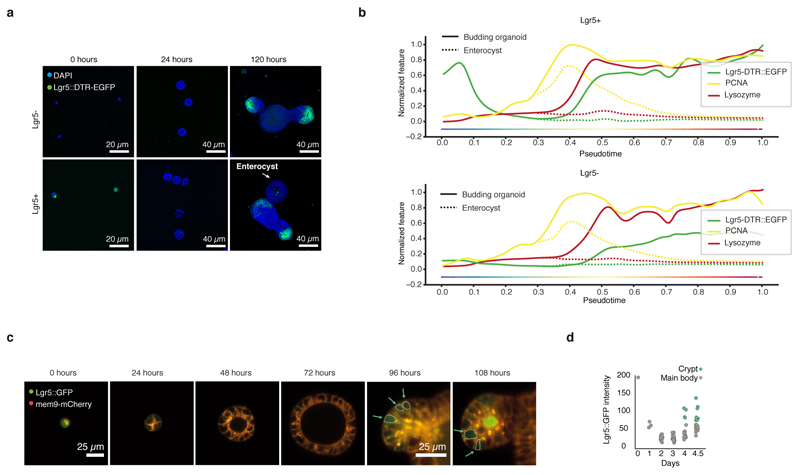
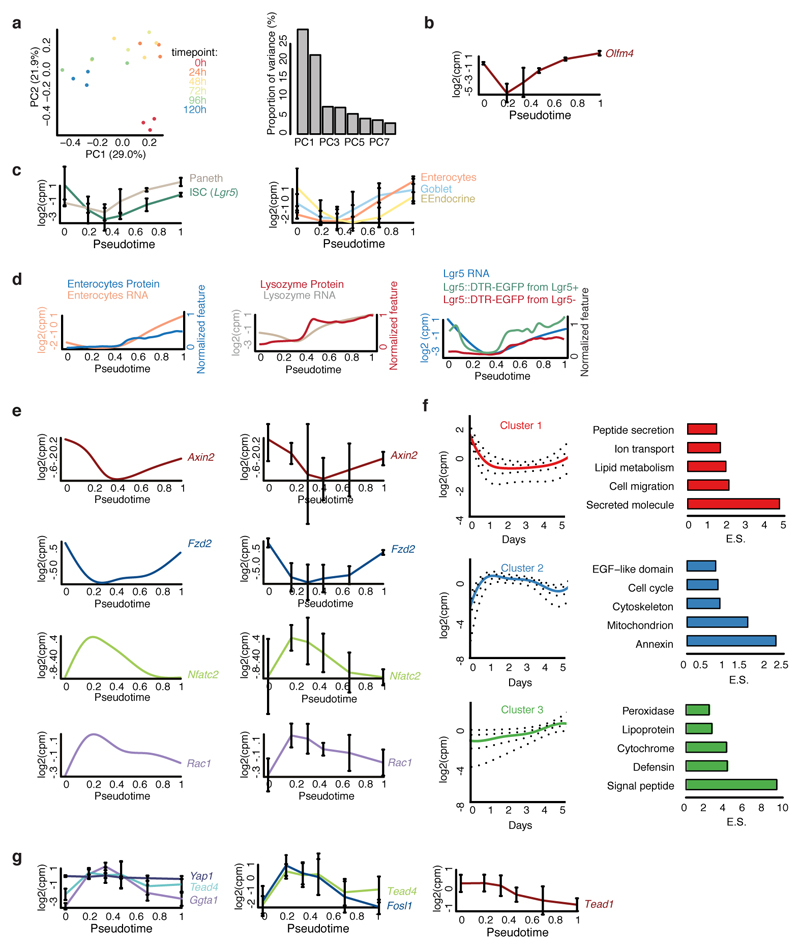
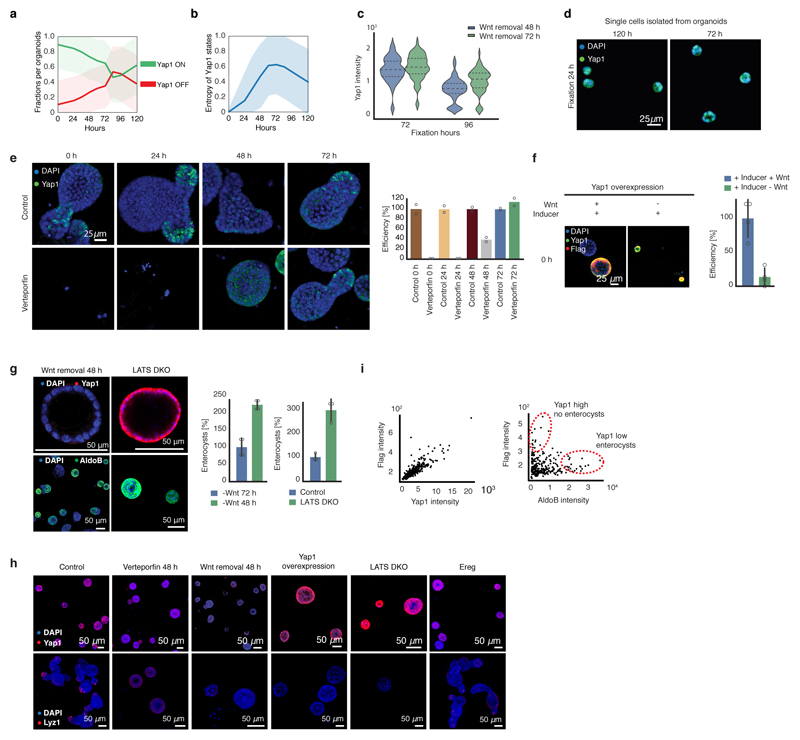
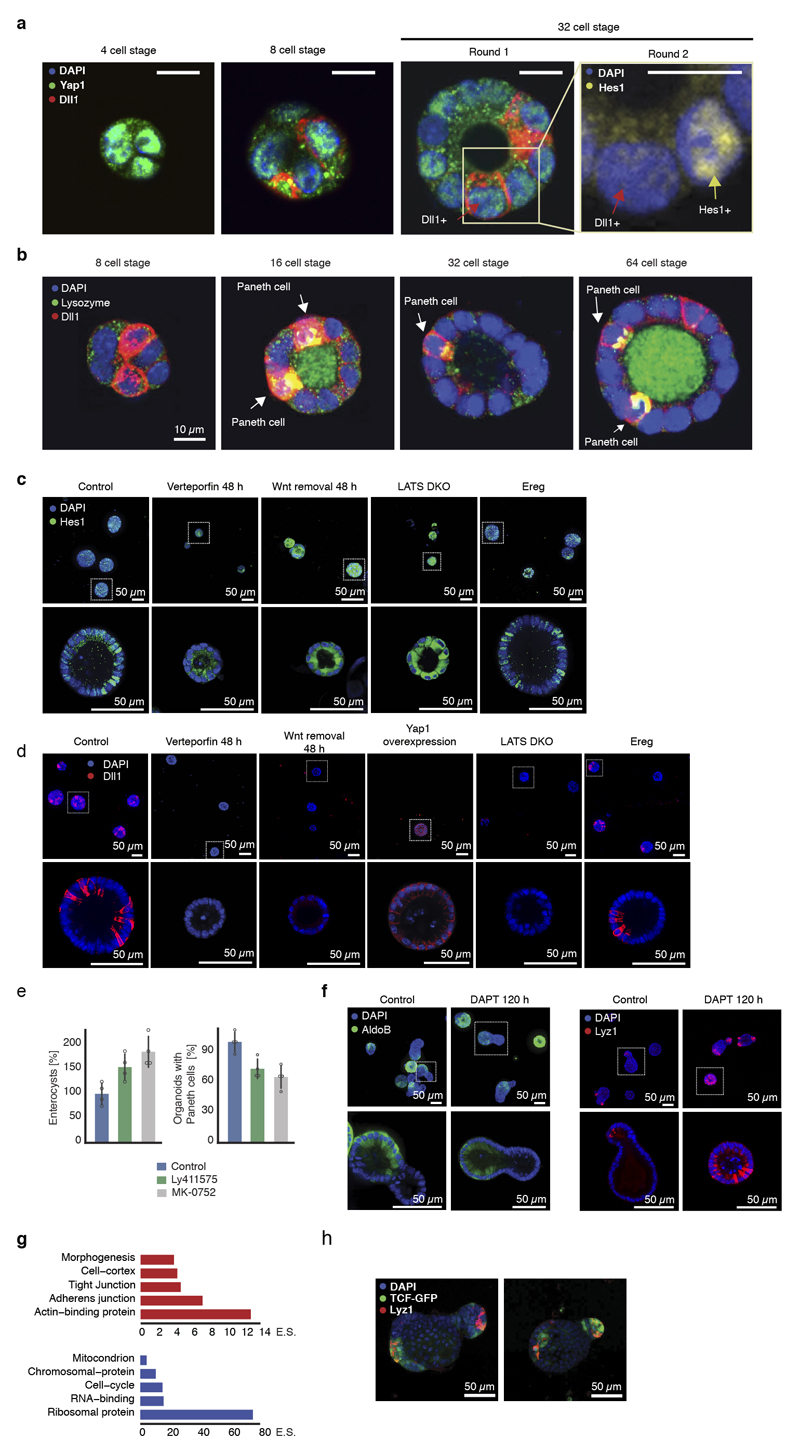
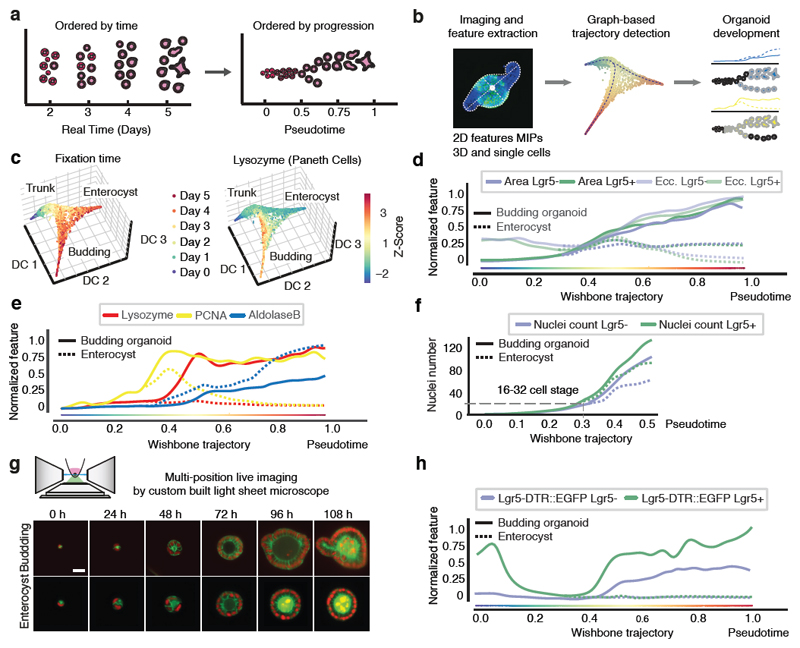
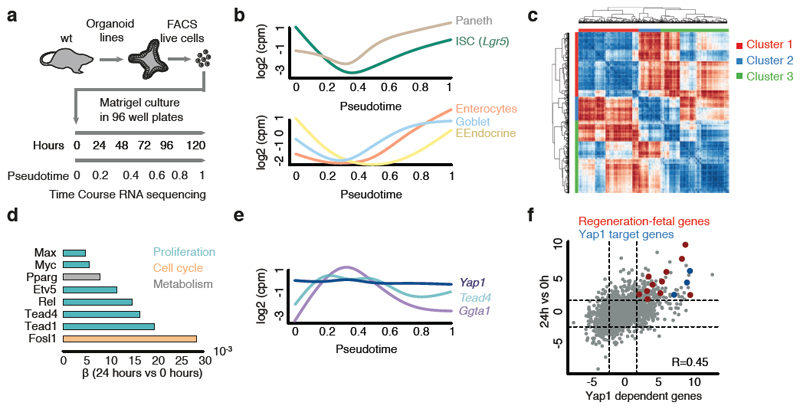
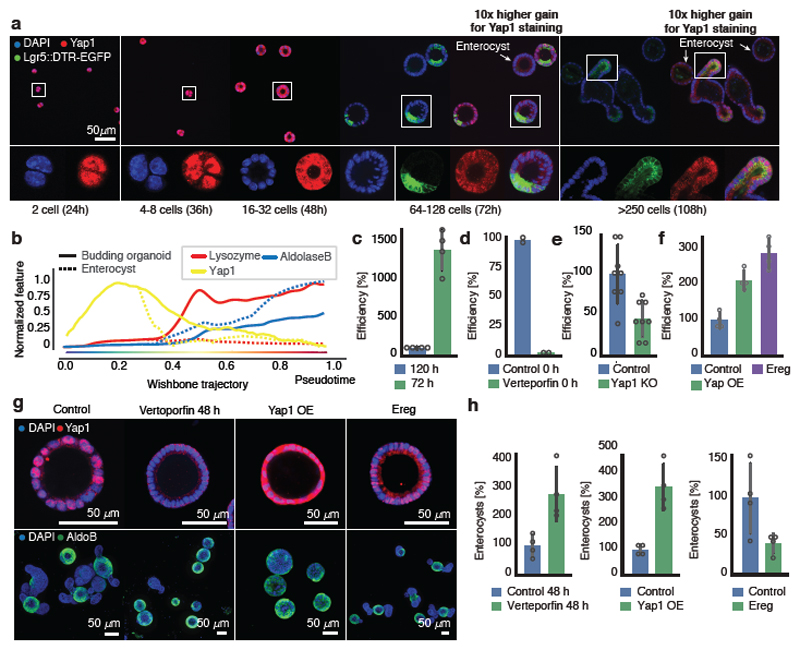
Intestinal organoids are complex three-dimensional structures that mimic the cell-type composition and tissue organization of the intestine by recapitulating the self-organizing ability of cell populations derived from a single intestinal stem cell. Crucial in this process is a first symmetry-breaking event, in which only a fraction of identical cells in a symmetrical sphere differentiate into Paneth cells, which generate the stem-cell niche and lead to asymmetric structures such as the crypts and villi. Here we combine single-cell quantitative genomic and imaging approaches to characterize the development of intestinal organoids from single cells. We show that their development follows a regeneration process that is driven by transient activation of the transcriptional regulator YAP1. Cell-to-cell variability in YAP1, emerging in symmetrical spheres, initiates Notch and DLL1 activation, and drives the symmetry-breaking event and formation of the first Paneth cell. Our findings reveal how single cells exposed to a uniform growth-promoting environment have the intrinsic ability to generate emergent, self-organized behaviour that results in the formation of complex multicellular asymmetric structures.
肠类器官是复杂的三维结构,通过再现来源于单个肠干细胞的细胞群体的自组织能力,模拟肠道的细胞类型组成和组织组织。在这个过程中,关键是第一次打破对称性事件,其中只有在对称球体中的相同细胞的一小部分分化为产生干细胞龛并导致不对称结构(如隐窝和绒毛)的潘氏细胞。在这里,我们结合单细胞定量基因组学和成像方法来描述从单个细胞发育肠类器官。我们表明,它们的发育遵循由转录调节剂 YAP1 的瞬时激活驱动的再生过程。在对称球体中出现的 YAP1 细胞间变异性引发 Notch 和 DLL1 的激活,并驱动对称性破缺事件和第一潘氏细胞的形成。我们的发现揭示了暴露在均匀促进生长的环境中的单个细胞如何具有内在能力产生突发的、自我组织的行为,从而导致复杂的多细胞不对称结构的形成。